




Behind the Scenes During California’s Thomas Fire
The City of Ventura's Mary Joyce Ivers was called to the Emergency Operations Center the night the Thomas fires began in December. She talks about her fleet department’s experience and response during the fire.
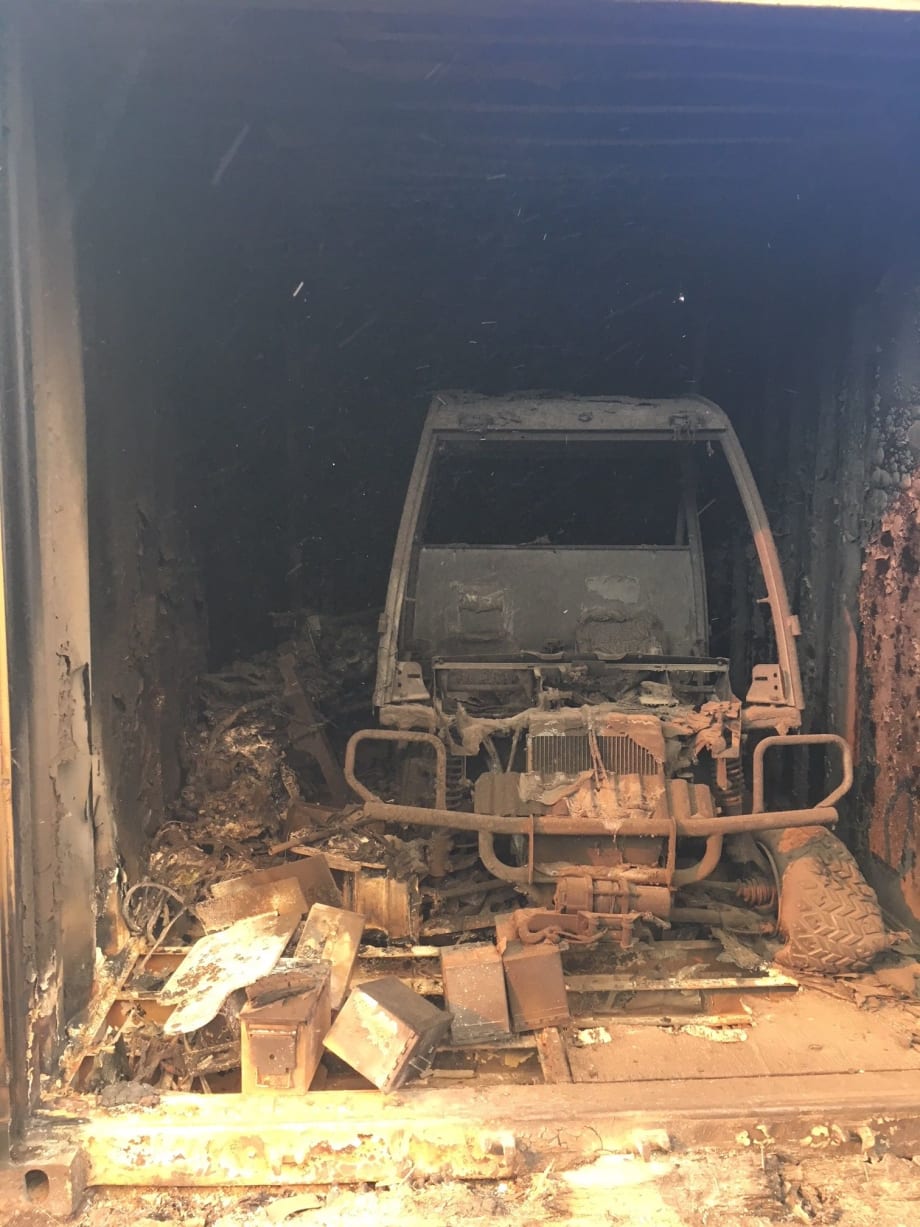
A John Deere Gator burned inside a storage box. Photo courtesy of City of Ventura

Fire threatened vehicles on this slope behind City Hall; Police personnel helped move the vehicles. Photo courtesy of City of Ventura
Starting Dec. 4, 2017, the Thomas wildfire burned 281,893 acres in Santa Barbara and Ventura counties in Southern California. It destroyed 1,063 structures and damaged 280 others before being fully contained more than a month later, on Jan. 12.
City of Ventura Fleet and Facilities Manager Mary Joyce Ivers, CPFP, was called to the emergency operations center (EOC) the night the fires began. She talks about her fleet department’s experience and response during the fire.
Q: How did fleet respond to the fire?
A: I am so proud of our fleet and city team, who worked tirelessly during the fire.
After I arrived at the emergency operations center around 10 p.m., our fleet mechanics Robert Winman and Tim Wolverton came in to help fuel emergency generators and provide support. They worked all through the night, and they put out a few small fires during their fueling routes. We had a shift change, and the other mechanics took over the duty of fueling six emergency generators continuously for the week.
At about 11 p.m. that evening, the police commander asked for all the keys to the city vehicles parked at City Hall. The back slope was engulfed, and the fire was headed to the parking lot where about 10 city vehicles park. Thankfully, I remembered the vehicle numbers and called Silvia Medrano, our fleet accounting technician who had stayed at the fleet shop to work after making sure her family was safe, to grab all the keys for vehicles numbered under 100 and take to Police to move the cars. Fleet staff assisted police personnel with moving all the vehicles away from the burning slope.
A John Deere Gator burned inside a storage box. Photo courtesy of City of Ventura
Q:Were you concerned about fuel availability during the fire?
A: That night, our fuel levels were about half full. I called the fuel supplier, who responded that the fuel ordered that day would be there in a couple of days. I said, "Have you seen the news? I need fuel now." The company got deliveries of fuel within a few hours in the middle of the night and continuously kept us filled for the week. We also had a fuel truck and driver on-site to deliver fuel to the critical sites with generators. We fueled more than 3,100 gallons for mutual aid fire apparatus in the first few days. The city consumed almost 13,000 gallons of fuel in six days, and our average monthly fuel usage is 20,000 gallons!
Within the first few hours, Fire Command requested the mutual aid agencies be fueled at the maintenance yard until they were set up at the base camp at the fairgrounds. After Silvia and her young family were evacuated, she worked all night long to help fuel the fire trucks. Barbara McCormack, our management analyst, joined us the next morning. Bryan Daniels, our designated fuel contractor and electrician, was called in Tuesday morning to repair a slow pump. He stayed and assisted all day cleaning fire truck windows.
We provided food, water, and Gatorade to the firefighters who were getting fuel after working the fire. Their faces were black with soot and some needed eye wash.
Q: How did your vehicles fare?
A: We have a compliant preventive maintenance program, so no vehicles had mechanical issues or breakdowns during the fire response. We are performing additional safety inspections and replaced the cabin air filters in Police, Fire, Public Works, Parks and Water vehicles. We will be performing inspection services of emergency generators to ensure their continuous reliability.
As for damages, we had one Seagrave engine windshield damaged, and it was replaced. A John Deere Gator burned inside a storage box. Hydraulic hoses to a water pump burned, a roll-off truck body was damaged, and a trailer that was located at a hillside water site was damaged. We estimate approximately $30,000 in damages.
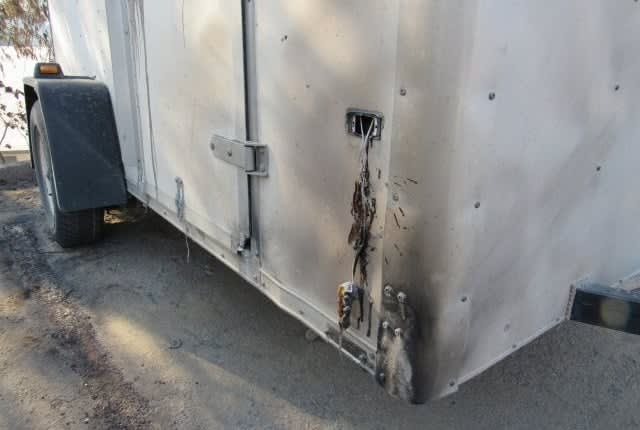
A trailer is shown with fire damage.Photo courtesy of City of Ventura
Q: Is fleet still working on post-fire work? Can you provide an update?
A: We are supporting fueling of some emergency generators as well as preventive maintenance.
Q: What have you learned from this experience?
A: Make sure your family is safe and report to work. Have a strong partnership with the fuel supplier and great preventive maintenance programs for all vehicles and equipment. Have two-way radios and a good contact list for employees and contractors readily available. We’ll soon be acquiring a fuel program that will give us access to real-time fuel levels, so any fleet personnel can log in and view it — we won’t have to call Sylvia for this anymore!
Q: Do you have any additional comments?
A: I am so proud of our dedicated and committed fleet team! Public Works employees are first responders! Fleet and all the maintenance yard staff knew what needed to be done and worked in very smoky conditions the first few days. I was at the EOC and not at the yard to direct the work, and the staff showed great initiative and care. NAPA IBS provided safety and personal protective equipment all throughout the response.
More Operations

Is Keeping Older Fleet Vehicles Really Saving Money?
Is keeping vehicles longer saving money, and what happens when a diagnostic test points to the wrong fix?
Read More →
How Smart Fleet Strategy Can Help Local Government Agencies Do More with Less
Keeping a vehicle longer may ease this year’s budget, but what does it cost the next one? A closer look at fleet decisions can reveal opportunities to reduce spending while protecting essential services.
Read More →
Connect with Government Fleet on LinkedIn
From industry news and fleet management strategies to conversations with peers, Government Fleet's LinkedIn page offers public-sector fleet professionals another way to stay informed and connected.
Read More →
Town of Queen Creek Named Most Successful Fleet Award Winner of Inaugural RTA Fleet Success Awards
Five fleets were honored at RTA Connect 2026 in Chicago for excellence across resource efficiency, intentional culture, risk management, and stakeholder satisfaction.
Read More →
A buyer's guide to fleet management software in 2027
Buying fleet management software in 2027 means looking beyond features and price. As fleet operations, technology and expectations evolve, this guide explores what today’s fleet professionals should consider when choosing a system that can deliver value now and adapt to what comes next.
Read More →
Hazard Alerts, Fleet Car Sales Rise and a New Shuttle Concept
Fleet car sales doubled, but the bigger picture tells a different story in this week’s roundup.
Read More →
How St. Johns County Turned Fleet Data Into Better Replacement Decisions
St. Johns County, Florida, had fleet data, but turning it into reliable decision guidance was another matter. Instead of starting over with a new fleet management system, the county connected existing tools and built a scoring system that gives managers an objective look at fleet health.
Read More →
Fleet Forward Conference Introduces One-Day Passes for 2026
New one-day registration lets fleet professionals attend Tuesday, Wednesday, or Thursday, with passes available for $249.
Read More →
ENC Unveils its ZAVIR Medium-Duty Shuttle
Two variants of the concept shuttles were revealed: a low-floor configuration and a high-floor configuration.
Read More →
Could Your Next Fleet Technician Start as an Intern?
What if your next technician hasn’t worked in a fleet shop yet? What fleets are doing to free up time.
Read More →