




LA Sheriff’s Dept. Releases Police Cruiser and Utility Test Results
TORRANCE, CA – The Los Angeles Sheriff’s Department (LASD) conducted its annual testing of the latest police vehicle models in October, including patrol cars and utility vehicles.
TORRANCE, CA – The Los Angeles Sheriff’s Department (LASD) conducted its annual testing of the latest police vehicle models in October, including patrol cars and utility vehicles. In this first overview of the testing results, we’ll cover the patrol cars and utility vehicle results. In the next, we'll cover the motorcycle results.
LASD testing is somewhat different from that of Michigan State Police’s (MSP) testing. During the LASD tests, four police drivers each take the vehicles out for eight laps, but the drivers have to switch vehicles in less than five minutes, which means each vehicle is driven in a total of 32 five-minutes-or-less “hot laps” in total. In the MSP’s tests, the vehicles are given a cooling off period between laps.
Immediately following the “hot laps,” LASD moves to brake testing. The brake tests also include a panic stop test, where the drivers mash the brakes while going from 60 mph to a stop. LASD also includes fuel economy ratings designed to provide an estimate of actual mpg under more realistic driving conditions. The LASD tests provide driver comments on the vehicles in addition to the numbers.
For the LASD tests, drivers drove the following patrol cars and utilities:
Dodge Charger V-8 with the 2.65 rear axle ratio
Dodge Charger V-6 with the 2.65 rear axle ratio
Dodge Charger V-8 with the 3.06 rear axle ratio
Dodge Charger V-6 with the 3.07 rear axle ratio
Ford Crown Victoria Pure Forge
Ford Crown Victoria Pure Forge
Ford FWD Police Interceptor Sedan
Ford AWD Police Interceptor with the 3.7L engine
Ford AWD Police Interceptor with the 3.5L engine
Ford AWD Police Interceptor with the EcoBoost engine
Ford AWD Police Interceptor Utility with the 3.7L engine
Chevrolet Caprice PPV with the V-8
Chevrolet Tahoe PPV
Chevrolet Impala
High-Speed Tests
For the high-speed tests, which involved the four series of eight laps, Ford’s AWD Police Interceptor with the EcoBoost engine came in first, with a fastest time of 1:21.15, during the first eight laps, and a slowest time of 1:22.26, during laps 17-24. Chrysler’s Dodge Charger equipped with the V-8 and the 3.06 rear axle ratio came in second place, with a fastest time of 1:21.77 during the first eight laps and a slowest time of 1:22.61 during laps 25-32.
Among the utility vehicles, the Ford AWD Police Interceptor Utility with the 3.7L engine came in at a fastest time of 1:27.81 during the first eight laps and a slowest time of 1:28.74, during laps 17-24. The Tahoe PPV got a fastest time of 1:29.68 during laps 1-8 and a slowest time of 1:30.91 during laps 17-24.
Acceleration Tests
LASD also conducted acceleration tests going from 0 to 100 mph. Two increments here are notable, the 0 to 60 mph times and the 60 to 100 mph "closing distance" times.
The V-8 Dodge Charger with the 3.06 rear axle ration had the fastest recorded 0 to 60 time, at 5.85 seconds. The V-8 Charger with the 2.65 rear axle ratio came in second, at 5.92 seconds.
For the "closing speed" tests, of 60 to 100 mph, the V-8 Charger with the 3.06 rear axle ratio had the fastest time, at 7.94 seconds. The Ford Police Interceptor with the EcoBoost engine came in second, at 8.48 seconds.
Among the utility vehicles, the Ford AWD Police Interceptor Utility had a 0 to 60 time of 8.33 seconds, and a 60 to 100 mph time of 13.83 seconds. The Tahoe PPV came in at an a 0 to 60 mph time of 9.03 seconds and a 60 to 100 mph time of 15.41 seconds.
Braking
For the “hot braking” tests, the patrol vehicle with the shortest braking distance was Ford AWD Police Interceptor base sedan with the 3.5L engine, at 136.05 ft. In second was the Ford AWD Police Interceptor with the 3.7L engine, at 136.23 ft. Among the utilities, the Ford AWD Police Interceptor Utility had the shortest stopping distance, at 144.08 ft. The Tahoe PPV came in second, at 167.11 ft.
More Operations
What Can Disappear After a Fleet Crash?
This week, we look at drone footage, what fleets should document before repairs begin, and share a quick poll.
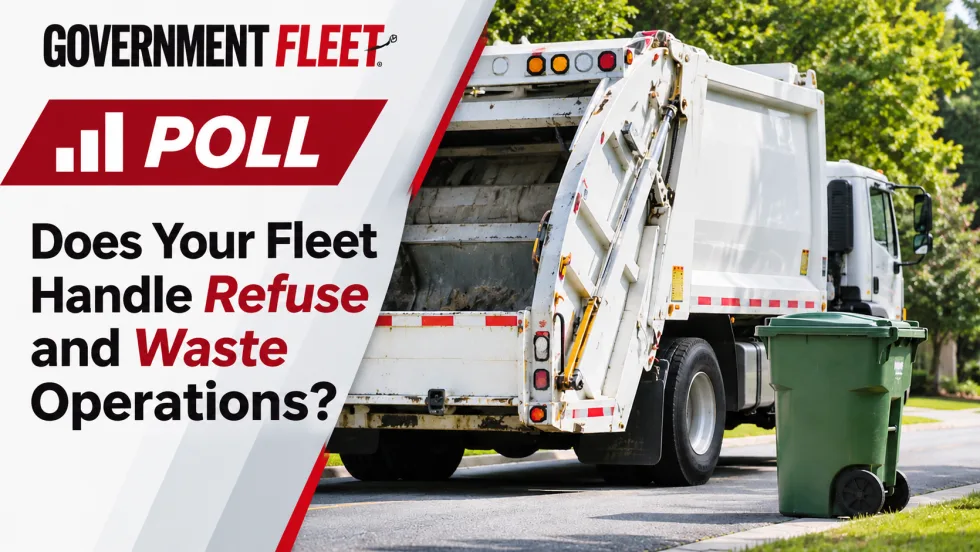
Does Your Government Fleet Handle Refuse and Waste Operations? Take Our Poll
Government Fleet wants to hear from public-sector fleet professionals about their responsibilities for refuse collection and waste management equipment.
Fleet Replacement Decisions, Waste Fleet Technology and the GFX Deadline
Is your next vehicle the right fit, can your records settle a missed pickup dispute, and what could your fleet teach others at GFX 2027?
Is Delaying Fleet Replacement Really Saving Money?
Could delaying replacement cost your fleet more than it saves? This week’s recap takes a closer look, plus an update on GFX 2027.

What Government Fleets Are Missing About Their True Costs
What are fleet budgets missing, and how can agencies use the data they already collect to make a stronger case for change?
Rethinking Fleet Decisions From the Budget Office to the Shop
This October we looked back at how public fleets are reconsidering familiar processes and using what they learn to make better decisions.
Who Owns the Message on a Refuse Truck?
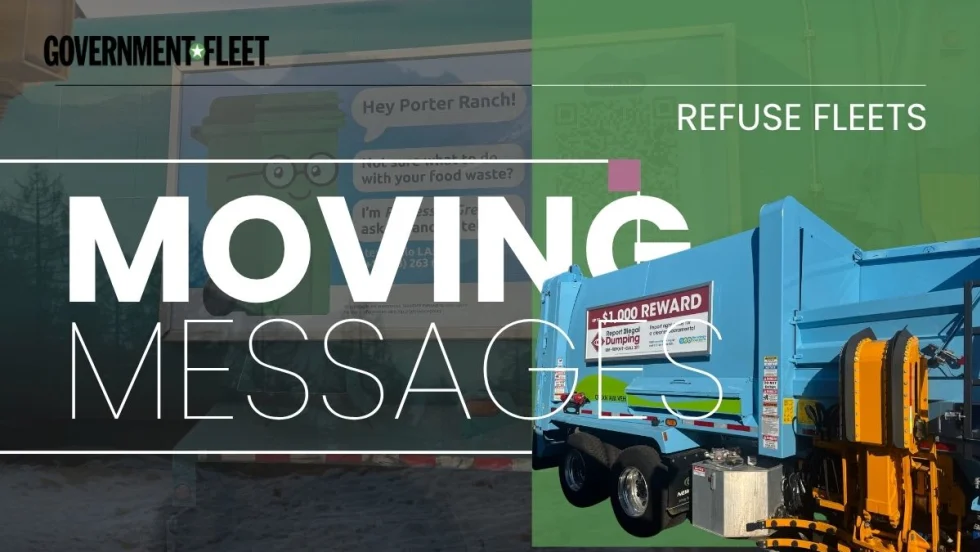
Refuse trucks can carry public messages into neighborhoods, but keeping those messages current takes planning and clear responsibility.

Who Deserves Fleet Recognition and What Could You Teach at GFX?
Who helped shape your fleet career, and what have you learned that could help someone else?

What’s Haunting Public Sector Fleets?
Public sector fleet challenges rarely happen in isolation, and addressing one often means understanding how it connects to another.
Is Keeping Older Fleet Vehicles Really Saving Money?
Is keeping vehicles longer saving money, and what happens when a diagnostic test points to the wrong fix?