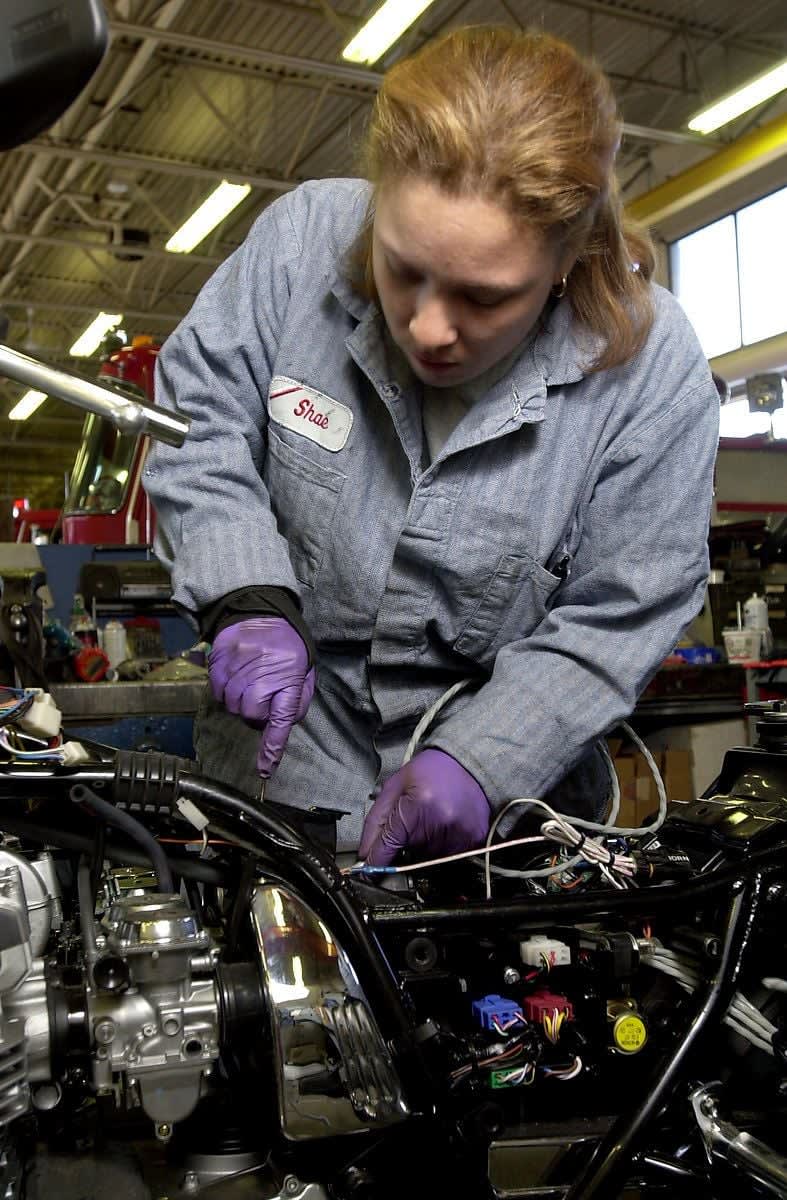
Many fleet managers get their start in the garage, fixing cars and working their way up to become the head of the department. There are benefits to this arrangement, the main one being that they’re familiar with vehicle diagnostics and maintenance. But as the public fleet profession evolves to become more about metrics, budgeting, and effective communication, there’s more of an emphasis on administration and management. That’s where fleet managers without technical backgrounds can bring their strengths to the role.
While not having shop experience can be an initial hurdle, non-technical fleet managers bring to their positions various other benefits.
Ad Loading...
At a Glance
Some advantages non-traditional fleet managers bring to their agencies are:
Office and personnel management skills
Previous relationships with user departments
A user department perspective
Objective decision-making not influenced by prior fleet relationships
Experience with databases and analyzing numbers.
Unifying Fleet Management
Mary Ann Lobdell didn’t expect to ever become fleet manager at the Port of Seattle, Wash. She has a background in inventory management. During the economic downturn around 2000, the port’s fleet manager retired, and his job was given to the inventory manager. The outgoing manager said, “You don’t have to do anything, it runs by itself,” Lobdell, now compliance and fleet manager, said. The maintenance supervisor who oversaw the repair facility reported to someone else, and departments ordered vehicles themselves, she explained.
When she took over the position of inventory manager in 2004, Lobdell got fleet and its 1,100 units along with it. She began doing research and found that fleet was being neglected. “It wasn’t being operated like a true fleet should be,” she said. “So I kind of built the program and convinced my boss there was more importance to fleet management than just the title. Then I eventually took over the auto shop, maintenance personnel, and fleet operations at the Seaport.”
To do this, she read industry publications and found prior professional correspondence with a neighboring fleet manager, Bill DeRousse, then with the City of Everett, Wash. She was able to rely on DeRousse as a resource, and he introduced her to the Public Fleet Managers Association (PFMA), where she now serves as information officer.
Lobdell said she didn’t have any problems connecting with and managing the seven technical staff members. “Even though I know nothing about mechanics, the mechanics themselves have been really good working with me and educating me,” she said. “They’re good with me managing the people, and programs, and I’m a data geek where I’ll look at trends to figure out preventive maintenance schedules and costs. But they kind of like that they’re the experts at the mechanics itself, that I’m not there to look over their shoulder at how they do their job.”
Ad Loading...
She also relies on the marine maintenance general manager, who had worked as a technician, for any technical questions.
There are benefits to having an inventory background. She had the procurement and inventory experience and was comfortable making policies and procedures and working with databases. She had staff management and office management skills and knew how to get through the red tape for purchasing and payroll within the department.
After making changes in the fleet, Lobdell realized fleet and inventory were too much work for one person. Given a choice, she chose fleet (and picked up compliance to replace inventory). “I just really found it interesting. It was totally different from what I had done,” she explained.
A User Department’s Perspective
Although her background is in hazardous waste collection management, Rory Greenfield got the rare opportunity to help build a fleet program. Greenfield is the facility and fleet manager for Metro, a regional government based in Portland, Ore. She had spent 16 years working in Metro’s solid waste program and had some experience with facilities management. After an internal audit showed a centralized fleet would yield cost savings, Metro created a fleet program in 2009. Greenfield took the helm as facilities and fleet manager in 2012 after a rocky beginning that included no dedicated administrative help.
Ad Loading...
Greenfield now works with Fleet Coordinator Ellen Leitner to oversee 112 vehicles and 200 pieces of equipment. Aside for a couple of sites with one technician or less, the fleet team outsources all maintenance and repairs to local vendors.
Greenfield said because she doesn’t have a technical person to lean on, interactions with vendors have been challenging.
“If you don’t speak vehicle and understand all the working parts and pieces of cars and what needs to be fixed, and what’s involved in maintenance, it’s lot more challenging. It’s learning a whole other language and a whole other discipline,” she explained.
Her biggest challenges have been in setting up the preventive maintenance program, understanding what should be included when setting up work with vendors, and ensuring those things are done.
To overcome this, Greenfield talks to other fleet managers to specify the scope of work vendors should do and works with trusted vendors with whom the group has built good relationships. After attending a local fleet conference, she met Fred Chun, CAFM, CPFP, fleet manager for the City of Tacoma, Wash., who introduced her to the PFMA. She has been able to reach out to Chun and other association members.
Ad Loading...
“We spent a lot of time researching and looking at other fleet programs, policies online from all over the country, and started to understand what criteria you’d evaluate on,” Greenfield said about determining a replacement cycle. “The thing that continues to be the biggest hurdle for us is understanding the mechanics and what it means when you sink $5,000 into a vehicle for a bunch of repairs. How much time or life span does that buy you?”
Greenfield and Leitner’s years of working at Metro have made other parts of their jobs easier. Both understand how the agency runs and have built relationships throughout their years there. Additionally, Greenfield came from what is now a user group, so she understands what operators out on the field think about when they look at their vehicles, how they decide what is mission-critical, and why.
By acknowledging what they don’t know and continually seeking answers in publications, at conferences, and with peers, Greenfield and Leitner are working to overcome the challenges of creating a new fleet program.
Building Trust With User Departments
The last time Noah Mehalski worked on vehicles for a living was about 20 years before, working on small engine repairs for a family fun center. When the fleet and facilities manager for Bloomfield Township, Mich., where Mehalski worked in the environmental department, left in 2009, he applied for the position. He was looking forward to the challenge of transitioning to a new building and creating a new chargeback method for the fleet.
Ad Loading...
Mehalski explained that previously, fleet charged user departments per vehicle despite the type of vehicle. In moving to a much-needed new facility (the previous garage didn’t have enough bays, so technicians were working outside), overhead costs skyrocketed, and management wanted a more accurate way to spread these costs.
He replaced a fleet manager with a technical background and began to oversee seven technicians and one parts person. Mehalski’s small engine technician experience, as well as his experience working on this own truck, helped him connect with technicians.
“I had enough of that small engine repair and knowledge to be in the know with the jargon, and that helped me a little bit. That kind of bridged the gap so I could go in there and talk about exactly what was going on and at least understand when they were explaining something,” he said.
But with a diverse fleet consisting of 240 pieces of equipment, including plows and fire equipment, the small engine knowledge only went so far. He explained that he didn’t have time frames down for larger equipment maintenance, so if someone was spending all day on a larger unit, he couldn’t tell if it was legitimate.
To overcome this, Mehalski relied on the crew leader, a respected employee who had previously been the lead mechanic, with technical questions.
Ad Loading...
“He’s been a sounding board for me to be able to see if I’m thinking in the right way about different things, to gather information from him as well. That’s been a huge asset,” Mehalski said.
He was also able to go into the new CFA database purchased in 2009 to view historical repair and maintenance times if he had doubts.
Mehalski brought several strengths to the position. He could make objective decisions without being clouded by extraneous factors such as past relationships or resistance to change. His previous work in the environmental role had already introduced him to other departments, and they had already seen him prove himself by handling difficult situations and successfully managing large projects, which allowed him to earn their trust, he said.
While he does try to learn more about maintenance, Mehalski doesn’t spend much time on it because the fleet manager role at the township has changed. Rather than understanding repairs, upper management wants him focus on management, to communicate with the township board, and to do more annual reporting, he said.
Bringing a Fresh Perspective
Ad Loading...
Leon Fourcade worked in university parking operations but after a while, he knew he wanted a different challenge. When a colleague told him about an opening in fleet services at the University of Oklahoma, Fourcade applied.
“The reason I was interested was it was truly something that would be different from anything I’d ever done before,” Fourcade, fleet services administrator at the university, said. “Second, it was a better example, I think, of operating a true enterprise. I thought with that would come an opportunity to learn more about budgeting, finances, human resources management, all of those functions that come with operating a business enterprise.”
He joined the fleet in 2004, looking forward to the construction of a new fleet facility, an opportunity to learn new technologies, and creating a new direction for the fleet department. He had worked for universities since he graduated from college, had gained management experience, and knew how to work as an ancillary service in the university setting. With the job, he began overseeing 13 employees, which included between six and seven technicians.
Fourcade said he developed relationships with technicians by visiting the shop and talking to them daily, and talking to service managers multiple times a day. “All these people are really talented at what they do, and most of them have been here for 15 to 20 years,” he said. “They know fleet really well, they know the equipment and some of the routine issues we get into. I’ve been learning from them.”
One of Fourcade’s learning curves was in discovering what the routine maintenance issues were in order to prepare for them. One example is with bus maintenance issues that tend to arise during cold weather, which could be heating and cooling systems that need repair.
Ad Loading...
Fourcade believes coming from another department at another university brings a fresh perspective to fleet. He has an open mind to new ideas, whether that’s policies or technologies, to incorporate into the operation.
As for a lack of a technical background, he said, “That’s never been my goal to [fix vehicles]. My goal is to oversee all the various departments within fleet services and make sure we’re all working together in the same direction, with the same goals, and oversee financial viability of the department.”
Keeping a vehicle longer may ease this year’s budget, but what does it cost the next one? A closer look at fleet decisions can reveal opportunities to reduce spending while protecting essential services.
From industry news and fleet management strategies to conversations with peers, Government Fleet's LinkedIn page offers public-sector fleet professionals another way to stay informed and connected.
Five fleets were honored at RTA Connect 2026 in Chicago for excellence across resource efficiency, intentional culture, risk management, and stakeholder satisfaction.
Buying fleet management software in 2027 means looking beyond features and price. As fleet operations, technology and expectations evolve, this guide explores what today’s fleet professionals should consider when choosing a system that can deliver value now and adapt to what comes next.
St. Johns County, Florida, had fleet data, but turning it into reliable decision guidance was another matter. Instead of starting over with a new fleet management system, the county connected existing tools and built a scoring system that gives managers an objective look at fleet health.