





Related: Year-Long Minneapolis Green Fleet Policy Cuts Fleet Size, Pollution
Study: Slow EV Transition Could Save Minneapolis Fleet Costs
A new electric vehicle (EV) adoption feasibility study of the City of Minneapolis’ fleet found that a slow transition to electric vehicles over the next 10 years could result in operational savings.
October 27, 2017
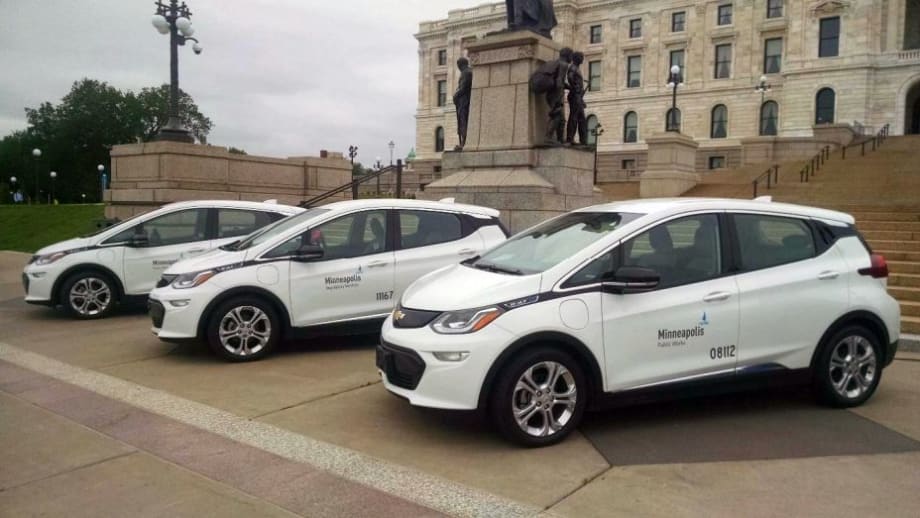
Photo via City of Minneapolis Electric Vehicle Study
3 min to read
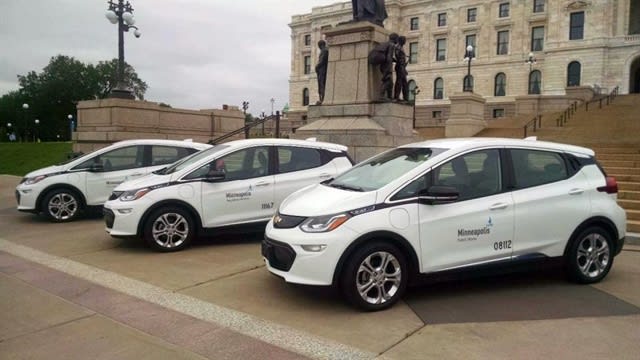
Photo via City of Minneapolis Electric Vehicle Study
A new electric vehicle (EV) adoption feasibility study of the City of Minneapolis’ fleet found that a slow transition to electric vehicles over the next 10 years could result in operational savings.
The city commissioned AECOM, an engineering firm, to determine scenarios for EV adoption. AECOM identified 980 vehicles available for conversion to EVs within a 10-year timeframe, and the report provided six scenarios for adoption, ranging from transition of 8% up to 47% of vehicles.
Capital costs for business-as-usual procurement for the vehicles over the next 10 years is estimated to be $77.8 million, while the most aggressive transition plans call for capital purchase needs of $86.5 million over the same time frame.
The most conservative approach calls for delaying transition until 2022, and then only transitioning 8% of the available fleet by 2027. This scenario assumes electric SUVs and minivans are not commercially mature enough for procurement until 2020, and heavier vehicles until 2022. The delay allows the city to save funds to cover the cost difference of EVs and results in lower lifecycle costs than the business-as-usual procurement method while still reducing roughly 4,700 metric tons of carbon dioxide. The total lifecycle cost for this method is $126.9 million, compared to $127 million for business as usual.
More aggressive timelines called for transitioning 47% of the available fleet across 10 years, for a total lifecycle cost of $131.1 million. These scenarios require $8.7 million more in capital costs than business as usual and would reduce carbon emissions by 10,600 to 10,800 metric tons.
The report used information available now and included assumptions where information was not yet available.
Council members have been aggressive in their efforts to reduce the city’s carbon footprint, the Star Tribune reported. They will decide how to move forward with the EV transition, and which scenario to choose, in a future meeting.
“Our city is forward looking,” said John Scharffbillig, director of the Fleet Services Division. “Using more eclectic vehicles will help the air quality and in turn improve quality of life here in Minneapolis.”
The report identified several steps the city can take in moving towards EV adoption, including monitoring EV use in the winter months, monitoring sources of funding for purchases, reviewing its vehicle replacement approach for new EV models, and monitoring industry progress with EVs.
The Fleet Services Division of the Public Works department manages the acquisition, maintenance, and remarketing of 1,433 on-road units and 2,132 off-road units. Its current EV fleet consists of 10 vehicles, five of which are on-road EVs.
In 2011, Minneapolis implemented a green fleet policy to reduce emissions and ensure low-emission vehicle procurement. In the years since, it has been recognized for its fleet greening efforts.
View the full report here.
More Green Fleet
Sustainability Partners, Energy Systems Group Help Albuquerque Close the Gap on its 100% Renewable Energy Goal
The eight-site, 6 MW solar project has advanced the city toward 100% renewable energy for municipal operations.
Read More →
Port Authority and CALSTART Launch $45 Million Electric Truck and Charging Programs
The programs aim to boost sustainable operations across the East Coast's busiest seaport.
Read More →
Moving Government Fleets Beyond the Vehicle Purchase: EV as a Service
A discussion on how EVaaS is moving beyond pilot programs and what fleets should consider before beginning a larger deployment.
Read More →
Moving Government Fleets Beyond the Vehicle Purchase: EV as a Service
As fleets move beyond small EV pilots, Sustainability Partners CEO Adam Cain explains how EVaaS can address the infrastructure and long-term planning required for larger deployments.
Read More →
Peterbilt Expands Sourcewell Partnership with Electric Vehicle Lineup
The agreement aims to provide streamlined procurement of Peterbilt trucks for government, education, nonprofit and tribal organizations across the United States and Canada.
Read More →
EV Adoption & Charging Challenges
Where is your fleet in the journey of vehicle electrification? If you're still looking for answers to fleet electrification you've come to the right place.
Read More →
Hawaii Passes Clean Fuel Policy
Hawaii lawmakers passed clean fuel legislation that could support renewable natural gas production, biogas-powered transportation, and lower-carbon fueling options for public and commercial fleets.
Read More →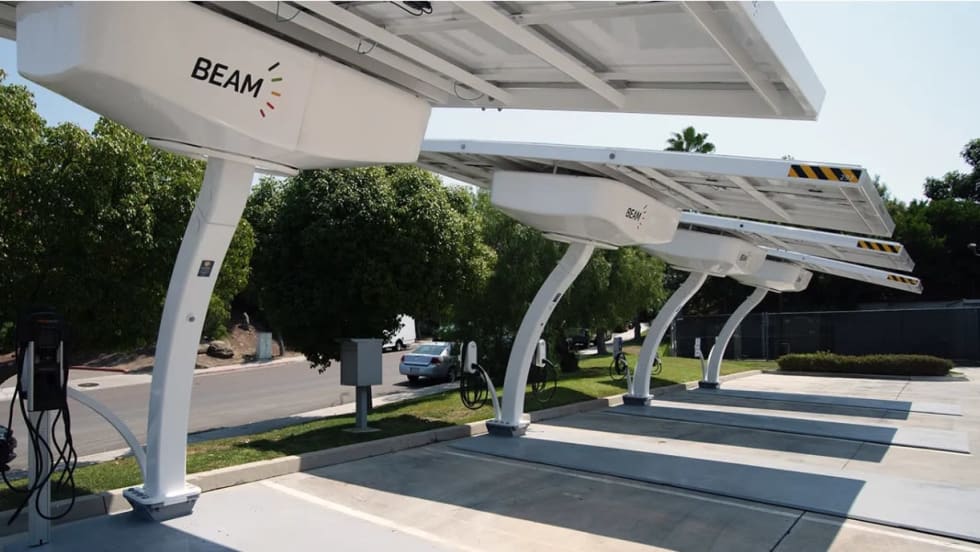
Stanislaus County Deploys Ten Beam Global EV ARC Systems to Support County Fleet Electrification
Stanislaus County deployed 10 off-grid solar-powered EV charging systems and a mobile charging trailer from Beam Global to support its electric fleet operations and emergency response flexibility.
Read More →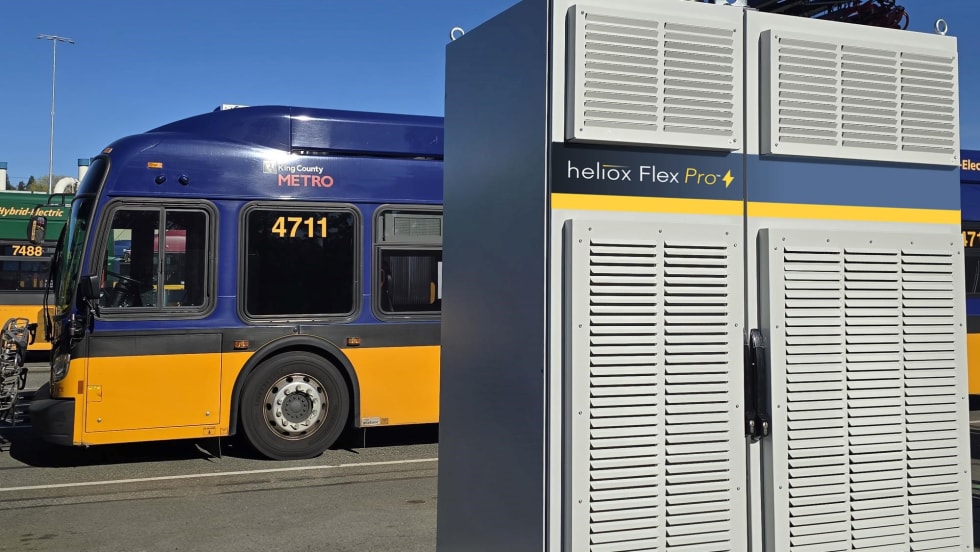
Heliox Pilots 480-kW Bus Charger with King County Metro
King County Metro is piloting Heliox’s new 480-kW Flex Pro charger to support expansion of its battery-electric bus fleet and depot charging infrastructure. The compact charging system supports pantograph and plug-in charging configurations for high-density transit operations.
Read More →