




Columbus, Ohio, Using Solar Array to Reduce Fleet Facility Costs
The City of Columbus, Ohio, has installed solar panels on its fleet facility to provide power for the building. Government Fleet spoke with Kelly Reagan, administrator for the City, about this project and how it benefits the City and the fleet department.
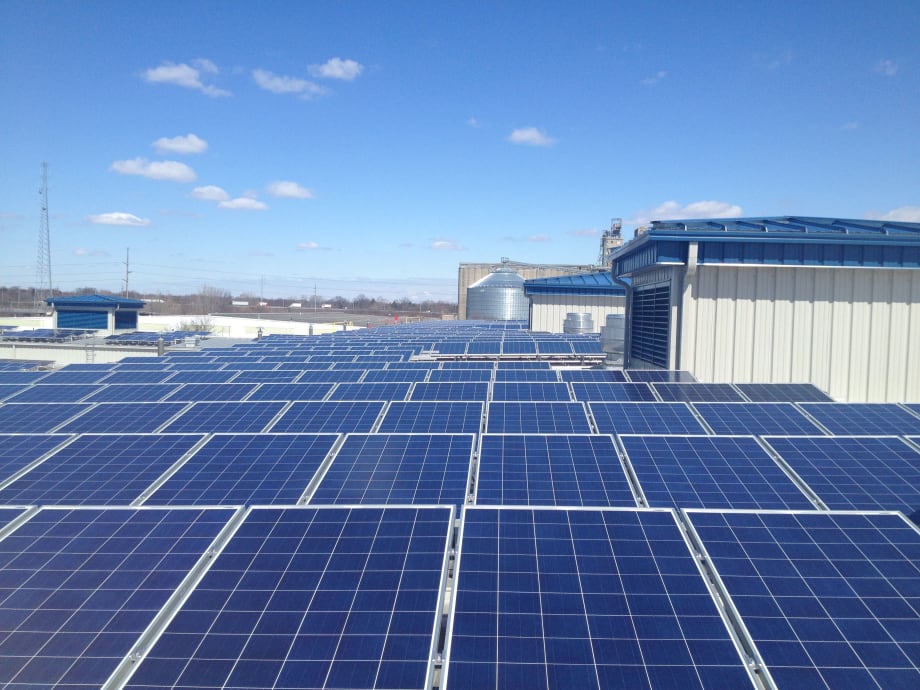
The City of Columbus, Ohio, is using solar power for its fleet facility. Photo courtesy City of Columbus.
The City of Columbus, Ohio, is using solar power for its fleet facility. Photo courtesy City of Columbus.
The City of Columbus, Ohio, has installed solar panels on its fleet facility to provide power for the building. Government Fleet spoke with Kelly Reagan, administrator for the City, about this project and how it benefits the City and the fleet department.
The solar array is made up of 2,650 solar panels manufactured by General Energy Solutions, which actually owns the array. The solar array will produce 802,000 kilowatt hours per year, and the nameplate capacity of the array is 636 kW. Each panel can produce 240 watts of DC power, which is converted into alternating current using two Advanced Energy Solutions inverters. Reagan said they will generate more than 800,000 kilowatt hours of electricity, enough to power 85 homes. These panels will also reduce the City's greenhouse gas emissions by 566 tons.
The solar array project did not cost the City anything for equipment, installation, and will not cost any recurring maintenance fees as it is part of a 20-year lease agreement with General Energy Solutions, Reagan said.

The solar panels will save approximately $23,000 annually, based on historic electricity costs for the building. Photo courtesy City of Columbus.
The solar buy-back rate is 33% less than the City’s current rate of $0.09 per kWh at $0.06. Potential annual savings is approximately $23,000, based on historical electricity costs for the building, Reagan said. He said the City’s fleet maintenance building will use most of the power the array generates. The system will feed any leftover power back to the grid, pursuant to a Net Metering and Interconnection Agreement with American Electric Power, and will be credited to the City’s usage.
The array can produce approximately 40% of the power the Fleet Maintenance Building consumes each year and provides the ongoing environmental benefit of clean power.
“For our region, solar power generation is cleaner than our utility’s coal-fired turbine generated power,” Reagan said.
Mayor Michael Coleman dedicated the project on May 9, 2013 along with elected officials (Council Member (Finance Chair) Priscilla Tyson & Franklin County Commissioner Paul Brooks, affirming the city’s continued commitment to the implementation of “green” technologies throughout the city.
Reagan said the project went fairly smoothly.
“A good bit of engineering was done in order to confirm that the current roof’s infrastructure would withstand the weight of the entire project,” Reagan said. “Once the project had investors, the installation process has been fine with the usual construction project coordination issues (scheduling, weather, material delays, etc.).”
Looking ahead, Reagan said discussions are underway to expand the array to other City-owned buildings and incorporate power from it for the City’s compressed natural gas fueling stations.
By Greg Basich
Updated 5/23/2013 with information on greenhouse gas emissions reduction and number of kilowatt hours of power produced.
More Green Fleet

Hawaii Passes Clean Fuel Policy
Hawaii lawmakers passed clean fuel legislation that could support renewable natural gas production, biogas-powered transportation, and lower-carbon fueling options for public and commercial fleets.
Read More →
Are You Tracking Your Fleet's True Total Cost of Ownership?
Bobit Business Media surveyed 190 fleet professionals and found that while most fleets are tracking costs, fragmented systems and data gaps are keeping true TCO visibility out of reach. With rising pressure to control spend in an increasingly volatile environment, the gap between what fleets think they know and what the data actually shows is wider than you might expect. See how your peers are managing costs today and where the industry still has room to improve.
Read More →
Stanislaus County Deploys Ten Beam Global EV ARC Systems to Support County Fleet Electrification
Stanislaus County deployed 10 off-grid solar-powered EV charging systems and a mobile charging trailer from Beam Global to support its electric fleet operations and emergency response flexibility.
Read More →
Heliox Pilots 480-kW Bus Charger with King County Metro
King County Metro is piloting Heliox’s new 480-kW Flex Pro charger to support expansion of its battery-electric bus fleet and depot charging infrastructure. The compact charging system supports pantograph and plug-in charging configurations for high-density transit operations.
Read More →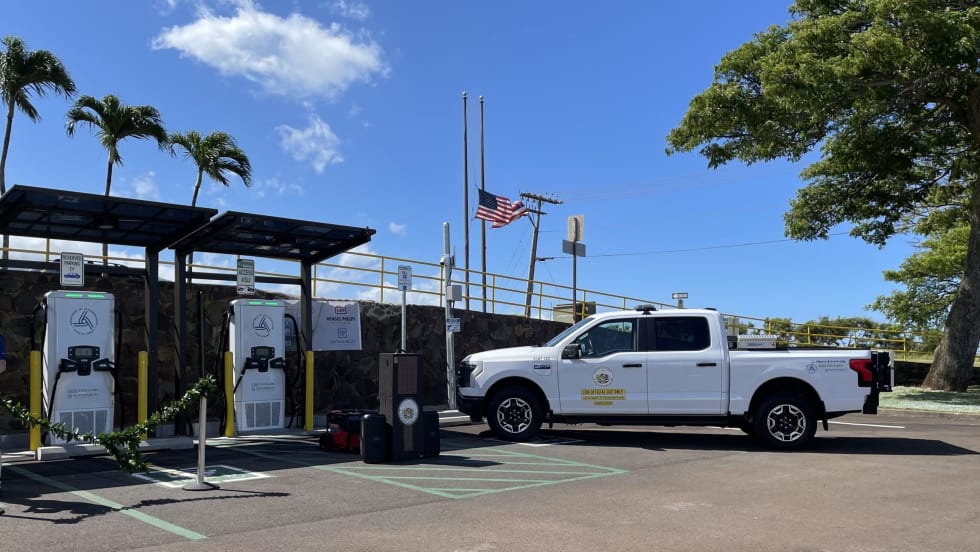
HDOT Commissions New NEVI Fast-Charging Site at Maui Kapalua Airport
HDOT, community leaders and project partners recently participated in a commissioning and blessing ceremony celebrating the opening of the new charging site.
Read More →
EV Efficiency Beyond the Battery
Eastman launched Saflex Evoca XIR.SR, an infrared-reflective interlayer for EV panoramic sunroofs designed to reduce cabin heat, improve occupant comfort, and support battery efficiency.
Read More →
Revisiting the EV Conversation | The Fleet Breakroom
EVs have been a major part of the fleet conversation for years, but where does that conversation stand now?
Read More →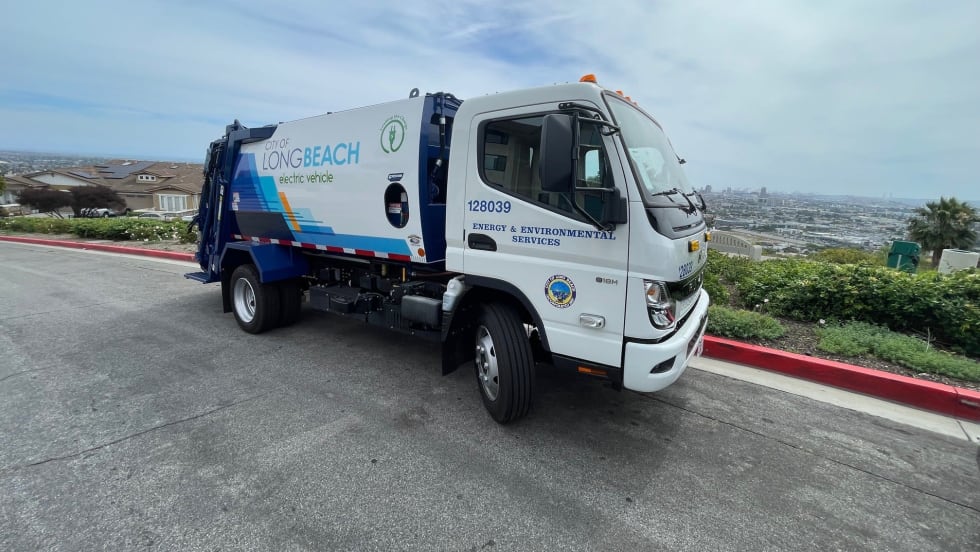
Long Beach Debuts First Electric Refuse Trucks in Fleet Pilot
The City of Long Beach, California, has unveiled its first two all-electric garbage trucks, marking the start of a pilot program as the city evaluates a broader transition away from compressed natural gas.
Read More →
Beam Global and HEVO Inc. Launch Market Ready Autonomous Charging Platform for Autonomous Vehicles
Beam Global and HEVO have launched an integrated autonomous wireless charging system that pairs off-grid solar EV infrastructure with wireless charging technology, designed to support autonomous vehicle operations and electric fleet deployments.
Read More →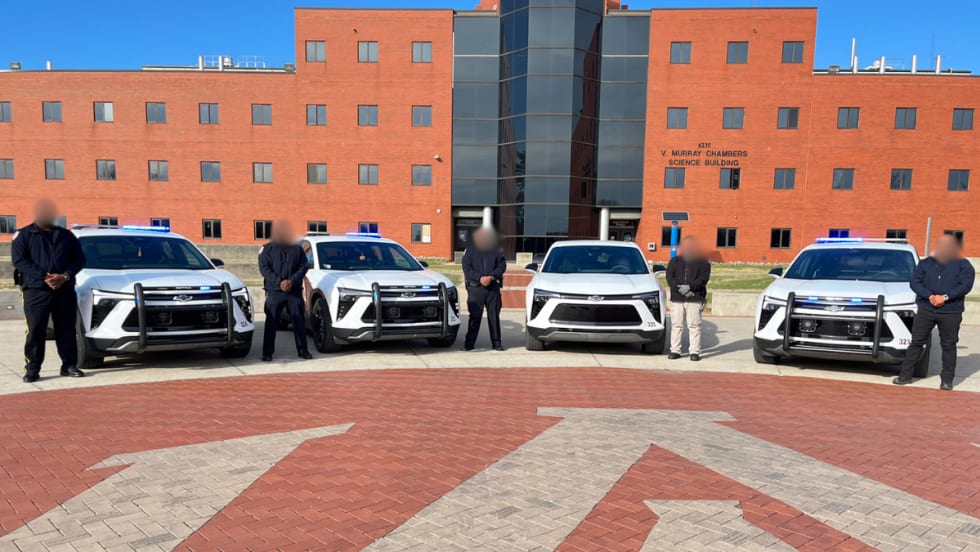
New EVs Part of Long-Term Investment Toward Zero Emissions
Alabama A&M University has added four electric patrol vehicles to its Department of Public Safety fleet, becoming the first university in the state to deploy electric police vehicles.
Read More →