




Five Key Questions of Green Fleet Management
To help managers make the right moves, they must first consider carefully the larger issues that will ultimately drive green success. This article discusses five key questions that fleet managers should ask and answer before adopting any sustainability strategies.
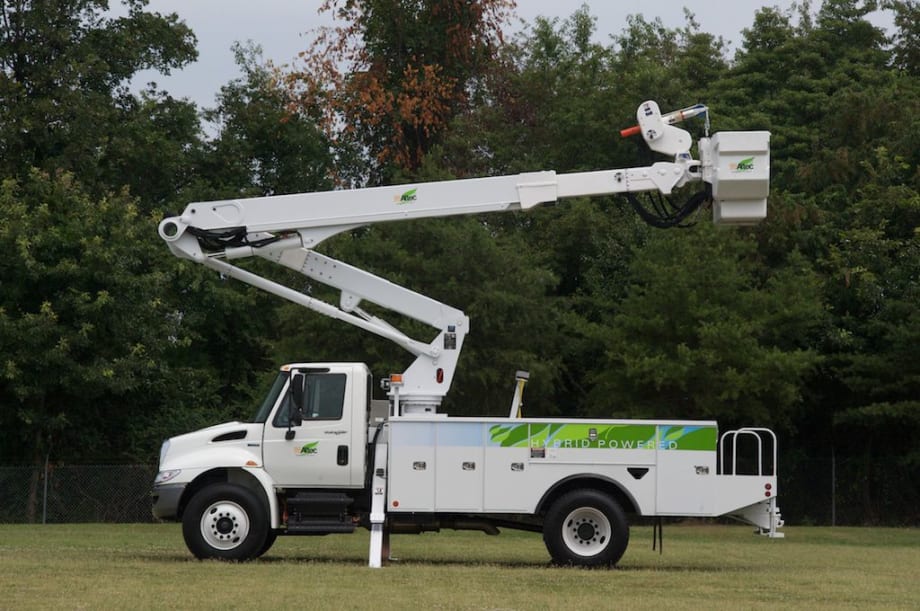
Properly defining goals will lead to a better understanding of what kind of alt-fuel vehicle will be better for the fleet. If the goal is to reduce dependence on foreign oil, vehicles such as this hybrid electric bucket truck may be a good solution.
Properly defining goals will lead to a better understanding of what kind of alt-fuel vehicle will be better for the fleet. If the goal is to reduce dependence on foreign oil, vehicles such as this hybrid electric bucket truck may be a good solution.
For fleet managers, the world has changed drastically over the past decade. However, one trend has proven to be the most elusive and persistent -- the move to green fleet management. Whether you are managing a municipal, city, state, or non-governmental fleet, the demand for increased sustainability and cost reduction is a looming new social and corporate mandate that's here to stay. Many fleet managers have a desire to go green, but either don't know where to begin or become discouraged after one or two costly steps. Most have uncovered a number of surprising gray areas in going green. To help managers make the right moves, they must first consider carefully the larger issues that will ultimately drive green success. The following are the five key questions that must be asked and answered before adopting any strategies for sustainability.
1. Does it have the right support?
Sustainability initiatives are typically generated in one of two ways: from the top down, through the support of executives and leaders, or pushed up through the ranks for leadership approval. In some organizations, the onus falls on the fleet manager to act as the prime driving force behind green initiatives. However, if the leadership is pushing for an agency-wide green movement, the hard work is done.
Regardless of the origin, once the initiative is supported, fleet managers can focus on working with peers to cultivate recommendations and benchmarking and best practice discussions to help avoid pitfalls or missteps. These discussions will help the manager develop a plan for the transition, including goals, messaging, tactics, and timing.
2. What are the realistic goals?
Properly defined goals can make the difference between success and failure in green fleet initiatives. As with any project, specific time-bound goals need to be identified in a way you can see, feel, and measure. If the primary goal is to decrease your agency's fuel consumption and corresponding carbon footprint, vehicle rightsizing could be a simple answer. Shifting to smaller vehicles that still support driver productivity or choosing a smaller, more efficient engine for the same vehicle model will support this goal. Likewise, if the agency wants to decrease its dependence of foreign oil, then compressed natural gas (CNG), propane autogas, or electric vehicles may be the better route to success. Too often the tactics, which are more tangible, tend to drive the goals.
Additionally, goals need to consider the size, age, and complexity of any fleet. For most managers, there is no easy, one-size-fits-all green solution. Most fleets are not able to decrease engine or vehicle size across the board. When dealing with a complex fleet, the manager and leadership must consider each portion of the fleet separately. One agency may be more successful transitioning to smaller vehicles or an alternative fuel type. But these moves could unintentionally increase costs and decrease efficiency for another organization. For instance, one fleet was evaluating the best ways to incorporate NGVs (natural gas vehicles). It found that deploying the Honda Civic GX natural gas vehicle made sense, but big-fuel CNG/gasoline vehicles were more useful for its pickup trucks due to vehicle applications. Agency leaders and fleet managers need to work together to develop realistic goals that work for the organization, the fleet, and the future.
[PAGEBREAK]
3. What is the real rationale for green?
Although green fleet management has been shown to save government agencies money in the long-term, cost savings is not the only case to be made. There are related benefits that can provide additional validation to help justify any investment in green. For governments, going green is one of the most immediate ways to affect public perception - otherwise known as voting behavior. And with trust and approval ratings and government budgets at historic lows, green offers agencies and fleet managers a new one-two punch of a social and spending improvement. Even the smallest efforts can affect perceptions - often before any actual savings are realized. Understanding the real rationale for the organization's green vision will help drive the right efforts for the right reasons.
4. How do we secure buy-in?
Beyond key leaders, success in green fleet management requires the support of key local managers, parallel agencies, and drivers alike. Too often, fleet managers enact new green policies in an organizational vacuum, without gaining the proper buy-in from key internal stakeholders. When enacted, these changes can be perceived as nothing more than an inconvenience, or worse, green grandstanding. But, with the proper education and communication, fleet managers can gain the cooperation of the broader stakeholder. Many states have achieved success using the official state, agency, or city website to disseminate green fleet specific policy information and educational tools to citizens, fleet managers, private sector influencers, and other stakeholders. This not only reduces barriers and resistance to green, but often increases investment and new opportunities.
To achieve this level of understanding and commitment, fleet managers must engage employees at every level. By holding meetings and discussions at local offices with department members and leadership, employees can voice concerns, discuss the application process, and play an active role in policy development. Managers should use every channel available to reach out and solicit feedback. By showing the drivers what's in it for them and involving them in the decision-making process, through committees or other means, drivers can become personally vested in the program's success. Without collaboration and feedback from the end user, the success of policies will be severely limited, if not doomed for failure.
5. How do we measure success?
Measuring green initiatives is rarely a black-and-white issue. The key is to align green metrics to the agency's existing outlined goals. Regardless of the new measures, there needs to be some benchmark of past performance. Generally six months to one year after the launch is advisable. For example, if one green metric is a reduction in dependence on foreign oil, the fleet manager could compare the agency's annual fuel usage from the previous year with the first 12 months of the green initiative.
After crunching the numbers, it is important to put the metrics in context. Although an organization may not meet or exceed the established goals in the first year, the smallest improvement can save money and lay the groundwork for long-term savings. The purpose of the evaluation process is to adjust your goals and efforts accordingly. Too often, agencies abandon goals that are not met in the first year.
Green fleet management is more than a trend; it is a strategic decision that should not be taken lightly. Asking the right questions ahead of time can save time, pain, and political capital down the road to green.
Elisa Durand serves as the assistant manager of Strategic Services, Environmental and Fuel Strategies at ARI. She can be reached at, Edurand@arifleet.com.
Related article:
How Minneapolis Implemented its Green Fleet Policy
More Green Fleet

Hawaii Passes Clean Fuel Policy
Hawaii lawmakers passed clean fuel legislation that could support renewable natural gas production, biogas-powered transportation, and lower-carbon fueling options for public and commercial fleets.
Read More →
Are You Tracking Your Fleet's True Total Cost of Ownership?
Bobit Business Media surveyed 190 fleet professionals and found that while most fleets are tracking costs, fragmented systems and data gaps are keeping true TCO visibility out of reach. With rising pressure to control spend in an increasingly volatile environment, the gap between what fleets think they know and what the data actually shows is wider than you might expect. See how your peers are managing costs today and where the industry still has room to improve.
Read More →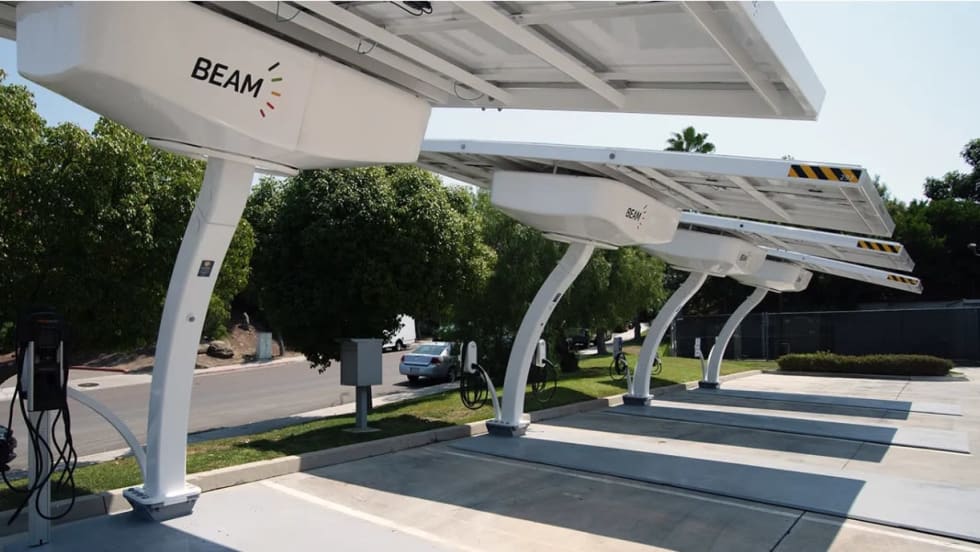
Stanislaus County Deploys Ten Beam Global EV ARC Systems to Support County Fleet Electrification
Stanislaus County deployed 10 off-grid solar-powered EV charging systems and a mobile charging trailer from Beam Global to support its electric fleet operations and emergency response flexibility.
Read More →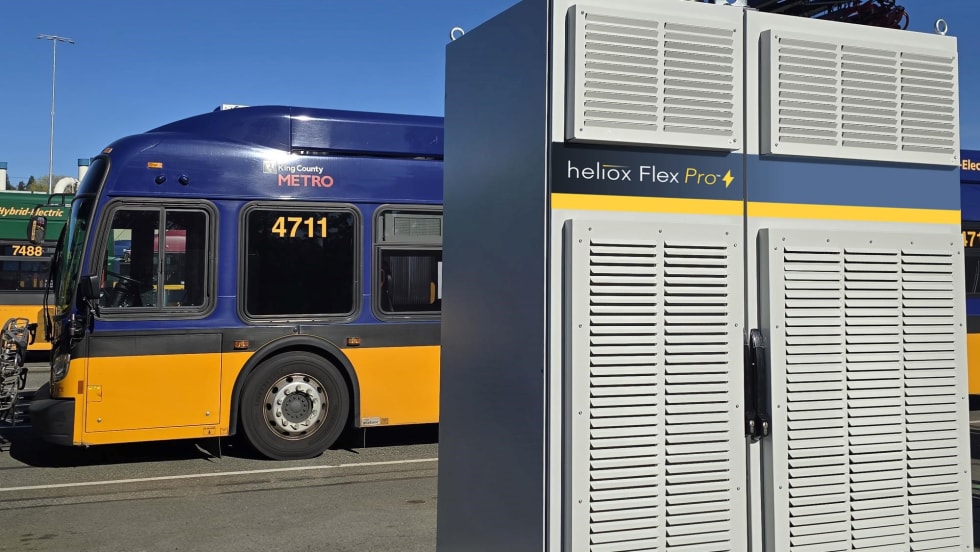
Heliox Pilots 480-kW Bus Charger with King County Metro
King County Metro is piloting Heliox’s new 480-kW Flex Pro charger to support expansion of its battery-electric bus fleet and depot charging infrastructure. The compact charging system supports pantograph and plug-in charging configurations for high-density transit operations.
Read More →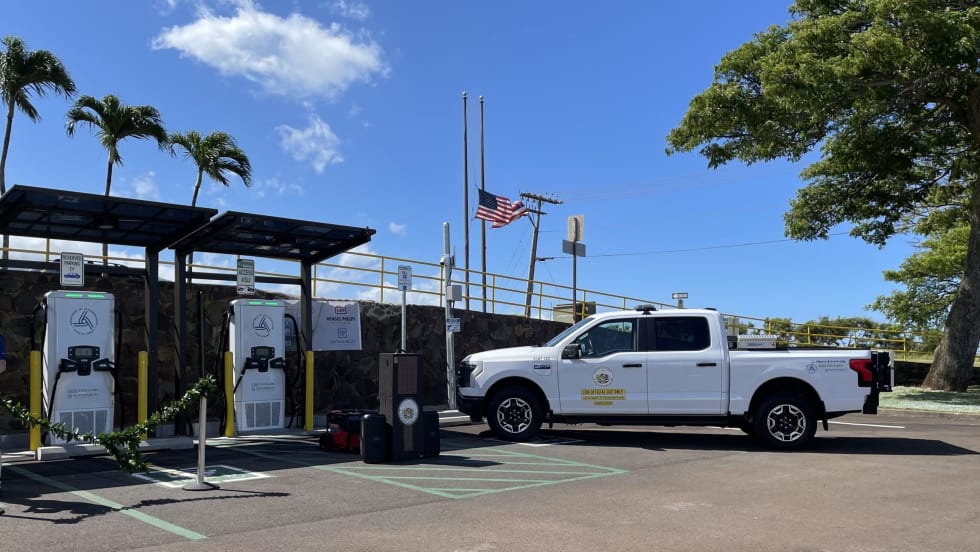
HDOT Commissions New NEVI Fast-Charging Site at Maui Kapalua Airport
HDOT, community leaders and project partners recently participated in a commissioning and blessing ceremony celebrating the opening of the new charging site.
Read More →
EV Efficiency Beyond the Battery
Eastman launched Saflex Evoca XIR.SR, an infrared-reflective interlayer for EV panoramic sunroofs designed to reduce cabin heat, improve occupant comfort, and support battery efficiency.
Read More →
Revisiting the EV Conversation | The Fleet Breakroom
EVs have been a major part of the fleet conversation for years, but where does that conversation stand now?
Read More →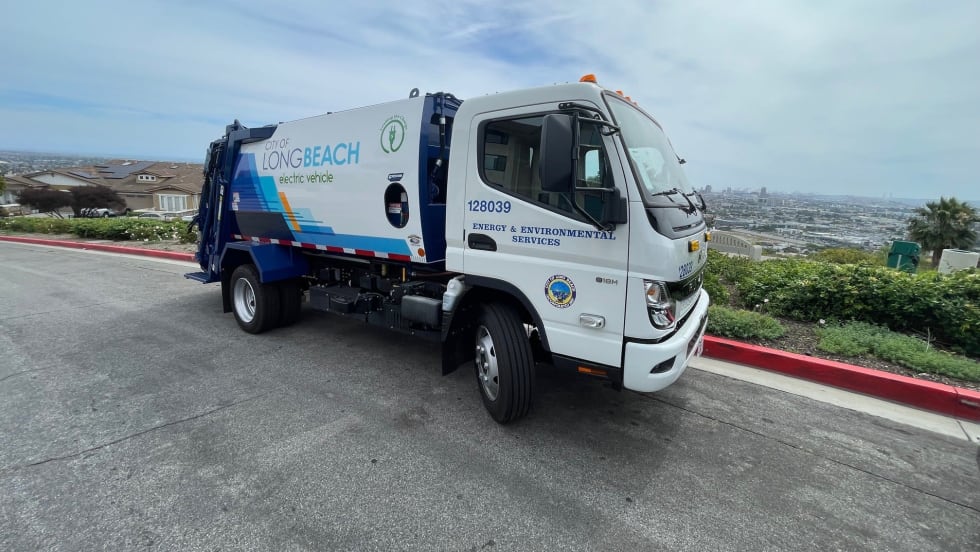
Long Beach Debuts First Electric Refuse Trucks in Fleet Pilot
The City of Long Beach, California, has unveiled its first two all-electric garbage trucks, marking the start of a pilot program as the city evaluates a broader transition away from compressed natural gas.
Read More →
Beam Global and HEVO Inc. Launch Market Ready Autonomous Charging Platform for Autonomous Vehicles
Beam Global and HEVO have launched an integrated autonomous wireless charging system that pairs off-grid solar EV infrastructure with wireless charging technology, designed to support autonomous vehicle operations and electric fleet deployments.
Read More →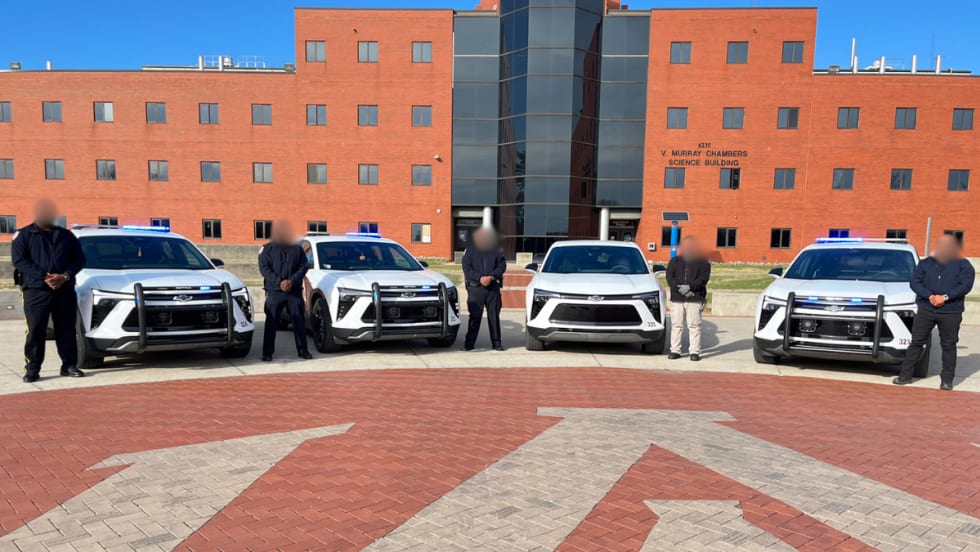
New EVs Part of Long-Term Investment Toward Zero Emissions
Alabama A&M University has added four electric patrol vehicles to its Department of Public Safety fleet, becoming the first university in the state to deploy electric police vehicles.
Read More →