




Overtime: A Cost-Effective Solution to Improve In-House Productivity
If heavy workloads exceed a typical eight-hour workday, offer your employees overtime rather than hire a new person. It may be more cost-effective.

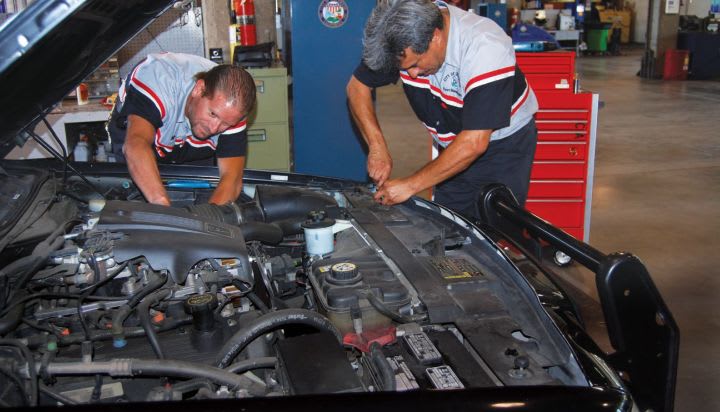
File photo
Is it more cost-effective to hire a new employee or work your existing staff overtime? The answer can be found in analyzing the employee productivity and workload.
For the purpose of this article, our analysis is based on the assumption that 5 percent of straight paid hours is considered an acceptably moderate amount of overtime (OT). To calculate an annual OT goal, first determine the total annual paid work hours per employee:
40 hours/week x 52 weeks/year = 2,080 annual paid work hours
Next, calculate the 5 percent annual OT goal:
2,080 x 0.05 = 104 annual OT hours
On average, the 104 hours annual OT goal amounts to two hours per week, per employee.
Breaking Down the Hours
The next step is calculating the total actual at-work hours. This calculation involves two basic steps.
Determine employee personal time — vacations, sick-leave, training, and holidays. Personal time is not considered at-work time. In general, annual personal time per employee totals 40 days or 320 hours (eight hours per day). Personal time hours are then subtracted from the 2,080 total annual paid hours:
2,080 – 320 = 1,760 at-work hoursDeduct time spent on indirect activities such as paperwork, toolbox talks, diagnostic times, restroom and coffee breaks, and cleanup time. This nonproductive time totals approximately two hours per day, five days a week, for the 47 weeks of at-work time or 470 hours.
1,760 at-work hours – 470 indirect activity hours = 1,290 potential productive hours
Determining Productivity
To determine hours of productivity per employee, we use two work classifications: scheduled and unscheduled. The productivity of each classification is calculated, and then combined for an annual total of productive hours per employee.
Scheduled work comprises defined, routine tasks completed in a specific time frame. As such, each hour of scheduled work equals one hour of productivity. We estimate one-third of our shop work is scheduled.
1,290 potential productive hours ÷ 3 = 430 hours of productivity from scheduled work
1,290 – 430 = 860 hours of unscheduled work
Unscheduled work usually takes three times longer to complete than scheduled work because it involves different, often nonroutine tasks. The 860 hours of unscheduled work realizes 287 hours of actual productivity:
860 ÷ 3 = 287 hours of unscheduled work
For the purposes of this article, our shop employees are paid $15 per hour — $30,000 average annual pay. Benefits, about 33 percent of total wages — $10,000 or $200 per week, must be added. Factor in Social Security, retirement, 401K matching, and health benefits and the cost of a $30,000 employee actually amounts to $50,000 per year.
Determining the direct labor rate charged customers is a two-step calculation. First, the total paid hours of 2,080 are divided by the 717 total productive hours:
2,080 ÷ 717 = 3 (approximately)
Second, multiply three by the $15 per hour employee rate:
3 x $15 = $45 direct labor rate
Extra Hours vs. Extra Employees
At what amount of OT work does hiring a new employee become cost-effective? With the target total of 717 annual productive hours per employee, a total of seven employees working the suggested maximum two OT hours per week comes closest to the goal:
2 hours OT/employee x 7 employees x 52 weeks = 728 annual productive hours
Of course, fewer employees working more OT hours will also approach the 717-hour productive goal. If we increase the 430 hours of scheduled work per employee, that employee is accomplishing more productive work within the 1,260-hour window. Each hour of increased scheduled work reduces three hours of unscheduled work to one.
Calculating productive hours, using a target of 5 percent OT per employee, allows us to evaluate workload — to operate more productively in-house rather than increase our staff.
When increasing staff becomes cost-effective in terms of productivity, we must also realize that a new shop team member does not immediately provide 717 hours of net productivity within the 1,290-hour window. The learning curve a new employee experiences means all work that employee performs must be considered unscheduled, the less productive shop work classification.
One-third of an employee’s total potential productive hours — 430 — is the net productivity that can be expected of a new employee rather than 717 total net hours the experienced staff member produces.
The deciding factors in our OT versus new employee analysis are employee costs and facility overhead, which includes work space, tools, heat, light, electricity, uniforms, supplies, employee benefits, personal off-time, training, productive time, and other direct or indirect employee costs. The cost of a new hire includes the indirect costs and his or her actual productive costs.
Benchmark Against 5 Percent Overtime Goal
The 5-percent OT is a benchmark to measure what we are doing, how we can do it better, and if the workload is increasing. For a workload that’s temporarily increased, it’s more productive to use in-house staff to cover the temporary peak work with OT — or vendor it out and improve in-house staff productivity with scheduled work. Unscheduled work is a good choice to vendor out if the vendor can do it more cost-effectively.
In summary, use the 5-percent OT goal to cover immediate need and evaluate future options. The 5-percent goal is also a useful "flag" to proactively pay attention to a symptom, signaling us to examine the root cause and initiate corrective action.
Use the following rule of thumb:
Measure, watch, and pay attention.
Measure what’s meaningful.
Watch everything.
Pay attention to the key symptoms.
More Maintenance

Drive More Profit with Greater Fleet Uptime
Fleet downtime costs money. JASPER helps keep vehicles on the road with quality remanufactured components, fast nationwide delivery, and reliable solutions that boost uptime and profitability.
Read More →
The Fleet Efficiency Gap: Where Budgets, Utilization & Risk Collide
Departmentally assigned vehicles often create hidden costs through underutilization, poor visibility, and increased administrative burden. This whitepaper explores how shared motor pool strategies help fleets reduce costs, improve accountability, and optimize vehicle utilization.
Read More →
How Public Fleets Earn Public Trust and Operate Under Scrutiny
Taxpayers judge public services by what they can see. Learn how state and local government fleets are using data and transparency to demonstrate reliability, strengthen accountability, and build public confidence in every mile driven.
Read More →

Smart Seasonal Maintenance Tips for Government Fleets
Government fleets carry extra weight, and routes, schedules, and public trust depend on reliability. A systematic spring checklist keeps vehicles in service when agencies need them most.
Read More →
BendPak Debuts 12APF Two-Post Lift for Tall Vehicles in Low-Ceiling Shops
New 12,000-lb. open-top lift designed for commercial vans, trucks, SUVs, and fleet vehicles
Read More →
Reducing Risk and Improving Safety in Public Sector Fleets with Advanced Driver-Assist Technology
Public sector fleets face increasing pressure to improve safety, reduce liability, and operate efficiently. See how advanced vehicle technologies are helping agencies protect drivers, the public, and their budgets.
Read More →
Fleetio Launches AI Service Advisor to Simplify and Accelerate Fleet Maintenance Approvals
Fleetio launched an open beta of its AI-powered Service Advisor tool, designed to help fleet managers streamline repair approvals and reduce vehicle downtime.
Read More →
The Future of Government Fleet Technicians with Mike Cleary
Mike Cleary shares what government fleets need to know about today’s technician workforce, EV and hybrid service demands, recruiting skilled talent, and making training dollars go further.
Read More →
3 Ways Fleet Tech Builds Public Trust
Managing a state or local fleet comes with levels of accountability private companies don’t have. Read how modern fleet technology helps elevate visibility and safety to strengthen community trust.
Read More →
Announcing Integration With Faster Asset Solutions
Faster and TransitCheck integrate inspection and maintenance workflows to help fleets address defects faster and improve compliance tracking.
Read More →