




GFX 2013: How to Implement a Take-Home Vehicle Policy
At the 2013 Government Fleet Expo, John Webster of Salt Lake County, UT, and other attendees, went over real-world examples of how to implement a policy for take-home vehicles. What's your criteria?
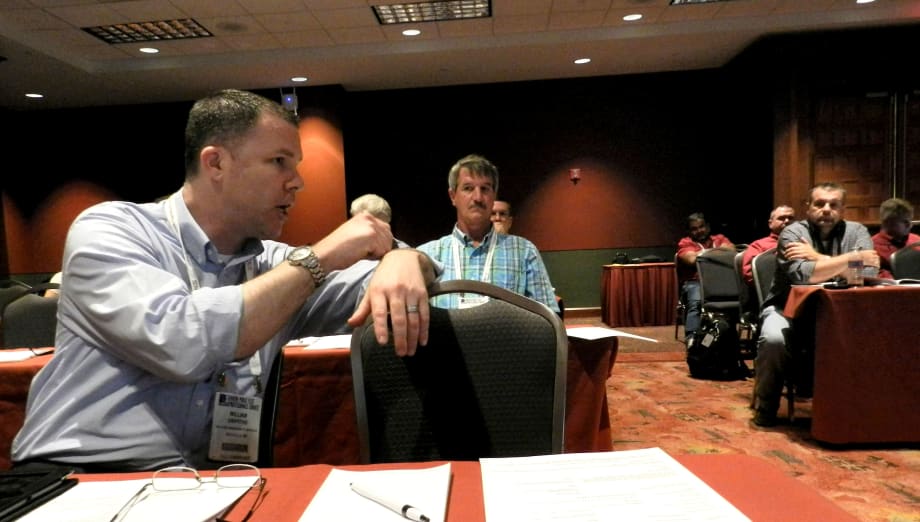
Audience members shared their own experiences, in what became a discussion on the challenges faced when implementing a policy. William Griffiths, division chief, Fleet Management Services in Montgomery County, Md., suggested that mileage logs should be required to help enforce take-home policies.
Audience members shared their own experiences, in what became a discussion on the challenges faced when implementing a policy. William Griffiths, division chief, Fleet Management Services in Montgomery County, Md., suggested that mileage logs should be required to help enforce take-home policies.
Many counties and public fleets allow employees to take vehicles home. But what does this option cost a fleet, and how do you ensure that this option doesn't get abused? At the 2013 Government Fleet Expo, John Webster, CPFP, Salt Lake County, Utah, went over what he has learned in implementing a policy on take-home vehicles, and how fleets can do the same.
Webster first explained that you should set a criteria on what situations consitute a vehicle to be taken home. This criteria should include how many miles out a vehicle can go, though he said the best practice is keeping vehicles within the county line. He said that fleet managers must ask themselves why they allow take-homes.
"Policymakers can change policy; it's hard to police them, so you have to have a set criteria for yourself," Webster said.
In order to prevent too many personal requests from changing your proposal, it's important to have every piece of data and analysis on why you've selected that criteria. "Make sure those policymakers are made aware on what the cost is to allow these take-home vehicles," Webster said.
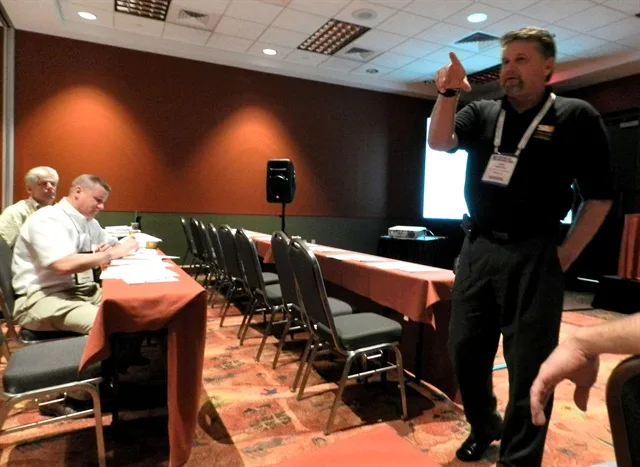
John Webster, CPFP, Salt Lake County, Utah, discussed why it's important for a fleet to have set criteria on when take-home vehicles should be allowed.
In the case of Salt Lake County, Webster explained that when he first proposed a policy, it went to a steering committee four times before it was voted on by the county board. Because of personal requests, "it gets watered down," he said.
He admitted that this can be difficult since oftentimes it's the policymakers who have their own requests that deviate from the proposed criteria.
But, if you have a cost-analysis prepared for every department, then it's easier for them to see why a policy is necessary for take-home vehicles. "A cost-analysis is one of the biggest ways to influence a decision," Webster said.
This is also why he suggests that every employee looking to take a vehicle home should have to fill out a form — essentially an application — and that these requests should be required to fill out or reviewed annually. This form, he said, helps enforce the policy.
In reviewing forms in addition to creating a policy, Webster said that a steering committee — if not already available — should be created, or a fleet board. "However you want to route it," he said.
Audience members also made their own suggestions on how to enforce the policy once it's created. One suggestion, for example, was to require a mileage log and/or use telematics to track vehicle use.
More Operations
Who Deserves Fleet Recognition and What Could You Teach at GFX?
Who helped shape your fleet career, and what have you learned that could help someone else?
Read More →
What’s Haunting Public Sector Fleets?
Public sector fleet challenges rarely happen in isolation, and addressing one often means understanding how it connects to another.
Read More →
Is Keeping Older Fleet Vehicles Really Saving Money?
Is keeping vehicles longer saving money, and what happens when a diagnostic test points to the wrong fix?
Read More →
How Smart Fleet Strategy Can Help Local Government Agencies Do More with Less
Keeping a vehicle longer may ease this year’s budget, but what does it cost the next one? A closer look at fleet decisions can reveal opportunities to reduce spending while protecting essential services.
Read More →
Connect with Government Fleet on LinkedIn
From industry news and fleet management strategies to conversations with peers, Government Fleet's LinkedIn page offers public-sector fleet professionals another way to stay informed and connected.
Read More →
Town of Queen Creek Named Most Successful Fleet Award Winner of Inaugural RTA Fleet Success Awards
Five fleets were honored at RTA Connect 2026 in Chicago for excellence across resource efficiency, intentional culture, risk management, and stakeholder satisfaction.
Read More →
A buyer's guide to fleet management software in 2027
Buying fleet management software in 2027 means looking beyond features and price. As fleet operations, technology and expectations evolve, this guide explores what today’s fleet professionals should consider when choosing a system that can deliver value now and adapt to what comes next.
Read More →
Hazard Alerts, Fleet Car Sales Rise and a New Shuttle Concept
Fleet car sales doubled, but the bigger picture tells a different story in this week’s roundup.
Read More →
How St. Johns County Turned Fleet Data Into Better Replacement Decisions
St. Johns County, Florida, had fleet data, but turning it into reliable decision guidance was another matter. Instead of starting over with a new fleet management system, the county connected existing tools and built a scoring system that gives managers an objective look at fleet health.
Read More →
Fleet Forward Conference Introduces One-Day Passes for 2026
New one-day registration lets fleet professionals attend Tuesday, Wednesday, or Thursday, with passes available for $249.
Read More →