




Using Data as a Tool: How the Smithsonian's FMIS Helped Streamline Operations
The Smithsonian Institution's fleet department has utilized the data harvested by its fleet management system to reduce fleet size, reduce administrative time, hire more technicians, and improve overall operations.


At a Glance
The Smithsonian Institution's Web-based fleet management information software allowed it to:
Reduce its light-duty fleet from 600 to 490 units.
Decrease administrative time devoted to records to one analyst, freeing others up for alternative tasks.
Produce accurate and detailed statistics for federal reporting.
Automate preventive maintenance alerts for customers.
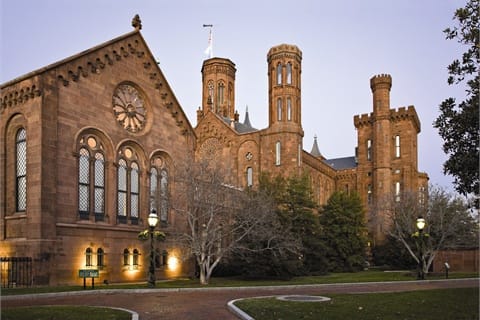
The Smithsonian Institution is the world's largest museum complex and research organization, comprised of 19 museums, nine research centers, and the national zoological park. Along with this comes a diverse and spread-out fleet comprised of more than 1,500 units ranging from low-speed electric vehicles all the way to construction equipment. While a good portion of these units and maintenance facilities are located in Washington D.C., fleet assets and facilities are also located in Tucson, Ariz., and Panama.
The vehicles and equipment are used for facility support, law enforcement, animal transportation, administrative purposes, road maintenance, and agricultural work, in addition to other uses. A fleet this large and diverse requires special attention, and just four years ago, the Smithsonian didn't even have a fleet manager in charge of the museum's vehicular assets. That changed when a review of the fleet recommended the creation of a fleet manager position, and Bill Griffiths was hired. Under Griffiths' leadership, the Smithsonian purchased the FleetWave Web-based fleet management solution from Chevin Fleet Solutions that produces the data the agency used to optimize its fleet. In the past four years, according to Griffiths, the fleet has reduced its unit size, eliminated tedious hours of manual recording, provided the metrics and analysis needed to back up the department's requests for new vehicle purchases and technician hires, more accurately determined preventive maintenance cycles, and improved customer service.
Creating a New Fleet Department
Griffiths is not only the Smithsonian's fleet manager, but also its transportation director. He has 20 years of experience in fleet, working first in the military as a heavy equipment mechanic and moving into a management position. He was most previously fleet manager for the White River National Forest in Aspen, Colo.
Because there was no previous fleet department, Griffiths was able to construct the department in a way he thought most efficient. The previous staff handling fleet consisted of four administrators, called transportation specialists, one of whom handled fleet maintenance. He consolidated all the fleet operations and developed a replacement policy where one didn't exist before, developing classes, lifecycles, and even a preventive maintenance (PM) program.
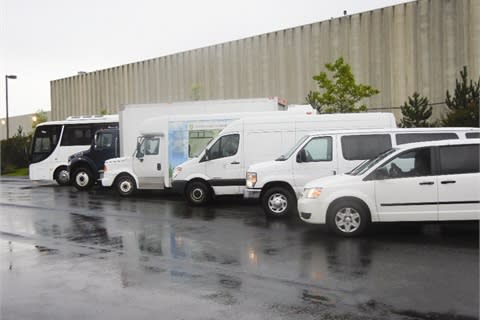
The Smithsonian's fleet consists of about 1,500 units ranging from passenger vehicles to buses to construction equipment.
Griffiths also began looking into purchasing a fleet management system. He had experience in the past using various systems and ended up choosing FleetWave. One of the benefits of the Web-based system, as opposed to a Web-enabled one, is that users around the world are able to access the up-to-date data, Griffiths said. This point is important considering the institution's spread-out maintenance locations. Another point was that the system was configurable to the needs of the organization. Fleet chose to host the application on its own data center to comply with organizational standards.
Implementation was swift - the fleet department issued a purchase order in September 2007 and went live with its maintenance, fuel, and asset modules in April 2008.
"That just goes to show you the determination of our team, of working long hours to sort out PM cycles, getting all the assets squared away, all the vehicle identification numbers decoded, and all the supporting documentation to set up the basic system to go live with it in April," Griffiths said. Chevin worked with the department to conduct business process reviews, design and test interfaces, migrate data from the current system, install test and production environments, and provide on-site training.
Fleet has been steadily expanding to incorporate all FleetWave modules. It began with commercial fuel cards and has since incorporated its in-house fuel system, a driver module, and tying its parts inventory system into the PM program.
Seeing Immediate Results
One of the benefits of the fleet management system was immediately clear: reduced administrative time through automated data tracking. The entire fleet staff consists of 30 personnel, and of these, only four are administrative, one of which is an analyst, Griffiths said.
The fleet is required to report annually to the Department of Energy and to the General Services Administration into FAST, the Federal Automotive Statistic Tool, which includes types of vehicles, class, fuels, mileage, cost, fuel cost, maintenance, and indirect costs. Before the automated system, three staff members collected this information manually using spreadsheets and documents. After the system was implemented, only one staff member was needed for this task, and other administrators are now able to take on other duties. The software generates 40 metrics each month, which also helps fleet create monthly reports for senior leadership and customers.
"It's streamlined our operations and processes, which has allowed us to be more efficient and utilize our personnel more effectively," Griffiths said.
In addition to federal and monthly reporting, the data has also been essential in helping improve the Smithsonian's vehicle purchases and PM program. Preventive maintenance is now automated, and customers receive an email saying their equipment is due for PM. They are then able to go online to schedule appointments for their vehicles, according to Griffiths.
With the maintenance module, when a work order is generated, it goes to the technician's work station, where he can view vehicle history and perform the necessary work. For repairs, technicians now use Vehicle Maintenance Report System (VMRS) codes to break down the task and document repairs.
Data Provides Unparalleled Value
"For me, ROI has been more than just dollars and cents," Griffiths said, adding that the ability to access so much data has brought unparalleled value to the fleet operation. "What the system has enabled us to do is to make genuine fact-based decisions and to be able to see where our money is going. You can't put a price tag on that."
For example, in the past, vehicle replacement decisions were made from recommendations from the maintenance superintendent, which was based on vehicle condition. More detailed information such as maintenance costs, fuel consumption, utilization, and mission requirements allows fleet to accurately determine best replacement cycles.
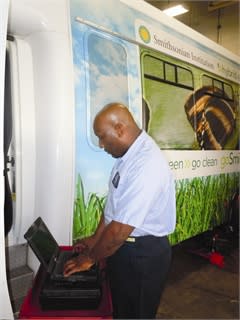
Fleet Technician Troy Smith updates software on one of the institution's hybrid-electric buses.
Another way the fleet has benefited from its data is by using it as backup for requests such as increased staffing levels. "We didn't have enough technicians, and we weren't able to demonstrate the need based off the maintenance workload or the number of vehicles. [The data] has enabled me to be able to get additional positions for the maintenance side to make sure we properly maintain our fleet," Griffiths said.
Increased data has also helped fleet obtain a replacement budget. Not uncommonly, management and user departments saw vehicle replacement as an expense they'd rather avoid. Using data from its fleet management system, Griffiths said he was able to demonstrate through maintenance costs and lifecycle costing that fleet needed to replace its vehicles. Being able to determine true lifecycle costs also allows the fleet to plan more effectively.
In addition, the system's easily accessible data has allowed the agency to reduce its light-duty fleet from 600 to 490 and reduce petroleum consumption by giving fleet a better handle on vehicle utilization and maintenance, Griffiths said.
The agency is currently testing out a motor pool, with online reservations and a key box. The fleet has four pools in the Washington D.C. area, totaling about 80 vehicles. Key boxes will be located at each pool location, accessible through RFID technology.
In addition, fleet is also working to further improve utilization and optimize routing through telematics. According to Griffiths, normal mileage requirements are lower than a municipality considering the campus environment, and "using telematics has allowed us to drill down to number of trips as a utilization standard, versus miles driven." Griffiths is now looking to integrate the telematics software into the fleet management system. The telematics system already sends out alerts from diagnostic trouble codes (DTC) about items such as transmission or turbo sensors. What Griffiths wants is for the system to automatically generate a work order, eliminating one more manual step.
Looking for Further Improvements
Considering all the benefits that data has brought to the fleet, it's no wonder Griffiths is proud of the FMIS he helped implement and the goals it has helped the fleet attain. But he's still looking for more improvements.
As a quasi-federal entity funded mostly by the federal government (and also through grants, endowments, and donations), the Smithsonian is held to strict sustainability standards, including petroleum reduction, alternative-fuel vehicle acquisition and alt-fuel use, and the purchase of low greenhouse-gas-emitting vehicles. Griffiths said the institution has exceeded the fiscal-year 2020 mandate of 20 percent petroleum reduction from the 2005 baseline. In fact, it had achieved a 30-percent reduction by 2010, and this number has increased since then.
Using data from the FMIS, Griffiths constantly looks into how he can improve operations, examining technician productivity, parts reliability, fuel economy, alt-fuel use, etc. The fleet's goal is to get 80 percent of work orders done within 12 hours. Running a one-shift facility, the fleet is already at 78 percent and looking to hit its target.
"I'm a maintenance guy by trade so for me, it's all about customer service and returning that piece of equipment back to the user and making sure we're as efficient as possible," Griffiths said.
Source:
Bill Griffiths, fleet manager, Smithsonian Institution
More Software

Turn Fleet Data Into Smarter Decisions
Fleet leaders have access to more operational data than ever, but disconnected systems and unclear metrics often slow decision-making instead of improving it. This article outlines five practical steps fleets can take to transform fragmented data into actionable insights that improve planning, safety, utilization, and long-term performance.
Read More →
How Public Fleets Earn Public Trust and Operate Under Scrutiny
Taxpayers judge public services by what they can see. Learn how state and local government fleets are using data and transparency to demonstrate reliability, strengthen accountability, and build public confidence in every mile driven.
Read More →
Ford Adds AI Fleet Assistant to Ford Pro Telematics Platform
AI-driven insights allow fleet managers to query vehicle data, track performance trends, and identify maintenance needs across connected fleets.
Read More →
Report Finds 53.3% of Fleets Researching or Piloting AI Capabilities
New benchmark data highlights the cost pressures, maintenance delays, and workforce constraints shaping fleet operations in 2026.
Read More →
3 Ways Fleet Tech Builds Public Trust
Managing a state or local fleet comes with levels of accountability private companies don’t have. Read how modern fleet technology helps elevate visibility and safety to strengthen community trust.
Read More →
Geotab Expands Sourcewell Contract Adding Video Telematics, Asset Tracking, Data Analytics Solutions for Public Sector
Geotab has expanded its cooperative purchasing contracts with Sourcewell to include additional telematics and data solutions for public sector fleets.
Read More →
Kooner Fleet Management Launches FleetIQ, A Next-Generation Fleet Maintenance Tech Platform
Kooner Fleet Management Solutions has launched FleetIQ, a new platform that uses predictive analytics and automation to improve fleet uptime, streamline service operations, and support data-driven decision-making.
Read More →
Streamlined Maintenance and Repair Options Now Available for Canadian Fleets
Fleetio expands its Maintenance Shop Network into Canada, giving fleets access to verified repair shops, real-time tracking, and automated approvals.
Read More →
From Disadvantaged to Data-Driven: Understanding AI and Its Role Within Small Government Fleets
Can artificial intelligence help smaller municipal fleets address the limitations of traditional total cost of ownership methods?
Read More →
Distracted Driving and Samsara AI Safety
The U.S. public sector continues to use AI technology to combat the dangers of distracted driving.
Read More →