




Getting the Most from Your Fleet System
When implementing a fleet system, fleets commonly focus on basic features to meet core needs, missing such valuable tools as warranty management, shop scheduling, flat-rate labor times, parts inventory stocking, and reporting.
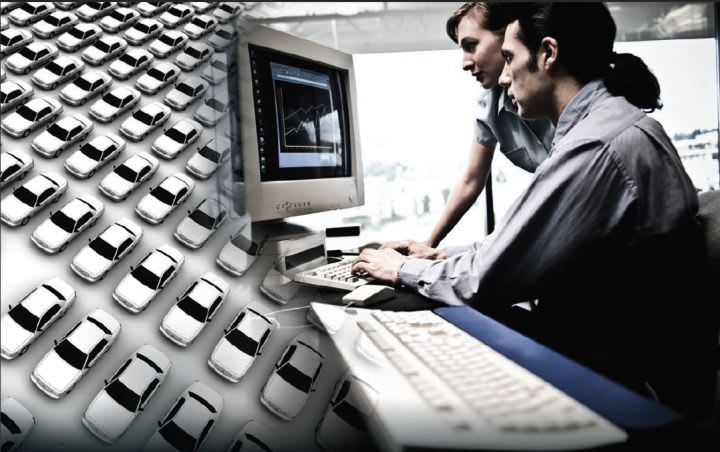
Fleet management software is much like the human brain, and we only use a fraction of its potential. The most underutilized fleet systems tend to be those in which initial software setup, training, and use were designed to meet the operation's basic business requirements (i.e., just enough effort and resources to get things back to business as usual).
This common scenario occurs when, during a system's implementation, the organization focuses solely on getting the system up and running to meet core business needs, such as work orders, parts inventory management, and basic reporting. The system then tends to remain in a remedial state with little emphasis on rolling-out features such as warranty management, shop scheduling, flat-rate labor times, part kits, part catalogs, inventory stocking levels, accident management, motor pool scheduling and administration, and management reporting.
Identify Unused Features & Develop Implementation Plans
To get the most from a fleet system, define a list of features in the system that are not fully implemented or are used poorly. Select two to four features that can be implemented within a 12-month period, establish an implementation plan with timelines and resources defined, and create an implementation team(s) with the time and resources required for success. Be sure any one fleet operation area is not overburdened.
Commit to funding implementation services, such as training, to ensure the initiative's success. If uncertain how to plan the next phase(s) of features to implement, contact the software provider or contract a third-party business advisory firm to develop a comprehensive strategy. Don't be too proud to ask for assistance.
A complete system implementation can take years and multiple phases of new-feature roll-out, revising work practices and system use processes. During this time, maintaining progress is imperative:
Don't get bogged down on any one initiative.
Contract assistance when needed.
Make sure the fleet staff is involved with the project.
If implementing a feature becomes too onerous a task, the project will lose momentum and user support.
Valuable System Modules Often Overlooked
Several key modules in fleet systems are often overlooked, undervalued, and under-implemented. However, they are often the most frequently cited as the justification for investing in a fleet system in the first place. The following are a few commonly overlooked modules in a fleet system.
1. Cost-of-Service Analysis
Every fleet manager should know the fully-burdened cost for each and every service his or her organization provides. While this may sound obvious to many fleet managers, as industry consultants, we often see clients who do not have a good understanding of their costs.
One consequence of poor costing practices relating to fleet system use can be improperly priced work orders. For example, if the labor rate (as well as other rates and markups) used on work orders does not appropriately include indirect expenses and overheads, labor costs will necessarily be understated. This inaccuracy impacts a host of fleet management activities, including replacement planning, lifecycle cost analysis, repair-versus-replace decisions, make/model selection, etc.
[PAGEBREAK]
Any modern fleet system provides the information required to conduct a comprehensive cost-of-service analysis. To take advantage of this feature, configure the system properly during implementation to track costs by each discrete service the organization provides (sometimes referred to as line of business). Examples of services include a fully burdened labor rate, parts and fuel markups, surcharge for commercial repairs, environmental fees, fleet administration fees, and fleet replacement rates.
Rates and markups can be entered into the system to accurately price repairs on work orders as well as other services. This data entry provides accurate repair cost histories and the basis for comparing service costs to benchmarks, peers, and competitors.
Note that a system of accurate rates and markups within the fleet system is required even if the organization does not bill fleet users for owning and operating assigned equipment. While a cost charge-back system is a clear industry best management practice, knowing service costs is an absolute necessity.
2. Parts Inventory Management
One area in which many fleet operations leak money is parts inventory. Some organizations carry excess inventory to meet an exceedingly high fill-rate on technician parts requests. As a result, the parts rooms are bloated with dead stock (i.e., parts not used in the previous six months) resulting in a slow annual inventory turn-rate (i.e.,less than three times per year).
This inefficiency can add up to tens of thousands of dollars tied up in unneeded inventory. Conversely, other fleet operations don't carry the right quantity of parts and/or don't employ effective supply practices, resulting in workflow bottlenecks that slow production.
A fleet system should offer a management report providing last-used part histories, current stock inventory, and records of part issues for the previous six- and 12-month periods. This information helps identify potential candidates for return-to-vendor for a credit and adjustments to the minimum and maximum stocking levels at each warehouse.
Fleet operations should review stocking levels and current inventory twice per year. Fleet managers should also analyze frequently utilized non-stock parts. These parts may be candidates to become stock inventory and improve fill-rate times without overstuffing the parts room.
Finally, a fleet system should provide other metrics to gauge supply operations effectiveness. One key metric is parts fill-rates (the percentage of parts available within a specific amount of time, such as immediately on demand, within one hour, one day, etc). Another important measure is downtime related to parts unavailability. The idea is to right-size the parts room by reviewing inventory activity (and lack of activity) to establish optimal inventory composition while minimizing the organization's investment in parts and improving fill-rate time.
3. Parts Cross-Referencing
Parts cross-referencing is a feature every fleet wants, but many never realize or implement correctly. Although a parts cross-referencing feature takes some time to set up, it is invaluable for identifying supply sources, quickly filling part orders, and maintaining an active healthy inventory.
The key to setting up a parts cross-reference solution is creating an internal part number to which all vendor part numbers are linked. For example, SAE-rated 10W-30 oil is part number Oil-10W-30 in the fleet system. Dozens of manufacturers and their 10W-30 oil-equivalent can be linked to part number Oil-10W-30. Moreover, linked part numbers can be listed in a defined hierarchy and made inactive without affecting the primary part number.
More advanced fleet systems even allow linking Vehicle Maintenance Reporting Standards (VMRS) codes and equipment year, make, and model to a part number to provide a higher level of accuracy. In some newer systems, users can load spreadsheets with defined parts references to update and append the cross-reference index.
[PAGEBREAK]
4. Scheduled Services
Scheduled services, such as preventive maintenance (PM), can be defined in a fleet system and linked to time and use intervals. Once standard services are established and linked to a vehicle or equipment type, the fleet system can project when an asset is due for standard service. All fleet systems provide this feature as a core function and its implementation is fairly straight-forward. However, fleet systems can do much more in this area, including grouping services hierarchically, associating standard labor times to services, defining part kits, and producing a checklist of services to be completed.
Many systems offer the ability to schedule appointments and standard services in a calendar, similar to Microsoft (MS) Outlook or Lotus Notes. The fleet system may also be intelligent enough to calculate total available labor hours based on the number of technicians, existing shop workload, and planned leave. In such a case, a fleet operation can fairly accurately manage its planned workload.
Scheduling standard services also assists in assessing how much of the fleet operation's workload is planned versus unplanned; a high rate of unplanned services can mean a poorly structured and executed maintenance program, an aging fleet, inadequate training, and various other problem areas in need of attention.
5. Downtime Management
Downtime is an often misunderstood concept. It is a measure of time during which the vehicle should be available for use, but is not due to a repair or service. However, if the vehicle is unavailable during a time in which it was not needed by the assigned user, service time is not considered downtime. Take, for example, a sedan that must be available to a driver 6 a.m.-6 p.m., Monday through Friday. The sedan is dropped off for service at 5:45 p.m. on Friday. The work is completed and the driver is notified by 5 a.m. Monday. The total downtime is 15 minutes. Because the bulk of service time occurred during off hours, downtime is limited.
Understanding how downtime is measured allows configuring the shift or service hours associated with each fleet vehicle and equipment piece. Shifts should be defined in a master table screen (e.g., system settings and defaults) and linked to an asset or group of assets. This step allows the system to accurately calculate downtime based on the vehicle shift, opposed to a 24/7 clock, which counts as downtime the total time from the point the work order was opened until the driver is notified the vehicle is available.
With this information, services hours, shop shifts, etc., can be set to manage downtime. A good fleet operation will have an average downtime of less than 5 percent when properly calculated.
6. Ad-Hoc Reports
Regardless of how good a fleet system's standard reports are, ultimately, an ad-hoc reporting software package will be needed. Custom reports address budget projections, customer information requests, "what-if" scenarios, cost reduction and control measures, performance and benchmark rankings, and other unique management information requirements. Ad-hoc reporting is a powerful and flexible solution for mining data to address these needs without the time and cost of hiring a developer.[PAGEBREAK]
Virtually every modern fleet management system utilizes an open database connectivity (ODBC)-compliant database — a standard method connecting to the database and reading data contained within. This feature, in combination with an ad hoc report writer (e.g., Crystal Reports, MS Data Analyzer, or SPSS), allows users to create customized management reports, export data to MS Excel and other formats for further analysis, and even publish saved reports to an Intranet Web site.
MS Windows users can create an ODBC connection by going to Control Panel > Administrative Tools > Data Sources (ODBC). Once a connection is created, an ad-hoc report writer (cost: $250-$400 per license) can be installed to begin creating reports. Although report writer applications are fairly intuitive, taking a class to learn how to develop reports is well worth the expense. Moreover, some fleet software companies even offer ad-hoc report writing training at annual and regional conferences.
Training & Networking Helpful Tools for System Deployment
Ongoing training is one of the easiest and most cost-effective ways to fully utilize a fleet system. Knowledgeable system users are more proficient in its use, generally are more efficient at tasks, and make better decisions due to the information available to them. A good fleet operation should allocate approximately 8-16 hours of system training annually for every staff member; new employees should receive 16-24 hours of training. Power users may require up to 40 hours of training with a focus on broader aspects of fleet management.
A small training budget (e.g., $3,500 plus expenses) can fund a contracted trainer for a few days annually, during which the trainer can focus on identified key system areas. This training is particularly useful when implementing a new system module or feature. A seasoned trainer provides visual instruction system set-up and use and fields questions from users about specific features or concepts. Basic training on standard activities, such as creating work orders or running reports, can be provided effectively by a power user.
Additionally, it is a good practice to communicate and network with industry peers who deploy the same fleet system. Frequently, a peer has already implemented a feature a fleet manager is interested in using, has addressed system issues, and can provide guidance on potential pitfalls. Collaboration is very powerful and can assist in navigating the waters of rolling out new features.
Performance Measures & Dashboards
Just as all fleet organizations should understand their costs, they should also understand their performance levels. Fleet systems provide the data and functionality to facilitate this important activity. Key performance measures to track include fleet availability, rate of repeat repairs, service turnaround time, PM compliance rate, and scheduled service rate, among others.
Many fleet systems include trackable functions and display performance graphically on dashboards. This functionality provides fleet managers and their supervisors and customers a quick and intuitive way to gauge organizational performance.
Effective Systems Require Set-Up & Ongoing Care
Fleet management systems are powerful tools that can make managing a fleet much easier than in the past, but they do require some set-up and ongoing care. To get the most from a fleet system, continue implementing system features, invest in training, reengineer processes to leverage system features, and benchmark performance — even after initial implementation. Keep investing in a fleet system and it will furnish information to streamline operations and capture greater cost efficiencies.
About the Author
Bradley Kelley is vice president of Mercury Associates, Inc., a fleet management consulting firm. He can be reached at bkelley@mercury-assoc.com.
More Operations
Public Fleet Professionals Set to Converge as GFX Gets Underway
Known as the largest gathering of public fleet professionals in the nation, GFX will feature in-depth training sessions, emerging fleet technologies, and access to leading suppliers and service providers.
Read More →
The Technician Pipeline: Finding, Keeping, and Promoting Techs Within the Operation
A look at where to find good talent, what fleets are doing to incentivize those techs to stay within the fleet, and what promotion looks like for a technician within the public sector.
Read More →
5 Public Fleet Stories Worth Revisiting Before GFX | The May Dispatch
Public fleet leaders are being asked to prepare for more, communicate better, and make decisions that hold up under pressure.
Read More →
Drive More Profit with Greater Fleet Uptime
Fleet downtime costs money. JASPER helps keep vehicles on the road with quality remanufactured components, fast nationwide delivery, and reliable solutions that boost uptime and profitability.
Read More →
Are You Tracking Your Fleet's True Total Cost of Ownership?
Bobit Business Media surveyed 190 fleet professionals and found that while most fleets are tracking costs, fragmented systems and data gaps are keeping true TCO visibility out of reach. With rising pressure to control spend in an increasingly volatile environment, the gap between what fleets think they know and what the data actually shows is wider than you might expect. See how your peers are managing costs today and where the industry still has room to improve.
Read More →
Minneapolis Fire Department Prepares to Add Three New Pierce Enforcer Pumpers to Front-Line Fleet
The order, secured through Pierce dealer MacQueen, marks the department’s move from commercial chassis pumpers to Pierce custom fire apparatus designed to meet the operational demands of Minnesota’s largest city.
Read More →
The Human Side of Fleet Leadership: Lessons from Larry Campbell
As public fleets navigate rapid change through AI, telematics, and increasing operational pressures, Larry Campbell believes the fundamentals of leadership matter more than ever. The longtime fleet leader reflects on accountability, integrity, and why earning trust remains the foundation of a successful fleet operation.
Read More →
Turn Fleet Data Into Smarter Decisions
Fleet leaders have access to more operational data than ever, but disconnected systems and unclear metrics often slow decision-making instead of improving it. This article outlines five practical steps fleets can take to transform fragmented data into actionable insights that improve planning, safety, utilization, and long-term performance.
Read More →
RoadFlex Brings Fleet Spend Management to the Field with Mobile App for Drivers, Fleet Managers
Through the RoadFlex mobile app, drivers can access their assigned cards, view recent transaction activity, and upload receipts directly from their mobile devices.
Read More →
Maryland Natural Resources Police Adds 31-Foot Patrol Boat to Enforcement Fleet
A new addition to Maryland’s marine enforcement fleet is bringing expanded capabilities to Chesapeake Bay operations while honoring a legacy within the agency. The high-performance patrol vessel reflects how law enforcement fleets are adapting to growing demands on the water.
Read More →