What Elected Officials and City Managers Want Fleets to Know
Experts in fleet management and municipal governance share advice for public-sector fleet managers who wish to build stronger and more mutually beneficial relationships with their administrators.
Fleet managers must answer to elected officials and organization leaders - those who've had those seats explain just what fleet employees should know. Photo: Getty Images
8 min to read
Fleet managers must answer to elected officials and organization leaders - those who've had those seats explain just what fleet employees should know. Photo: Getty Images
Public fleet managers may be the experts in their industries, but outside forces such as elected officials and government administrators have a large say in fleet decisions. What should fleet managers know about how to communicate with these officials?
J.D. Schulte’s 27-year tenure with the City of Moline, Ill., began with a job as a technician and has included 12 years as fleet manager, a brief stint as interim city administrator, and, 18 months ago, a promotion to his current role as director of public works. Before accepting the fleet manager job, he suggested the operation be run like a business: Departments would lease vehicles and other assets from a centralized fleet on an amortized basis, and the facility would serve as a regional hub for fleet maintenance.
Ad Loading...
At a Glance
Elected officials and city managers want government fleet managers to know:
You can take a proactive role in making the budgeting process less painful
Political realities affect decision-making in tangible ways
Open communication is key to protecting budgets and meeting objectives
Your skills could translate into a second career in government management.
They agreed, and the plan worked. The city has negotiated agreements with various agencies, including the U.S. Department of Defense.
Schulte, CPFP, believes the institutional knowledge he gained from his first decade-plus in municipal service helped make his plan a reality, and his time as interim city administrator has helped him gain a fuller understanding of fleet’s role in overall government management.
Government Fleet met with Schulte as well as George Hrichak, CEM, CPFP, fleet manager for the City of Chesapeake, Va., and C.J. Thompson, director of intra-governmental services for the City of Jacksonville, Fla., to ask what public-sector fleet managers can learn from their collective experience and how fleet should be presented to elected officials and city managers.
Make Budgeting Less Painful
A self-described “numbers guy,” Thompson brought a wealth of financial and business administration expertise to the City of Jacksonville when he was hired in 2015. He also knew how communities are governed, having served as manager for rural Baker County from 2010 to 2015. He advises fleet managers to keep the customer in mind, including chargeback rates for fleets that run as internal services.
“If you add additional vehicles, costs come up across the board,” he said. “You don’t want another agency standing up and blaming fleet for raising their costs.”
Ad Loading...
Hrichak concurred, noting that city and county officials are responsible for ensuring tax dollars are not wasted. In 2007, Hrichak was elected to the first of two four-year terms on the board of supervisors of York County, Va., where he lives, overlapping with his tenure as Chesapeake’s fleet manager, a job he has held since 2001.
“Fleet managers need to educate their hierarchy on the need for replacement vehicles and what the impact is if vehicles are not replaced,” he said. “And because of budget restrictions, they may think that’s the lesser of two evils.”
Officials may also have been burned in the past, Hrichak cautioned, which could prevent them from pulling the trigger on a new vehicle or equipment type. Arguing that an asset is the “latest and greatest” might not be enough. “It has to be something we’ve thought out and vetted, something we need to perform our mission, serve our citizens, and do so in an economical manner,” he said.
“Budgeting is paramount,” Schulte said, noting that managers can be proactive in addressing shortfalls, among other issues. Using Moline’s business model as an example, he said fleet can help absorb the shock of unexpected costs. “If our customer loses an engine on a police cruiser, rather than pass on the $4,500 cost as a chargeback, we can amortize it as a capitalized cost. It’s important for the city council to know that’s a possibility.”
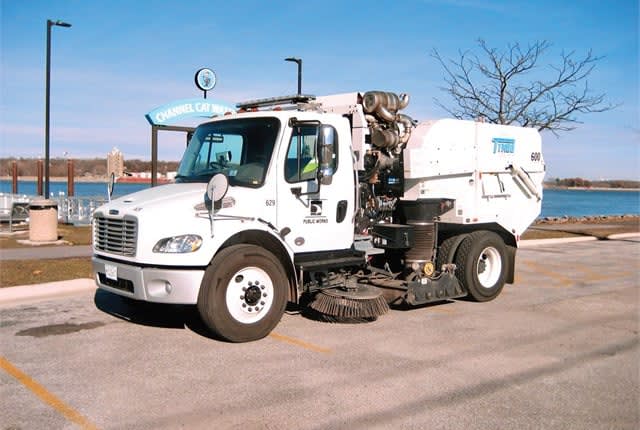
The City of Moline, Ill., invested in ultra-low-sulfur diesel-powered street sweepers after determining the application was unsuitable for natural gas. Photo by Sarah Mark
Agenda Item: Should the City Buy Alt-Fuel Street Sweepers?
When the City of Moline, Ill., went looking for opportunities to cycle alternative-fuel vehicles into its municipal fleet, Director of Public Works J.D. Schulte, CPFP, was all for it. His staff completed a 15-year lifecycle analysis to determine whether the proposed acquisition of four compressed natural gas (CNG)-powered tandem dump trucks would benefit the city and determined the higher price point would be worth it.
Asked to run the same analysis on CNG street sweepers, staff members found the opposite was true. Dual drivetrains meant a dual initial premium, and the dirty, gritty environment in which they work would make it difficult to extend their lifecycles. Schulte’s team recommended the city switch to ultra-low-sulfur diesel (ULSD) for street sweepers instead, and officials agreed.
Schulte said the experience proved that city and county officials are likely to side with the fleet department when the lines of communication are open and the numbers prove their case.
“We know we’re spending hard-earned tax dollars, and we’ve maintained credibility with our elected officials,” he said.
Ad Loading...
Political Realities Are Just That
It’s a scenario familiar to many government fleet managers: A newly elected official who campaigned on a solemn pledge to reduce the city or county’s budget takes office and demands cuts.
For Schulte, such challenges create opportunities to explain how Moline’s fleet operation is designed, right down to the replacement cycle of an individual unit. When an alderman recently requested a $75,000 reduction in chargebacks in 2018, Schulte was prepared. After demonstrating the many ways in which his department already minimizes chargebacks, he was spared the scalpel.
“We’ve established credibility,” he said. “It’s a defensible model.”
Political realities were a greater concern at Thompson’s previous job, for which he reported to five equally powerful councilmembers; in Jacksonville, he works with 19 councilmembers who serve under an independent mayor. But he pointed out that political pressure isn’t limited to elected officials. Citizens who are engaged with their municipal governments have a powerful voice that can’t be ignored.
Thompson recalled a Baker County resident who owned a trucking company and could not reconcile his experience with that of the county, which was losing money on the transportation of patients for emergency services.
Ad Loading...
“I said, ‘Did you ever haul a load for someone who didn’t pay you? When you dial 911, we don’t look up your balance.’ He took a step back and got it,” Thompson said. “I believe that 99% of the time, people are campaigning for what they believe is right. … It becomes our job to educate them. But you’ve always got to be open-minded. They might teach you something.”
Hrichak
Schulte
Thompson
Open Communication Is Critical
Hrichak urges fleet managers to open the lines of communication with officials, even if it goes against their nature.
“Typically, fleet guys are quiet. They get the job done,” he said. Rather than wait for officials to ask questions, Hrichak suggested fleet managers share status updates and other useful information in the form of a newsletter, even if it’s just a simple e-mail. “Prepare them with information ahead of time. They’ll be better off, and you’ll be better off.”
Schulte said Moline’s fleet is cognizant of the city’s needs and concerns, a quality he believes has helped establish and maintain credibility with elected officials. He remains focused on the need to justify the expenditure of tax money and deliver recommendations backed by extensive research and hard data.
However, Schulte added, communication is a two-way street, and fleet managers must be prepared to accept good advice. He worked closely with Moline’s previous mayor, who had experience in the utilities industry, to create a third shift for the fleet division. As a result, the city was able to reduce its total vehicle and equipment count.
Ad Loading...
Thompson suggested fleet managers ask officials what success in the fleet department means to them and what the fleet can do to support that goal. He also stressed the need to be open and honest with city officials and to refrain from leaking information to the press or making negative remarks in public.
“Never let your boss be surprised — at budget time or any other time,” Thompson said.
City officials in Chesapeake, Ca., accepted the fleet department's suggestion to build a publicly accessible fast-fill CNG station. Photo by George Hrichak
Agenda Item: Should the City Invest in CNG?
In 2009, the city council of Chesapeake, Va., launched “Sustainable Chesapeake,” an initiative designed to make the city greener.
“That takes money, and they weren’t giving us more,” said Fleet Manager George Hrichak, CEM, CPFP. He ultimately recommended cycling in hybrid and compressed natural gas (CNG) vehicles, investing in a fast-fill CNG refueling station, and opening it to the public.
Officials adopted the plan, and Hrichak said it has been a success.
“It costs less to maintain and it’s costing less in fuel, and it made it cheaper for the city to switch to alternative fuels.”
Your Skills Could Translate to Public Service
Our experts agreed that government fleet managers who are considering a second career as elected or appointed officials have a leg up on candidates who have never worked in the public sector. That basic understanding of how an administration operates is critical to success in both fields, Hrichak said.
“That is definitely helpful when you’re sitting on the dais and hearing the city manager going through various departments. It gives you a fuller understanding of the government and what it takes to make it work,” Hrichak said.
Ad Loading...
Much like elected officials, fleet managers are in the customer service business, Thompson added. You are skilled in relationship-building. With relatively few exceptions, your objectives align with those of your administrators.
“In the private sector, your labor hours are how you make money. Well, I don’t want my vehicles in the shop. I want them on the streets, serving their public mission,” he said.
The list of translatable skills doesn’t end there. Schulte said many of the same personal and professional qualities shared by successful fleet managers could help you succeed as a councilmember, mayor, or city manager.
“I think the fleet managers today are very analytical, very methodical. You base your decisions on facts and logic, take the feelings out of it, and deal with the dollars and cents,” Schulte said. “I think those skills probably transfer well into making policymaking decisions.”
Public fleets have more data than ever, but inconsistent records and missing information can still undermine maintenance, replacement, and cost decisions.
With more than 8,000 vehicles and pieces of equipment to maintain, the City of Phoenix could not afford to wait for fully trained technicians to walk through the door. Instead, they revamped their entire workforce strategy and showed how public fleets can create their own talent pipeline while preparing existing employees for increasingly complex vehicles.
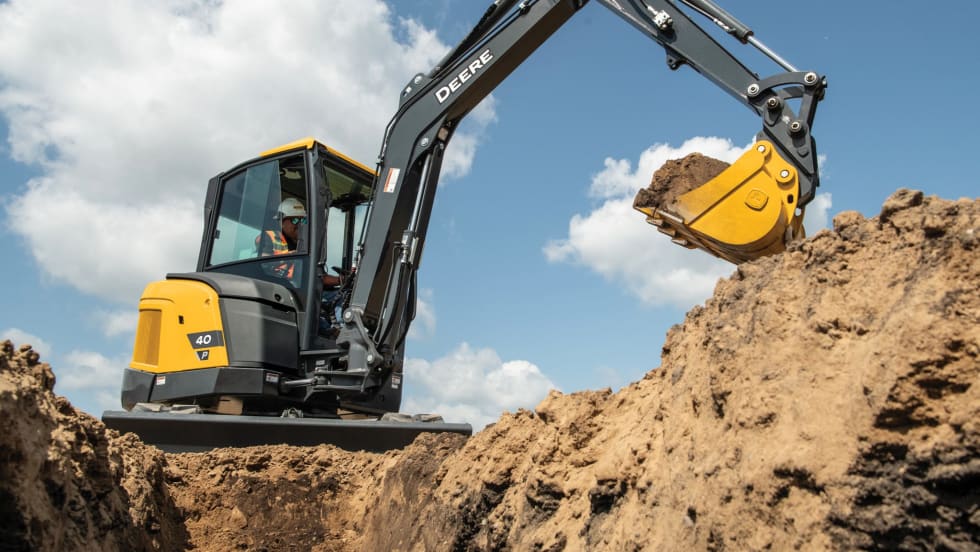
John Deere is adding a compact excavator designed for crews that need to move equipment between jobsites and handle multiple types of work with one machine. The 40 P-Tier weighs less than 10,000 pounds and offers configurable hydraulics, attachment options, and connected fleet-management capabilities.
This week, we look at what past Leading Fleet winners can teach us about making progress, plus how to build a business plan your fleet will actually use.
A fleet business plan should help agency leaders understand the fleet’s value, give the organization a clear direction, and establish shared expectations with customer departments.
This week’s fleet news covers emergency preparedness, shifting vehicle sales, electric truck investments, and new tools for monitoring road conditions.