Steven Saltzgiver received the 2017 Legendary Lifetime Achievement Award. He has worked with fleets as an operator, mechanic, and manager, and has used this expertise to help fleets all over the country.
Roselynne Reyes・Senior Editor
July 19, 2017
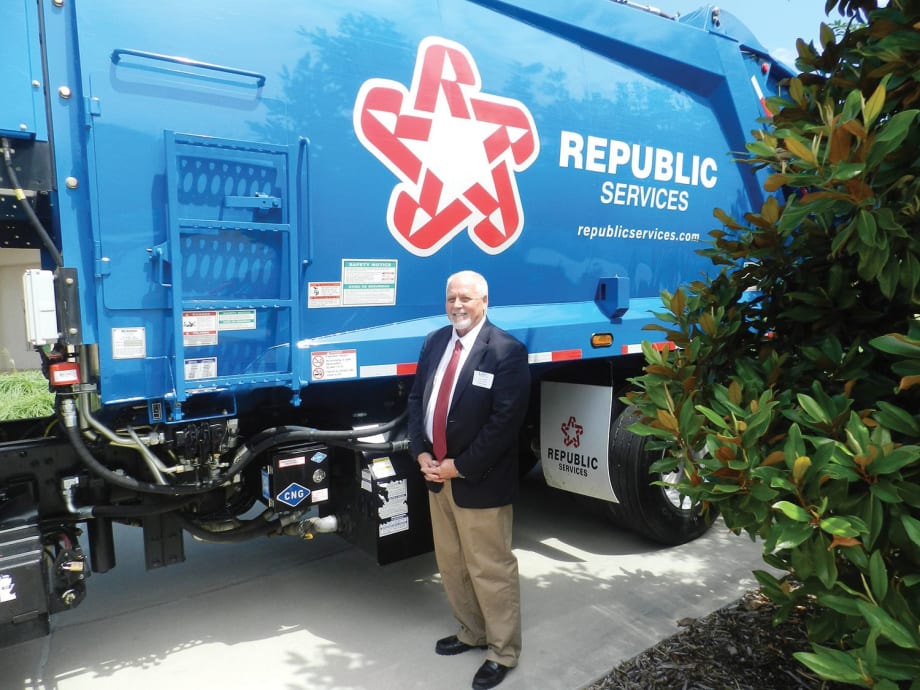
As VP of fleet management for Republic Services, Saltzgiver implemented a program to increase efficiency and fleet operations.
Photo: Steven Saltzgiver
4 min to read
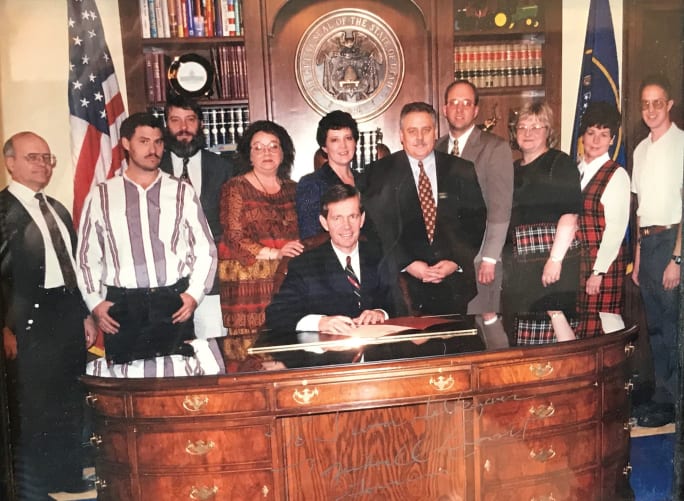
Saltzgiver worked at the State of Utah for 11 years, Pictured: the fleet team with then-Governor Steve Leavitt.
Photo: Steven Saltzgiver
Steven Saltzgiver, CAFS, knows fleet from every angle. Over the past four decades he has managed vehicles, assembled vehicles, fixed vehicles, and even operated them.
Over the years, he has gained a reputation as someone who can fix fleets and improve efficiency. But, more importantly, he takes his expertise and uses it to give back to the industry that helped him get to where he is today.
Ad Loading...
Saltzgiver was presented the Legendary Lifetime Achievement Award at the 2017 Government Fleet Expo & Conference. The award, sponsored by the National Joint Powers Alliance (NJPA), recognizes one member of the Public Fleet Hall of Fame for his or her lasting contributions to the industry. The winner was selected by industry professionals via an online ballot.
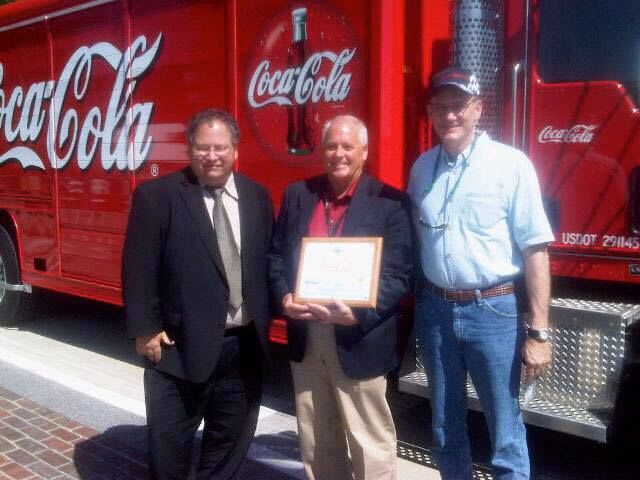
Saltzgiver served as Coca Cola's VP of fleet management for three years.
“Don’t get comfortable and don’t be hesitant to take risks in your career,” he said.
At a glance
Throughout his career in fleet, Legendary Lifetime Achievement Award winner Steven Saltzgiver:
Managed fleets of all sizes
Continued to develop his skills in fleet and management
Contributed to the industry through his involvement in various fleet associations.
Saltzgiver’s first job out of high school was an assembler and mechanic at a local truck manufacturer, where he helped assemble terminal trucks, single cab trucks used for transporting trailers around a shipment yard.
He spent 15 years at the Utah Transit Authority — starting as a mechanic, working his way up to maintenance supervisor, and obtaining his commercial driver’s license (CDL) along the way, which allowed him to drive buses and wrecker trucks.
Ad Loading...
Next, Saltzgiver became the fleet manager for the City of West Jordan, Utah, for three years. In addition to his 8-5 shift with the fleet, Saltzgiver worked as a volunteer firefighter three nights a week from 6 p.m. to 6 a.m. Because of his CDL, this often meant driving the fire truck.
“The fire chief thought I needed experience in fire in order to specify a truck,” he said. “It did help me, but probably to their detriment, because now I knew what we really needed on a fire truck that wasn’t bells or whistles.”
Saltzgiver was recruited to take over the State of Utah fleet in 1994, where he stayed for 11 years. During that time, the state became interested in consolidating its fleet and this became Saltzgiver’s primary role.
He joined the State of Georgia fleet in 2008, and worked to optimize and centralize the state fleet, which meant downsizing the team and outsourcing services during the recession. He also launched a vehicle tracking program.
After two years Saltzgiver took a job with Coca-Cola and was named vice president of fleet operations. In this role, he created a program to increase reliability, productivity, and maintenance management. Saltzgiver stayed with the company for about three years before he was recruited by Republic Services, managing the waste fleet for two years. He implemented a similar program to improve reliability, availability, and equipment utilization.
Ad Loading...
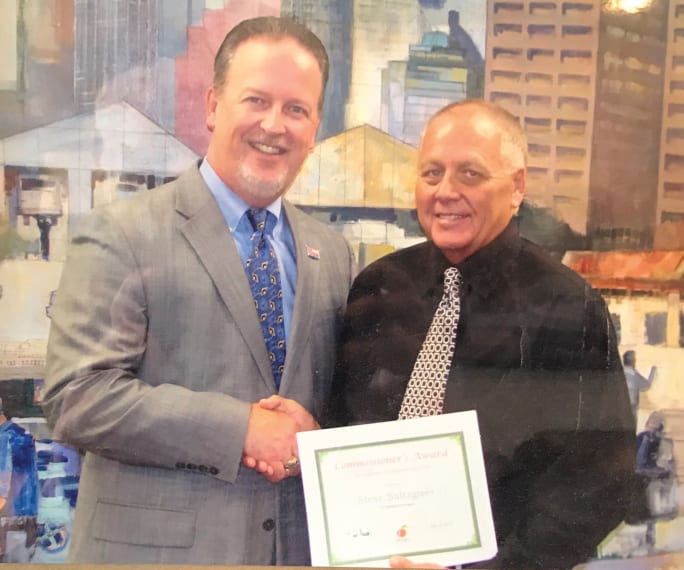
Saltzgiver, then-director of fleet for the State of Georgia, with Department of Administrative Services Commissioner Brad Douglas.
Photo: Steven Saltzgiver
Fixing Up Fleets
Over the course of his career, Saltzgiver earned a reputation as a fixer of fleets, and this comes in handy in his current role as a manager for Mercury Associates. At the consulting company, he shares best practices, creates replacement plans, analyzes policies and procedures, and reviews rates.
Saltzgiver said it takes between two and four years to get a fleet on the right track. When approaching a new fleet, he always looks at the number of assets first, which can take up to 50% of a fleet’s costs.
“It’s the one thing you can use to drive down costs. Fleets should continually right-size,” he said.
He also looks at fuel management and labor. Additional aspects of the fleet that should be reviewed include utilization, whether preventive maintenance is conducted on time, and mechanic productivity.
Working for a variety of fleets over the years also brought along valuable leadership knowledge. Saltzgiver said the most rewarding part of his career has been working side by side with people; as fleet manager, he made an effort to know everyone’s job, emphasized the team over individuals, and learned to motivate others.
Ad Loading...
“People always want to do their best. It’s up to you as the supervisor to bring that out,” he said. “If a person is performing poorly, look at the leadership.”
One overlooked aspect of management, Saltzgiver noted, is to ensure all employees succeed — even if that means succeeding somewhere else. In the past, he has helped employees find other jobs.
Embracing the Industry
Steven Saltzgiver has served in a variety of roles in his 40 years in fleet, from mechanic to fleet manager to his current role as a consultant.
Photo: Natalia King
Saltzgiver has been a key member of several fleet associations over the years, which started when he first began working at the City of West Jordan and joined the Rocky Mountain Fleet Management Association (now known as FleetPros), eventually serving as chair.
He later became involved with NAFA Fleet Management Association, where he still sits on the Board of Directors, and the National Conference of State Fleet Administrators (NCSFA). As executive director of NCSFA, he managed three profitable and well-attended conferences.
Even with decades of experience, Saltzgiver never stops learning. He spends at least an hour every day reading industry news, keeps a wall full of books about management and fleet, and regularly attends classes to stay current.
St. Johns County, Florida, had fleet data, but turning it into reliable decision guidance was another matter. Instead of starting over with a new fleet management system, the county connected existing tools and built a scoring system that gives managers an objective look at fleet health.
With more than 8,000 vehicles and pieces of equipment to maintain, the City of Phoenix could not afford to wait for fully trained technicians to walk through the door. Instead, they revamped their entire workforce strategy and showed how public fleets can create their own talent pipeline while preparing existing employees for increasingly complex vehicles.
Public fleets have more data than ever, but inconsistent records and missing information can still undermine maintenance, replacement, and cost decisions.
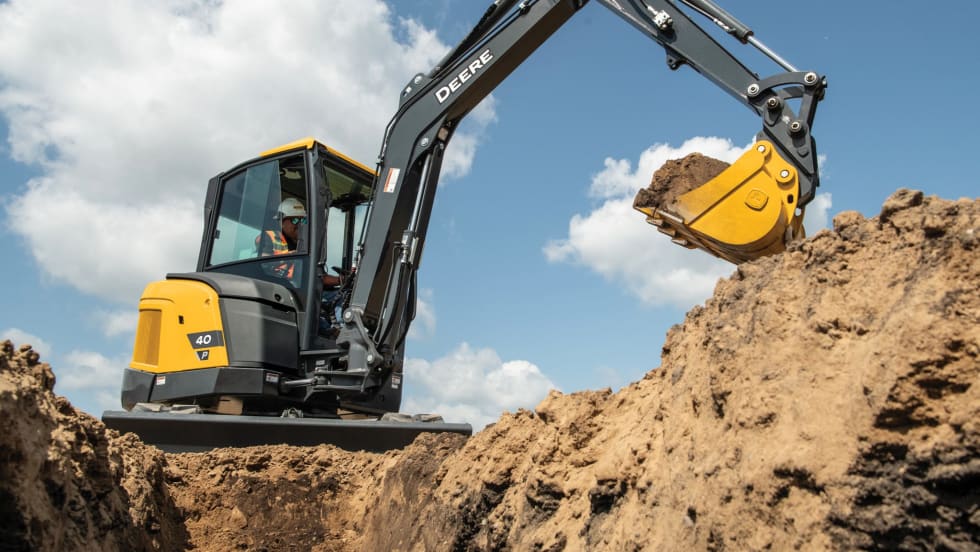
John Deere is adding a compact excavator designed for crews that need to move equipment between jobsites and handle multiple types of work with one machine. The 40 P-Tier weighs less than 10,000 pounds and offers configurable hydraulics, attachment options, and connected fleet-management capabilities.
This week, we look at what past Leading Fleet winners can teach us about making progress, plus how to build a business plan your fleet will actually use.