


At a Glance
To prepare for winter events, the City of Buffalo, N.Y.:
Installed telematics on its plow vehicles
Preps winter equipment beginning in August
Meets with department heads to go over the winter plan.
 MENU
MENU SEARCH
When Western New York saw six feet of snow dumped on the ground the week before Thanksgiving 2014, the City of Buffalo was ready to handle the mess with a fleet that was prepped and ready.
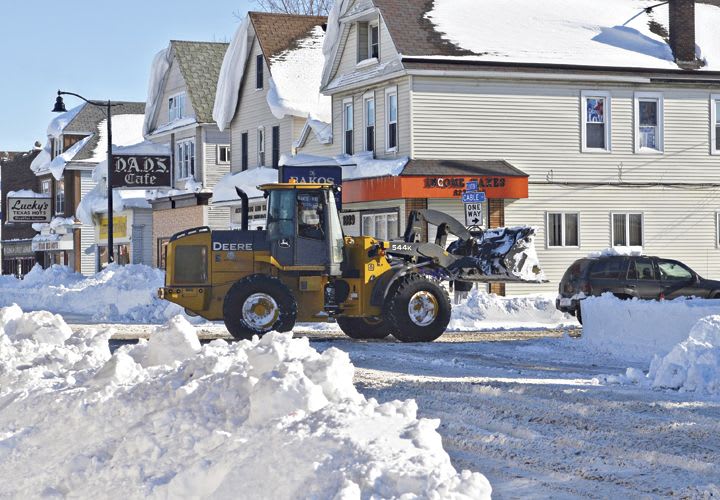
During the November 2014 snowstorm, the city enacted a driving ban so plows could get through. Photo courtesy of City of Buffalo
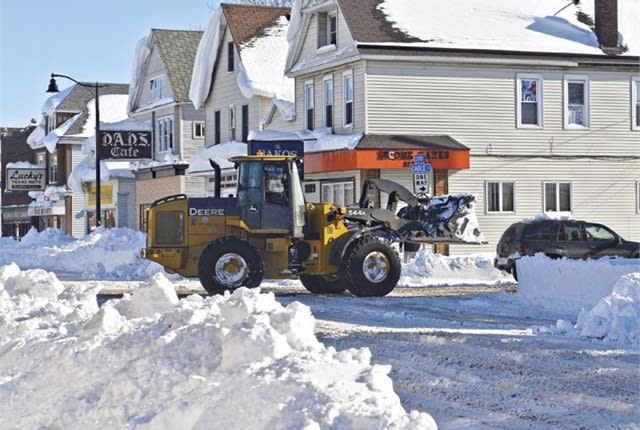
During the November 2014 snowstorm, the city enacted a driving ban so plows could get through. Photo courtesy of City of Buffalo
Among the breaking news stories that flooded the national news outlets during the last few months of 2014 was the tale of a city engulfed in a snowstorm of astronomical proportions. The residents of Western New York were hit with more than six feet of snow in the week before Thanksgiving, with some areas seeing more than 30 inches of snow in only 10 hours. While certain cities saw only inches to others’ feet, the City of Buffalo experienced a unique situation where half the city was crippled, while the other half of the city went on with their days as normal.
“This storm was a very narrow band where half the city was in good shape and the other half was under feet of snow,” said Steven Stepniak, commissioner of Buffalo’s Department of Public Works. “One of the things we did very well in this storm is we made the call quickly to put a driving ban in place and pulled in contractors quickly to help plow the streets.”
The ban, which is decided upon between Stepniak’s department, the mayor’s office, and other city agencies, was put into place by 5 a.m., giving city workers ample time and room to begin the clean-up. Driving bans like this do have some exceptions, allowing emergency service employees such as police, firefighters, doctors, and nurses to make it to work. Checkpoints are set up where identification is required.
“In some cases, we may even give assistance in getting them to their location during the event,” Stepniak said.
Assessing the Fleet
Currently, the city uses 72 pieces of equipment to battle the Buffalo winters, and the equipment is upgraded through rotation every year. In 2014, Stepniak’s department added eight new pieces of equipment to a fleet that consists of tandems with a plow and a salt body spreader combo, and high lifts/front loader with either a bucket or plow blade. All of this is operated by a crew of more than 70 that rotates to give the city 24-hour coverage.
Upping the ante on these winter warriors is the addition of GPS to help the Public Works department track the vehicles and their progress.
“GPS allows for that easy transition through shifts,” Stepniak said. “If you have one shift that’s completed and another that’s coming in, that transition is easier because we know what we’ve accomplished, where we’ve been, and what we’ve done so far. It’s very clear because you can have it up on an electronic map.”
Other tweaks to the equipment are considered as well on an annual basis, such as the addition of electronic ground control spreaders that determine exactly how much salt is being laid down.
“We always look at new pieces of equipment and new technology and see if it would apply to our situation,” Stepniak added.
Preparing for a Blistery Battle
While the winter equipment preparation begins in August, most, if not all, of the vehicles are used throughout the year.
“We use very versatile equipment,” said Stepniak, explaining that the department’s front loaders are used for a number of different duties throughout the year. “We do a bulk trash collection so they’re constantly in use. We remove the spreaders, put a tailgate on them, remove the plow, and they work all year round collecting trash and other things. Our fleet coordinator does a great job adjusting to the seasons.”
During the summer, the medium-duty trucks are used to move mulch or dirt around the city to different projects.
“It’s not like that equipment sits on a shelf somewhere. It’s used year-round,” he added.
But certain bits are stored until they are needed for another day — specifically the plows themselves.
After putting in grueling hours throughout the winter, the team makes sure the plows are lubed up properly by ensuring that plenty of grease is used on the different components of the plows themselves.
“They’re a heavy apparatus that goes onto our tandem trucks; it’s not the kind you put on a pickup,” Stepniak said.
Storing them properly is also a key component. After cleaning them completely and greasing them up, the plows are stored in a dry place so they’re ready to go once the winter season begins. The bulk of preparation happens in August, since the plows are sometimes used in September to perform leaf collections.
“You might see a plow out there without a spreader body collecting leaves — it’s a system we’ve been doing for years,” said Stepniak, adding that the crew that performs the plow prep has a considerable amount of experience getting the equipment ready, and “they do it very quickly at a very quick pace.”
Interestingly enough, according to Mike DeGeorge, director of communication for the City of Buffalo, “there was still leaf collection going on when the storm hit South Buffalo.”
“They’re very diverse in what they do,” Stepniak added, “and we’re very proud of our diversity of our four seasons, and we adapt well.”
Prepping the People
It is not as simple as just getting the equipment ready to take on another year’s snowfall. The staff of the Public Works Department, as well as a number of other departments, need to be on the same page.
“Public Works is a very vast department, which includes water, the parks department, our engineering staff, road maintenance — every department is involved in our preparation for our winter plan because they have various equipment that’s helpful,” Stepniak explained. “Our parks department has smaller Bobcats that can help clear sidewalks. Our engineering section has pickups that can be used to clear parking lots. It’s all hands on deck when it comes to snow.”
Deputies who look over each department meet with Stepniak to go over the winter plan. After an initial plan is filed and reviewed numerous times throughout the year, a final plan is submitted, and Stepniak ensures that everyone involved understands it.
“There are constant meetings for winter prep, and when we have an emergency, everyone understands what they need to do, and that’s very helpful,” he added.
Stepniak and his team also meets with police, emergency services, and the fire department so everyone is on the same page.
“We understand that seasons vary, but this is the eastern part of the country and we prepare accordingly in that you could have a rough winter, you could have a storm come in like we did that comes in very quickly. Last year was a strong winter, with record cold temperatures, but our fleet is equipped to handle all those things,” Stepniak said.

Is keeping vehicles longer saving money, and what happens when a diagnostic test points to the wrong fix?
Read More →
Keeping a vehicle longer may ease this year’s budget, but what does it cost the next one? A closer look at fleet decisions can reveal opportunities to reduce spending while protecting essential services.
Read More →
From industry news and fleet management strategies to conversations with peers, Government Fleet's LinkedIn page offers public-sector fleet professionals another way to stay informed and connected.
Read More →
Five fleets were honored at RTA Connect 2026 in Chicago for excellence across resource efficiency, intentional culture, risk management, and stakeholder satisfaction.
Read More →
Buying fleet management software in 2027 means looking beyond features and price. As fleet operations, technology and expectations evolve, this guide explores what today’s fleet professionals should consider when choosing a system that can deliver value now and adapt to what comes next.
Read More →
Fleet car sales doubled, but the bigger picture tells a different story in this week’s roundup.
Read More →
St. Johns County, Florida, had fleet data, but turning it into reliable decision guidance was another matter. Instead of starting over with a new fleet management system, the county connected existing tools and built a scoring system that gives managers an objective look at fleet health.
Read More →
New one-day registration lets fleet professionals attend Tuesday, Wednesday, or Thursday, with passes available for $249.
Read More →
Two variants of the concept shuttles were revealed: a low-floor configuration and a high-floor configuration.
Read More →
What if your next technician hasn’t worked in a fleet shop yet? What fleets are doing to free up time.
Read More →