




Related: Choosing the Right Lightbar
Mass. State Police Boosts Vehicle Visibility
In an effort to improve officer safety, Massachusetts State Police adopted reflective vehicle graphics and more effective lighting.

Roselynne Reyes・Senior Editor
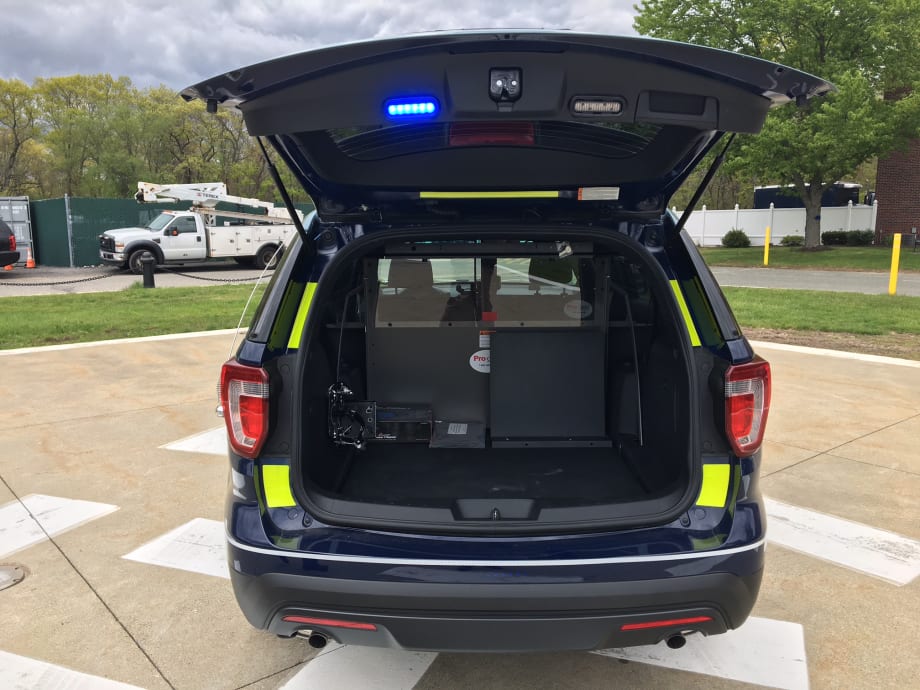
Photo courtesy of Massachusetts State Police
2 min to read
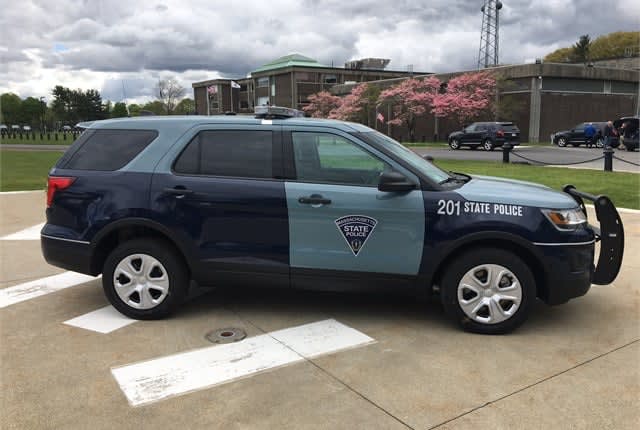
Photo courtesy of Massachusetts State Police
Since 2012, Massachusetts State Police (MSP) has implemented several initiatives to make officers more visible and increase officer safety at night.
Sergeant Paul Fernandes noted that most officers wear black or dark blue uniforms that are nearly invisible at night. Although MSP officers wear light blue shirts, it still does not help drivers see them once it gets dark, and this risk is even higher when parked along the side of the road. The agency turned to vehicle visibility to improve officer safety.
Improving Police Vehicle Visibility
The initiatives started with vehicle graphics. Fernandes said MSP’s colonel went on a trip to Europe and noticed the amount of reflective blue and green graphics on patrol cars. The agency installed chevrons on the back of its Police Interceptor Utility vehicles, facing out like arrows.
Next, the agency looked into replacing its light bars. MSP uses blue light bars, and a common complaint was that the light bar’s brightness was a distraction in itself. Fernandes noted that, as LED technology became the norm, vehicle lighting became significantly brighter. Unfortunately, this can be a strain on the eyes for motorists stopped on the side of the road.
To solve this problem, MSP worked with a local manufacturer to find a solution. It’s new light bar uses a steady burn – in which the blue light flickers at a lower intensity when parked at a traffic stop.
“It’s bright, it flashes, and when you go to a call it’s as bright as any other cruiser out there. You can see us as far away as anybody else. But what it does is, once the officer puts it in park, it automatically dims down,” Fernandes said.
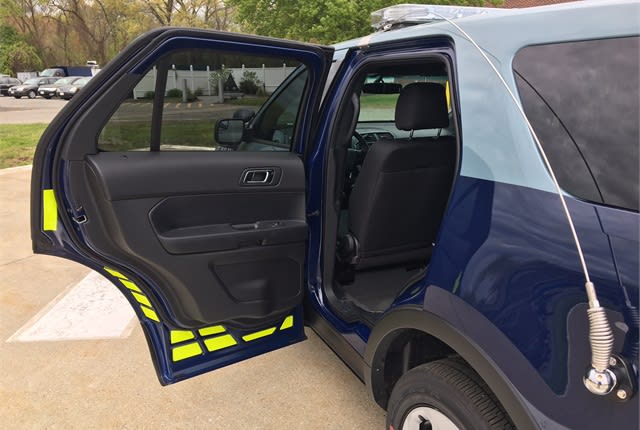
Photo courtesy of Massachusetts State Police

Photo courtesy of Massachusetts State Police
Dealing with Critics
Massachusetts State Police has been around since 1865, and making any changes to the agency’s signature two-tone patrol cars brought backlash. Officers also voiced their concerns, noting that civilians will be able to see them coming from a mile away.
Although faced with some pushback from officers in the beginning, Fernandes said he now receives positive feedback from officers, and several neighboring agencies have adopted similar initiatives to improve officer safety.
“It’s always something that comes up with police officers, and especially highway patrol. We get in more car accidents than we do shootouts,” he said. “I don’t have any statistical data right now to say, ‘hey, it saved X amount of lives,’ but if it saves one guy, I’ve done my job.”
Special thanks to 329 Marketing for contributing to the article.
Subscribe to Our Newsletter
More Police
Ford Pro Introduces Full-Size 2028 Expedition Police Responder
Ford Pro gave law enforcement customers a first look at the pursuit-rated utility during Police Fleet Expo.
Read More →
Paterson Police Expand Drone Fleet, Launch Real-Time Operations Center
The Paterson Police Department has expanded its drone program and opened a new Real-Time Operations Center designed to support emergency response and incident management. The initiative integrates multiple technologies to provide officers with real-time information during investigations and public safety operations.
Read More →
Why Public Fleet Success Depends on More Than the Vehicles
Tim Coxwell of the Leon County Sheriff’s Office discusses the projects shaping his fleet operation, including long-term work around vehicle selection, greenhouse gas emissions, and cost per mile.
Read More →
Havis Acquires Pro-gard Products
The acquisition brings together two manufacturers of public safety vehicle equipment under one company. Havis says the move expands its portfolio of products for outfitting law enforcement vehicles and other public safety fleets.
Read More →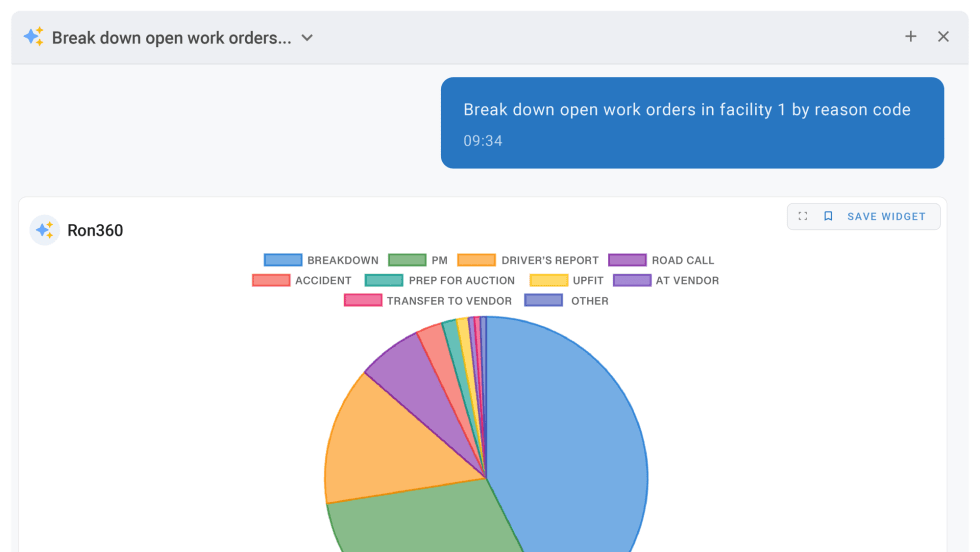
RTA Fleet Introduces AI Assistant for Fleet360 Platform
As artificial intelligence continues to gain traction across public-sector operations, fleet software providers are finding new ways to incorporate the technology into everyday workflows. RTA's latest addition aims to simplify how users interact with fleet data.
Read More →
2026 Police Fleet Innovators Named
Meet the professionals finding new ways to solve some of law enforcement's toughest fleet challenges.
Read More →
Rynse Expands Nationwide Fleet Wash Access for Law Enforcement
The North Carolina Sheriff’s Association Contract Cooperative purchasing contract aims to streamline procurement process for law enforcement agencies across the U.S.
Read More →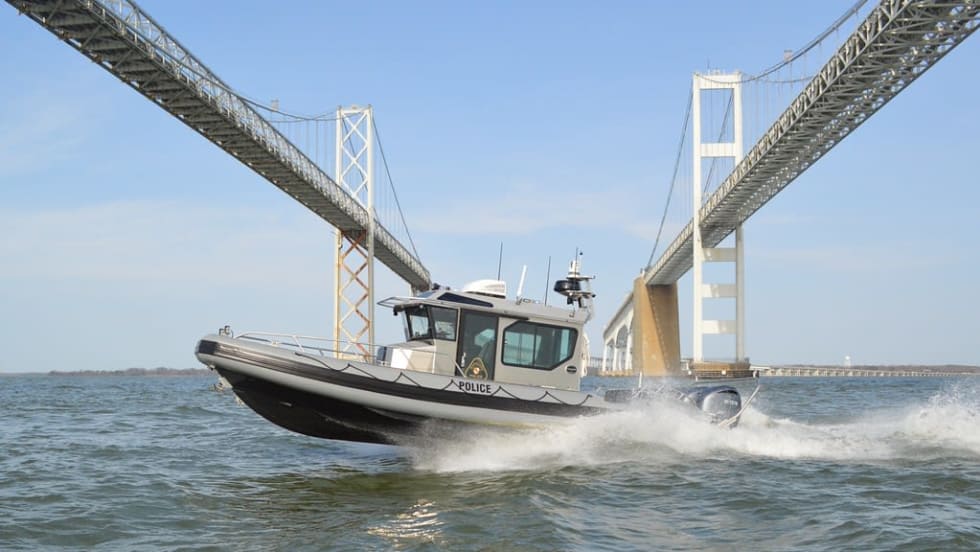
Maryland Natural Resources Police Adds 31-Foot Patrol Boat to Enforcement Fleet
A new addition to Maryland’s marine enforcement fleet is bringing expanded capabilities to Chesapeake Bay operations while honoring a legacy within the agency. The high-performance patrol vessel reflects how law enforcement fleets are adapting to growing demands on the water.
Read More →
LEHR Expands Florida Presence With Enforcement One Acquisition
LEHR has acquired Florida-based emergency vehicle upfitter Enforcement One, marking its eighth add-on acquisition.
Read More →
Maryland’s Wicomico County Sheriff Adds Mustang GT Patrol Vehicles
The agency is also working with the Maryland Police Training Commission on a specialized high-performance driving course for deputies assigned to the vehicles.
Read More →