




15 Questions to Ask When Purchasing a Fuel Management System
Are you in the market for a fuel management system? Ask the right questions to avoid costly mistakes.
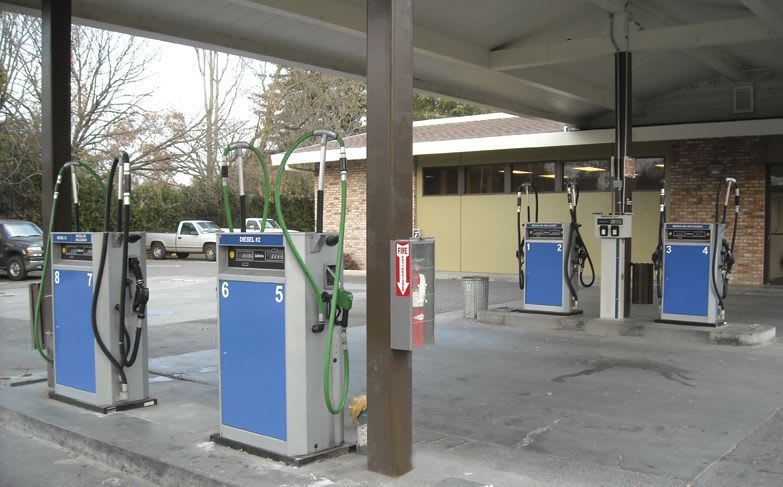
When purchasing a fuel management system, ask the right questions up front. Photo by Erik Gustafson.
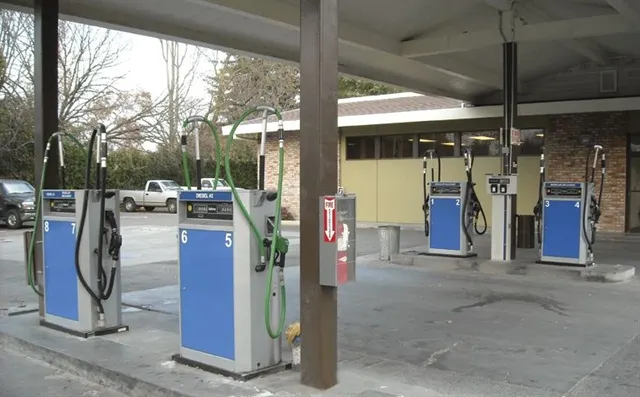
When purchasing a fuel management system, ask the right questions up front. Photo by Erik Gustafson.
At a Glance |
Some points to consider when purchasing a fuel management system include:
|
Everyone knows that purchasing a big-ticket item like a fuel management system is nothing short of a big deal. It's costly. It's critical to the functionality of an agency. And it can create countless problems, including financial headaches, if the system chosen doesn't run smoothly and report information accurately.
When given the green light to buy, it's smart to start the purchasing process by asking the right questions up front. Whether talking to a salesperson about the system itself or consulting with other agencies for feedback and tips, doing your homework can net big rewards. Sure, it takes time to truly understand the key differentiators behind the fuel management systems on the market today, but that knowledge can help prevent expensive mistakes.
Below is a guide to 15 questions to ask when purchasing a system, as well as important considerations from a number of savvy fleet professionals who've learned a lot in their purchasing experiences over the years.
1) What features are unique to this system? At first glance, all fuel management systems seem alike, with no immediately distinguishable features. But no two systems are identical, considering each comes with its own bells and whistles. While exploring the options, identify those relevant features, noting any innovative benefits that might be solution-oriented, particularly if the system being replaced is antiquated.
For instance, thanks to new technology, it's now easy to track and generate state-required reports if applying for rebates related to off-road taxes. In the past, this feature simply didn't exist.
2) What kind of customer support do you offer? When you're in the market for a fuel management system, this is the No. 1 factor to consider, according to Rick Longobart, facilities, fleet, and central stores manager for the City of Santa Ana, Calif. "The quality of a system is as good as the people who support it. If a company cannot support you throughout the installation and repairs process and be there when you need it, it's not going to work out," he said.
What's more, it's helpful to have a service agreement policy and any relevant procedures in writing from the company (and not just in the request for proposal). Most fuel management system companies should provide that without issue. If a company doesn't or won't, that's a big red flag.
Note that there are great discrepancies among companies in terms of the response time offered by their certified technicians. Managers often report having to wait for hours, and even days, before a problem is resolved, which is unacceptable in the industry.
Yet sometimes the customer may have to wait, particularly if the parts are "made on demand" or manufactured overseas. This could tack on days or weeks to a delay. Determine the average wait time for replacements and whether this is acceptable when reviewing a bid.
3) How does the system improve security? That's a major concern for Doug Bond, transportation services manager for the County of Alameda/General Services Agency in California.
"We manage the fuel for the entire county, and there's a lot of cost involved," Bond said. "We don't have any sites that have 24-hour security, and two of our sites are actually remote and don't have any constant supervision. So it's very important for us to have a secure site that only allows those who are permitted to fuel to fuel."
When Bond researched his options, he looked for a solution that prevents people from tricking the system and reduces or eliminates the potential for human error. He also expected user-friendly tools that collect and deliver accurate data, so he could quickly determine compromised security vs. malfunctioning equipment and/or vehicles.
Understanding the importance of a secure, accurate system, companies are developing advanced technologies and electronic gadgets designed to allow for less input from the user and reduce human interaction with the system.
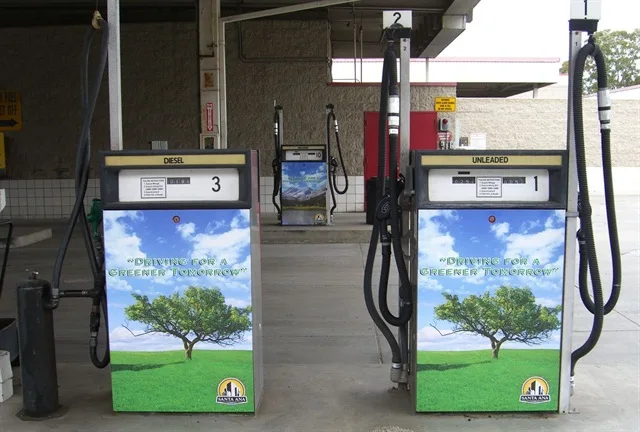
Rick Longobart, facilities, fleet, and central stores manager for the City of Santa Ana, Calif., said one of the key questions to ask when purchasing a fuel system is about customer support. Pictured is the City of Santa Ana's fuel island, with environmental wraps on dispensers.
4) What new technologies does this system deliver? People commonly assume their new system will simply replace the old one and that everything will operate as it has in the past. They're often surprised to discover an array of new solution-centric technologies are now available to address common issues that surface in fuel system management that are easier to use.
For instance, real-time tools and sophisticated tracking features can provide instant information that can help eliminate those previously mentioned security issues, spot mechanical problems, regulate fuel usage, facilitate flawless data collection and transmittal, and more. All these tools and features are time-savers that translate to reduced costs over time.
As with any new technologies, you need to make sure they are proven to work. "You need to know what types of issues arise with the different types of technologies, whether they're reliable, and if there have been failures before you go to bid," Bond said. He recommended reading up about the pros and cons of the product and talking extensively to other agency managers who've used the technologies.
5) Will there be any downtime in the transition between my old and new systems? The answer should always be "no." The transition from the old to the new should be seamless at best and very manageable at least, according to John Cantu, director of equipment services for Arizona's Maricopa County.
"There are always concerns with implementing a new system or even upgrading an existing system because any downtime for refueling operations is critical," he said. "However, open communication and dissemination of timely updates will minimize any concerns or fuel-related problems. Even the temporary use of alternative refueling sites or fuel trucks on standby can alleviate any issues."
Having a backup plan is prudent, but like any product you purchase, it should work when you flip the switch.
6) What can I expect in terms of the system's reliability? A system and its software have to operate dependably -- period. When they fail, it's not only stressful but also potentially risky, particularly if the fuel is used by emergency vehicles.
Not only that, it can also cause other frustrating issues, according to Butch Smith, fleet supervisor for the City of Fontana, Calif. "When a regulatory agency arrives on site for a surprise visit and requests annual fuel-throughput reports, and you're unable to provide them that simple report due to software glitches that support can't seem to fix, it's time for a new fuel management system," he said.
Examine the track record of the product under consideration. Most systems should be able to operate reliably for a good 10 years before a major overhaul deserves consideration, and in many cases, upgrades and replacing some parts can extend the life of a solid system to 15 to 20 years. If it has a history of malfunction, or users say they're replacing parts all the time, be very wary.
When surveying other fleets about a specific system, also be sure to ask the company for a full client list. A partial client list may result in just a star list that will skew results. Ask about cost, quality of installation, local support, customer service, and response times for hardware and software issues.
7) Does this new system interface seamlessly and easily with my current software? It seems like if an organization isn't struggling with the mechanics of the equipment, then it has issues with the software. Learn how the fuel management system's software jives with the agency's internal software or fleet management software.
"Our new system had to interface and allow data export to our existing fleet management software system," Smith said. "This would allow us to schedule maintenance and adjust replacement cycles better."
8) Can it save our agency money? Correct tracking and control of fuel spend are what can save agencies money. It reduces and eliminates misuse and theft, plus it provides the ability to get accurate data that supports fleet maintenance and financial decisions.
"The long-term ability to monitor fuel use, engine efficiency, vehicle-use cycles and, of course, the ability to avoid regulatory fines with proper reporting capabilities are potential savings," Smith said. "We have a better capability to ensure that equipment is operating at the highest efficiency level, which we all know saves fuel."
Longobart agreed, adding that no fuel management system is a cash machine, but a good one will allow a fleet manager to eliminate errors, plus spot potential savings.
"If you identify that a vehicle hasn't been getting fuel for a number of months, then maybe it's not being used and doesn't need to be replaced," he explained. "You then save money by eliminating that need from the fleet."
In addition, a good system cuts down on personnel costs, which is exactly what both Smith and Longobart have found with their newer systems. "Just in the few months that we've had our software, we've had a decrease in staffing overtime due to a decrease in fuel system failures," Smith said.
"Without that technology, you can imagine the intensive labor that would be required to manage the fuel," Longobart stated.
9) What's "green" about the system you offer? "Green" has a lot of connotations nowadays. It might relate to tracking fueling processes accurately and, consequently, reducing idling time or identifying emissions issues. Or it might mean a dispensing system that supports any number of fuels, including alternative options, as well as the possibility to operate those systems using solar or other eco-smart technologies.
Find out what is or could potentially be green about the fuel management system under consideration. If sustainability is important to your agency, choose a brand that's known for being more progressive and that creates products that swiftly and regularly adapt with the times.
10) How long do you carry inventory for parts? It's no different than your car or any other piece of equipment -- at some point, your system is going to need replacement parts. But getting new parts can be tricky if the company that made your system has discontinued them or, worse, has closed its doors. While some companies keep stock for parts that are decades old, others don't, forcing the switch to a new system on their timeline, as opposed to yours. As a consumer, you should be in the driver seat. Choose a company that keeps parts on hand for a reasonable amount of time. What's reasonable? It depends on a system's needs, age, and functionality. Determine the needs first and you'll come to know what a reasonable expectation for parts replacement is. For Cantu, he expects to be able to get replacement parts for a good 10-15 years.
11) Do you offer an extended warranty after the original expires? If you've never bought a fuel management system before, it's important to know that they always come with a warranty program. Furthermore, some companies offer extended warranties. This can equate to major savings should problems start creeping up. Get the details of the warranties in writing, read the fine print, and compare the benefits.
Also, determine how long the company has been in business, as this may be an indication of reliability.
12) How will this impact my fuel audit process? When it comes to fuel auditing, Bond's staff spends about 104 hours a year doing the weekly uploads. And that "back-end" time adds up because "it's a lot of time my staff spends having to upload and check records that could be utilized somewhere else," he said. But it's got to be done, so he's always on the lookout for upgrades that can save time. Specifically, the upgrade must improve overall efficiency by reporting accurate data through a system that interfaces with the tank level system and easily shows fuel drops and transaction usage.
13) What are the pros and cons of doing a free trial/pilot program with a fuel management system? Some fleet managers balk at the thought of agreeing to a free trial or setting up a pilot program just to see if it might work. They hardly have time to manage what's currently in operation, let alone test out a new or upcoming product, particularly if they decide against it and want to have it removed. Meanwhile, a growing number of fuel system managers are giving pilot programs a try.
"I found [a pilot program] beneficial in determining if an upgrade or replacement system was feasible," Cantu said.
What are the benefits? A free trial enables the fleet to test the system and its ability to interface with other components before making a purchase decision. It also allows for an opportunity to interact with a local distributor or installer to see the quality of work they offer, their knowledge of the product, and level of support they'll provide. It eliminates any unforeseen items that might be missed without the testing of a pilot. And if the system is purchased, there will be a smoother rollout overall because of staff understanding and expectations of the system.
14) What is the system's upgrade ability? It's an entire subject that most buyers forget about during the purchasing process, yet learning what the manufacturer's track record has been in providing new equipment that's backward-compatible is extremely important. A solid system that comes with the ability to upgrade means innovative developments can be incorporated into the existing system without requiring a new one, leading to cost savings as technologies change.
15) What am I overlooking or forgetting to ask in regard to purchasing this fuel management system? Asking this question is a bit of a wild card, but you might not have thought of all the right or best questions to ask. You could be surprised to discover that those representing the product, as well as other agency managers who have used it, know not only a number of good questions worth considering, but the answers as well.
About the Author
Russ Whelan is the southwest regional manager for Syn-Tech Systems, home of the FuelMaster fuel management system.
More Fuel
Clean Energy to Build Hydrogen Station for Orange County Transportation Authority
The new station will support the agency’s growing fleet of zero-emission hydrogen fuel cell buses.
Read More →
How Fleet Managers Reduce Fuel Waste and Protect Budgets
When fuel prices swing, fleet averages don’t tell the whole story. This white paper helps fleet and operations leaders uncover where fuel waste really hides and what data they need to build a smarter, more resilient fuel strategy.
Read More →
Planning for Future Technologies: Hydrogen and Beyond
As public agencies work to cut emissions from off-road operations, fleets are turning to a mix of renewable fuels, hybrid systems, battery-electric equipment and emerging hydrogen technology.
Read More →
RoadFlex Expands Fuel Network with Refuel Partnership
RoadFlex expands its fueling network for public sector fleets through a new partnership with Refuel, adding more than 250 locations across the Southeastern U.S. to improve access, savings, and efficiency.
Read More →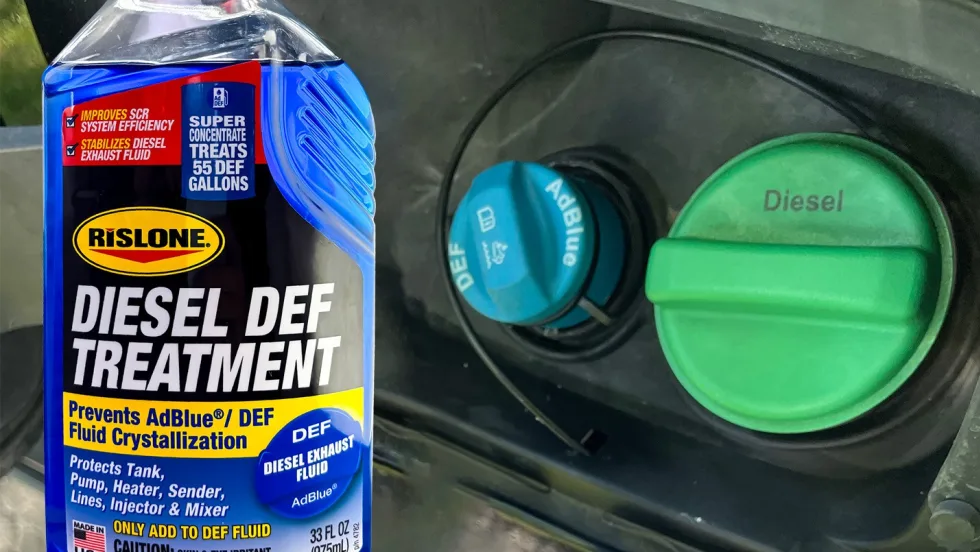
Rislone DEF Treatment Designed to Keep Diesel Exhaust Fluid Crystal-Free
Rislone is rolling out a super-concentrated version of its Diesel DEF Treatment that is designed to stabilize and improve diesel exhaust fluid.
Read More →
Are Bi-Fuel Propane Autogas Vehicles Making Law Enforcement Fleets More Resilient, Cost-Effective?
How a Florida sheriff office’s choice in fuel system led to a healthier budget, increased resiliency, and decreased emissions.
Read More →
Fleets All-In On Fuel Management Tech
Fuel management can become a tricky obstacle, but smart strategies and new tech have turned it into a well-oiled machine where price prediction is art, and cost control is science.
Read More →
Prepare Diesel Trucks for Winter with Diesel Exhaust Fluid
Understand proper DEF purchasing, handling, and storage practices in order to meet regulatory requirements and operates at peak performance.
Read More →
Diesel Exhaust Fluid (DEF) Locator
Yara, a diesel exhaust fluid (DEF) producer, offers a DEF locator website to help get the fluids fleets need.
Read More →
Gas vs. Diesel: The Bad Investment Only Fleet Managers Know About
A major point of debate in fleet management is using diesel vs. gas cars and trucks. Choosing to purchase gasoline engines instead of diesel ones for medium-duty trucks may be an unpopular decision, but is it the right one?
Read More →