Fleet managers and off-road equipment manufacturers say technological advances and design improvements are helping raise the standard for maintenance. These fleet professionals offer their equipment maintenance tips.
by Stephen Bennett
January 11, 2012
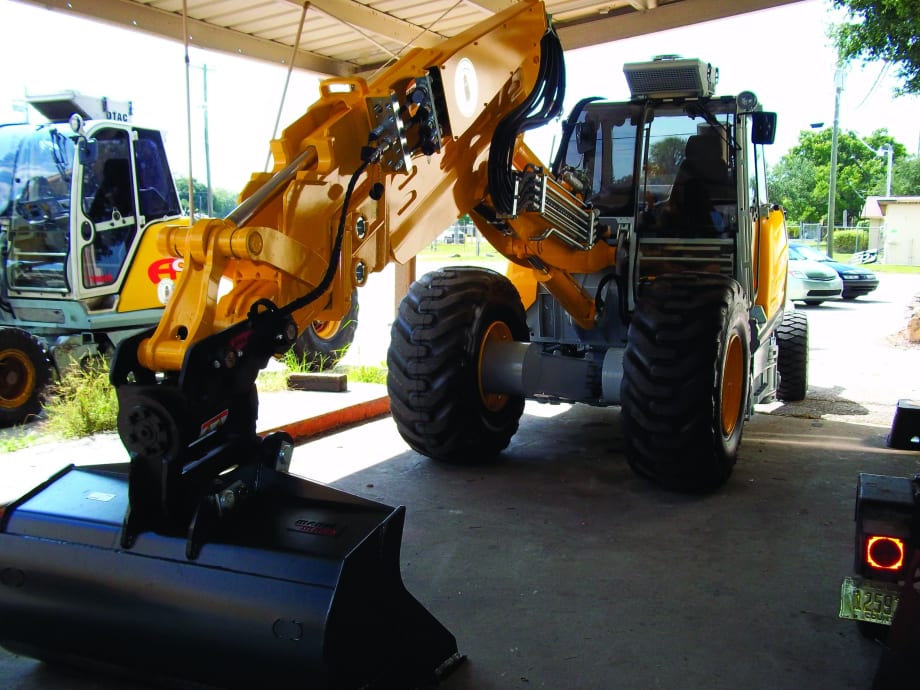
Sarasota County in Florida uses Menzi Mucks for clearing ditches and drainage canals. To counter the effects of exposure to the salty water, the fleet installed lubrication systems for the mower head.
Photo: Sarasota County
8 min to read
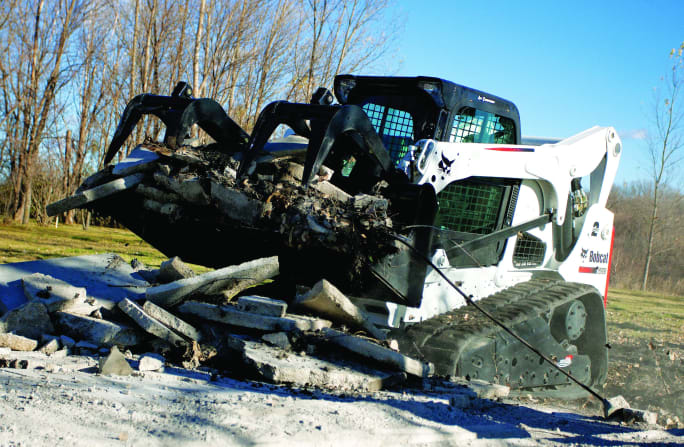
Design improvements are making it easier for technicians to service equipment. The Bobcat T750 compact track loader has an oil cooler that swings up, allowing operators better access for cleaning.
Photo: Sarasota County
Consistent, high-quality maintenance is key to keeping off-road equipment in optimal condition, whatever demands geography, weather, and other factors place on backhoes, excavators, loaders, and mowers. How does a department achieve that standard?
For starters, meticulous spec'ing can ensure off-road equipment is well-matched to the work it is expected to do; and if that equipment is sourced from a limited number of manufacturers, some fleets have found, technicians more easily master maintenance tasks and repairs. Software for managing maintenance and parts is essential, but take pains with data entry, a county fleet manager advised. You get out of it what you put into it.
Ad Loading...
At a Glance
Some maintenance tips from equipment specialists include:
Purchase equipment from a limited number of manufacturers.
Understand how geographic differences affect machines.
Create an effective preventive maintenance program.
When preparing equipment for use, a careful inspection should be the first step.
A Common Manufacturer Helps Prevent Maintenance Mistakes
The off-road fleet at Thurston County, Wash., benefits by having much of its equipment from a single manufacturer. The fleet consists of approximately 230 pieces, of which about 125 are off-road units. Almost all of them are Caterpillar, including backhoes, excavators, and loaders.
Richard Hardy, fleet operations crew chief for Thurston County, said using a standardized manufacturer makes maintenance of the off-road pieces more straightforward. "We work with Caterpillar and their service manuals," Hardy said. "It's all pretty well laid out."
Other fleet managers have stated that maintaining equipment from a limited number of manufacturers helps prevent incorrect diagnoses because technicians become familiar with the equipment. While the process of converting to a smaller number of manufacturers may take years to complete, it does come with an additional benefit: being able to keep up with advances in design. As manufacturers redesign equipment, some technical aspects may stay the same, making technician training that much easier.
Operating off-road equipment that is mostly from the same manufacturer provides the benefit of common training, tools, product support, and parts for all that equipment, leading to more uniform, consistent maintenance practices.
Handling Geographical Demands
Geography can be a highly influential factor in a fleet's off-road operations and maintenance, something Robert Bryan understands. Bryan, operations manager, Fleet Services, Sarasota County, Fla., said the county's 297 pieces of heavy equipment include Menzi Mucks for clearing ditches and drainage canals. Often the water in the ditches and canals is brackish, a consequence of proximity to the Gulf of Mexico.
Ad Loading...
To counter the effects of exposure to the salty water, the fleet installed lubrication systems for the mower head that fits on the end of the boom on the Menzi Muck equipment "to keep the bearings lubed while it's working in the water," Bryan said. In addition to helping protect the bearings in the mower head, the lube system saves the operator from having to stop work to lube the bearings himself, which saves time and improves productivity, Bryan pointed out.
The Sarasota County fleet goes further to protect the heavy pieces from the effects of salty water, bringing them in every 300 hours for service and paying extra attention to the undercarriage. "Wheels have to be pulled and re-greased to get the contamination out of them," Bryan added, and the Menzi Muck pieces and vac trucks are also washed at the shop in Venice, Fla., which is equipped with a wash system for heavy equipment.
"It's important to wash the equipment," Bryan said. "It extends the life, and it gets all the debris away from the pins so when we [perform preventive maintenance on] the vehicles, the grease can do what it needs to do."
Occasionally Bryan confers with his counterparts in nearby county fleets, including Hillsborough and Charlotte counties - and sometimes they confer with him.
The fleet staff at Charlotte County was interested in the safety screens that Bryan and his crew had fashioned for the operator cabs on the Menzi Muck equipment used for mowing. They wanted photos, too. Bryan said the screens were attached to the cabs to protect operators from flying debris. "When they're mowing in the ditch, the mower tends to pick up stuff and throw it at your operator," he said.
Ad Loading...
Fleets in agencies that cover a large area may benefit from outposts, or satellite locations where equipment can be serviced without being sent to the main facility. Storing equipment parts at various locations can also help reduce downtime when there are breakdowns.
Creating a Preventive Maintenance Program
While Thurston County now has few problems with its equipment maintenance program, this wasn't always so.
When Hardy first came to work for the county fleet 18 years ago, he recalled, major repairs on rear ends and transmissions were common, a consequence of erratic preventive maintenance stemming from incomplete record-keeping.
"Our biggest challenge was building a PM program," Hardy said. He began by putting a premium on consistent record-keeping and made it the foundation of regular preventive maintenance. "Now when a piece of equipment comes in," he said, "we know whether it needs an A, B, C, D, or E service."
The County is exploring maintenance software to replace its current program, now more than 10 years old. But software, however dazzling it might be, isn't a magic bullet. Hardy said, "Whatever you put in it is what you get out of it. If you don't take the time to track everything, you're not going to get much out of it."
Ad Loading...
Sarasota County in Florida uses Menzi Mucks for clearing ditches and drainage canals.
Photo: Sarasota County
Manufacturers Improve Design Features
Technology and design improvements in off-road equipment can also help government fleet mechanics service and repair off-road equipment more efficiently.
For fleets that sample equipment fluids to determine engine or bearing problems, Caterpillar equipment enables live port testing, and the equipment has been designed to make such ports easier to access.
Other manufacturers of off-road equipment also have design features to ease service or maintenance. For example, Bobcat last year introduced the S750 skid-steer loader and T750 compact track loader with an oil cooler that swings up, allowing the operator to clean the area between the oil cooler and the radiator more easily.
The loaders are designed so that operators spend minimal time on routine maintenance and can thus start the workday earlier. Simple checks make it easier to perform maintenance correctly at the proper intervals.
Bobcat also came up with designs to make its machines less vulnerable to damage, and so less likely to need repair. For example, auxiliary hydraulic quick couplers are mounted directly to the front plate of the lift arm to provide a solid mounting, and hoses are routed through the loader arms for protection. A guard bar extends in front of the coupler for added protection.
Ad Loading...
Case says it designs its 580 Super N loader backhoe with groundline access for easier daily maintenance. Swing-out coolers are easy to access. Axles, with outboard-mounted wet disc brakes, are serviceable without complete disassembly. A flip-up hood, spin-on filters, and grouped site gauges save time during routine maintenance.
Whether the off-road equipment is big or small, best maintenance practices tend to be similar, as recommended service for mowers, by manufacturers such as John Deere and Toro, illustrate.
"Like most equipment, if you take care of it, it's going to pay off in less downtime and it's likely to last longer," Craig Horstick, product support specialist with the agriculture and turf division of John Deere, told Government Fleet in a prior interview.
John Deere provides its dealers with diagnostic software to help them pinpoint problems on selected models of mowers, which leads to cheaper and quicker repairs. The proprietary John Deere software program is called Service Advisor and is available only to dealers.
Preparing Mowers for Use
Michael Anderson, technical service representative for The Toro Company’s commercial zero-turn mowers, offered some pre-season tips on preparing the machines, which can be applied to similar mowers. He suggested beginning with an “audit” of a unit’s current condition.
Ad Loading...
“The first tool you need is a good pair of eyes,” Anderson said. Inspect a mower’s wiring and engine shroud for ground-up paper, insulation, or chewed wires, he advised. “Rodents often think of mowers as a great place to ‘snowbird’ for the winter,” he said. Also look for and clean off any debris on the cooling fins or in the air filter of the engine. “Dirt can shorten the engine’s life by as much as 60 percent,” Anderson said. To clean the fins, blow dirt out with an air compressor. “For the air cleaner,” he said, “very often you can get by with simply changing the pre-cleaner covering the paper air cleaner. Replacing the pre-cleaner can cost as little as $3, and it’s worth the investment.” If the paper air cleaner is heavily soiled, replace it following the engine manufacturer’s recommendation.
Another area to inspect for debris is under the mower’s belt cover, where trapped grass from the season before may still be lingering, Anderson noted. Ground-up turf can get pushed into spindles and bearings and cause them to fail, Anderson warned. Inspect the belt for wear and take the time to grease spindles and bearings. The action of pushing in grease actually pushes out dirt and debris, Anderson said.
Change engine oil and the oil filter according to the engine manufacturer’s recommendations, of course. Typically, Anderson said, oil changes should occur after every 100 hours of mower use, more often if the mower is used in adverse conditions or under heavily loaded conditions. Overfilling the engine with oil is as harmful as under-filling it, Anderson warned; let the dipstick marker be your guide.
Check the hydraulic oil reservoir when the mower is cold, Anderson added. If the machine is hot, it may look like there’s more fluid than actually exists. Fill the reservoir to the indicated level. Oil that is milky white has been contaminated with water and needs to be replaced. If the fluid level seems low, there might be a hydraulic oil leak. Check for pooled oil where the mower is stored after no more than 10 hours of use, Anderson advised.
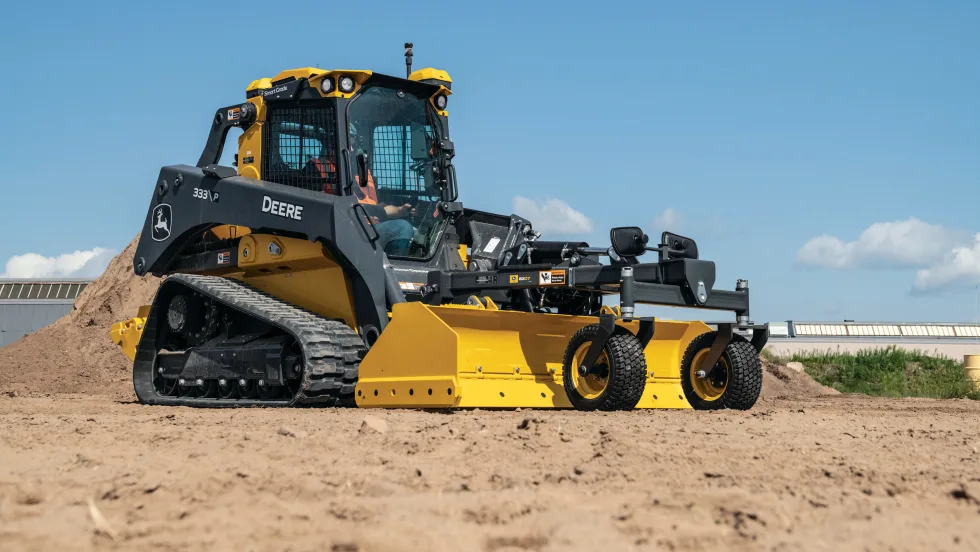
John Deere is expanding the capabilities of its compact track loaders with new grading attachments and an equipment protection option. The additions include two SmartGrade box blades for the 333 and 335 P-Tier models and an integrated fire suppression system for large-frame machines.
The updates aim to provide customers with more flexibility to use the machines for different jobs while improving service access and everyday operation.
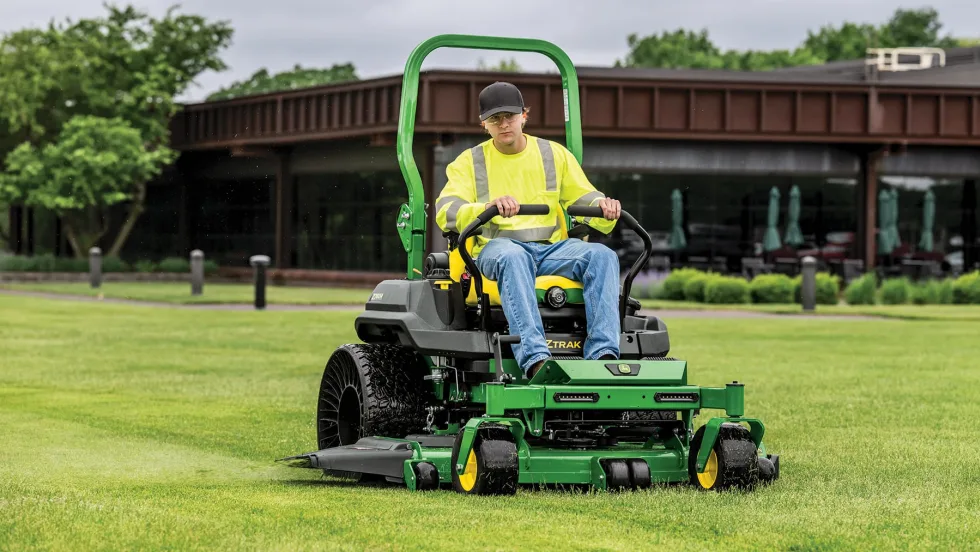
Public agencies responsible for maintaining large properties have several updated mower options from John Deere. The refreshed Z700 ZTrak lineup adds upgraded engines, transmissions, mower decks, and operator features across four models.
The acquisition brings a manufacturer of custom fire apparatus under Stellar Industries, expanding the work-truck manufacturer into the fire and emergency response market. Midwest Fire will continue operating from its existing Minnesota headquarters as a distinct company.
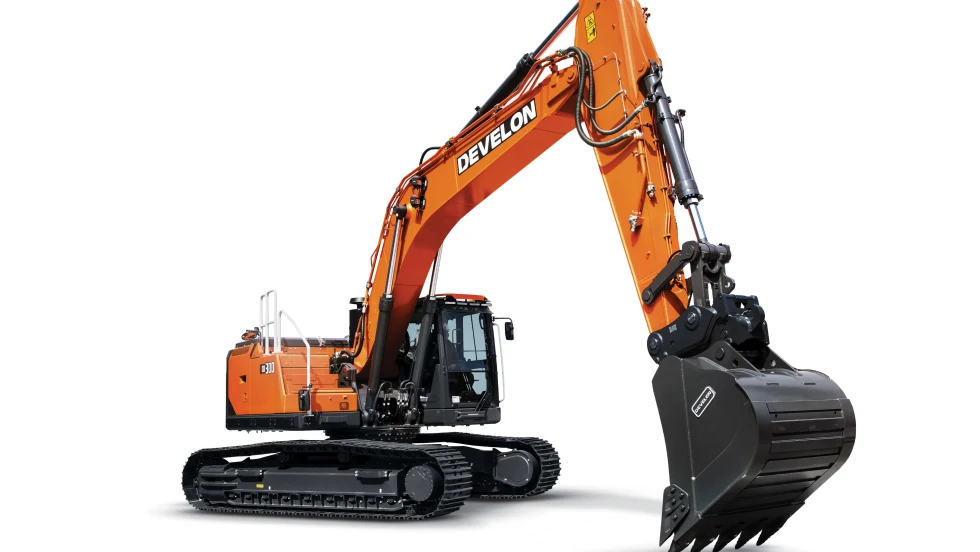
For public works operations handling infrastructure, road, and utility projects, DEVELON has added a new 33-metric-ton excavator to its equipment lineup. The DX300LC-9 combines updated controls with technology designed to address operator safety, equipment monitoring, and machine operation.
Equipment used every day in fleet maintenance shops comes with its own set of safety considerations. Following an 18-month redesign and testing process, BendPak's Ranger tire changers and wheel balancers have received certification to applicable U.S. and Canadian safety standards.
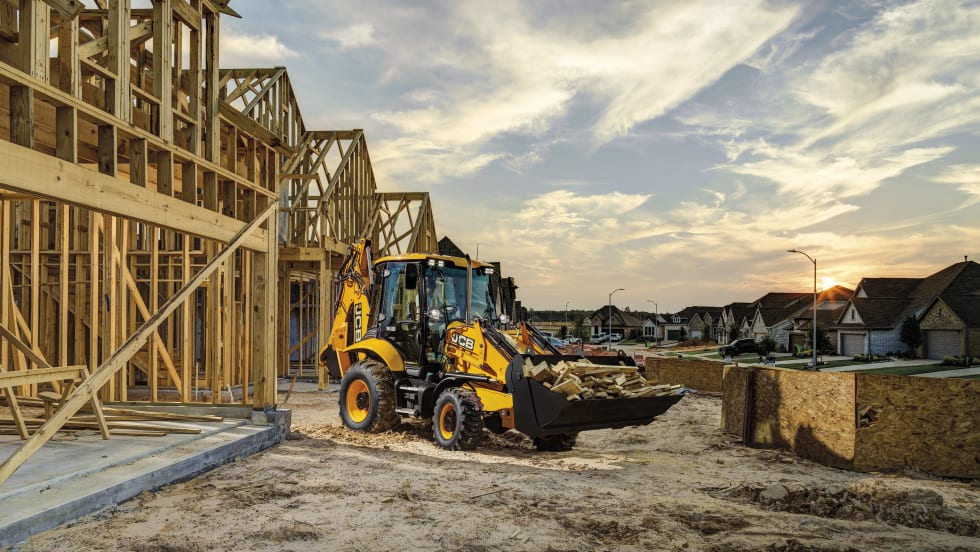
Public works operators traditionally switch positions and controls each time they reposition a backhoe during excavation. JCB's new Dual Drive system is designed to allow operators to move the machine while remaining at the excavator controls.
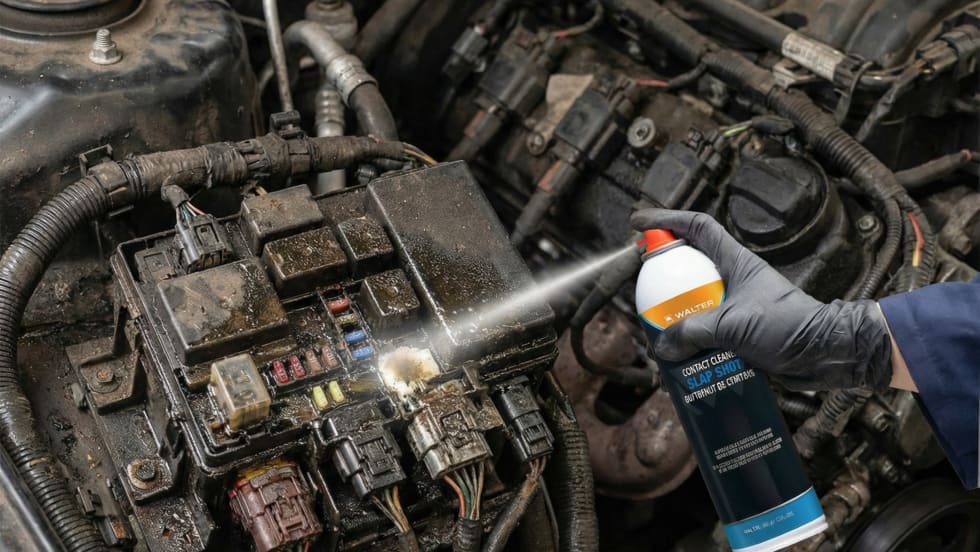
Slap Shot Contact Cleaner combines fast contaminant removal, rapid evaporation, moisture displacement, no-wipe
cleaning, non-conductive performance, and residue-free cleaning into a single solution.
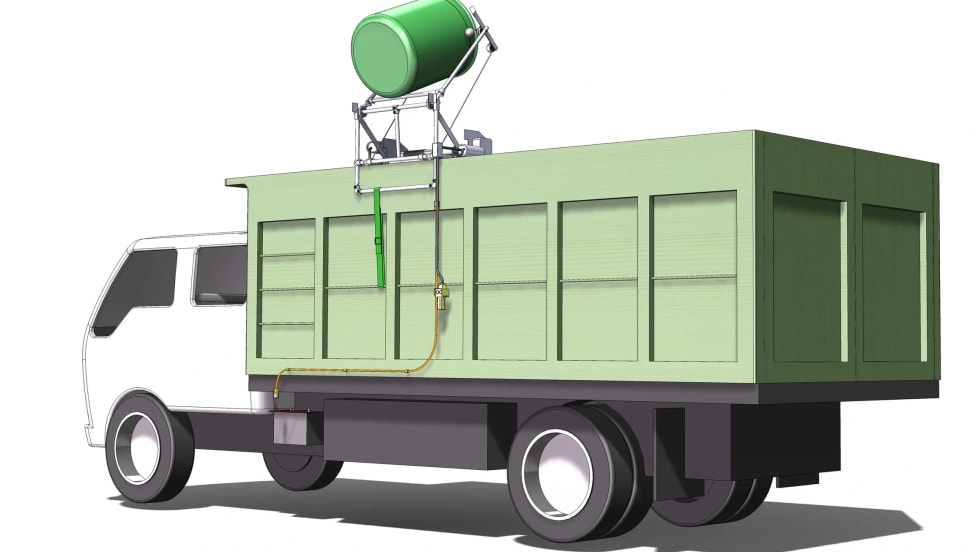
The Carry Barrel Lift is a new truck-mounted attachment designed to help landscape and municipal crews lift and dump heavy 60-gallon barrels more efficiently while reducing manual strain.