



At a Glance
Some common problems at fleet operations include:
Inadequate preventive maintenance
Old vehicles
Poor data analysis
Outdated fleet facility
Not sharing resources.
 MENU
MENU SEARCH
If another fleet manager or a consultant reviewed your operation today, what would he or she say? Fleet professionals discuss common fleet deficiencies and how to fix them.


Inviting another fleet professional, whether a hired consultant or from the neighboring agency, to review your operation can be an eye-opening experience. What would this person see that you can’t see, or how would he or she suggest solving some of the problems you know you have?
Fleet consultants and fleet managers who have worked at multiple operations talk about what they think are common fleet deficiencies and how to fix them.
Replace Old Vehicles
The economy is getting better, but that doesn’t mean fleets are replacing vehicles properly. Randy Owen, sr. vice president at Mercury Associates, and Jim Wright, CEO of Fleet Counselor Services, two fleet consulting firms, agree that vehicle replacements aren’t where they should be. Owen and Wright both worked for various public fleets before becoming consultants.
“One of the things we see lot of is old fleets,” Owen said.
Because fleet replacement is usually a lower priority for public agencies, vehicle replacements weren’t very well funded to begin with, Owen said. And just because the economy is getting better doesn’t mean replacement funding is where it should be. “Because most organizations fell so far behind, they’re just now getting back to where they were, to their historic under-funding,” he said.
He said fleet managers need to get better at communicating the business case to replace vehicles on time.
Although not every fleet may get full replacement funding, the improving economy is helping some. Wright said in the past year, he’s been able to set up replacement funds for a few of his clients that previously didn’t have them.
Wright said fleets need to fight for a vehicle replacement fund because otherwise, they’re fighting for capital money along with Public Works, Parks & Recreation, Police, and even elected officials who may prefer to see $75,000 going toward a park rehabilitation project rather than a dump truck.
“They spend a lot of time collecting data, but not enough time using that data to make better decisions about their fleet,” Owen said.
To get out of the competition for funding, fleet managers can start by conducting a survey of neighboring fleets to see if they have replacement funds. While this alone won’t necessarily convince management or elected officials, it will open the door for discussion, Wright said. The next steps are to perform a financial impact analysis, create the policy, and seek adoption.
Jon White, consultant for CST Fleet Services, cautioned that agencies are losing out on resale value (not to mention increased maintenance and repair costs) by keeping their vehicles too long. CST provides fleet consulting services with a focus on forecasting and modeling, and White has a background as a theoretical physicist.
To counteract this, fleet managers need to compare their vehicles’ life cycles with industry standards to determine whether they’re out of balance. Then, they can model and forecast the fleet from the proposed alternative life cycle to determine if that is an optimum time to sell, he said.
“We’ve seen some fleets where it makes so much more sense to [sell] a vehicle when there is still value in it rather than running it to the ground,” White said.
Make Sure Vehicles Get PM
Preventive maintenance (PM) is the backbone of a healthy fleet, and Wright said he finds inadequate PM programs in many fleets. The problem usually lies with user departments, which don’t place enough importance on PM.
“To them, it’s an oil change that you can do next month or the month after because they need [the vehicle] right now,” Wright said. Fleet managers should remind department heads that PM prevents time-wasting breakdowns and potentially dangerous vehicle failures.
Make Data-Based Decisions
Everybody should be collecting data with their maintenance software, but it’s how they use it that’s important.
“They spend a lot of time collecting data, but not enough time using that data to make better decisions about their fleet,” Owen said.
This may be because they’re short staffed in the office, the data is too overwhelming, or the fleet software system makes it difficult to extract the data, he explained.
Facing time and staffing challenges, how can fleets get the data they need? They can get help, Owen said. Public agencies can hire fleet consulting companies, the maintenance software company, outside firms, or even their own IT departments to do the work. Developing reports and query tools is a one-time thing, so once it’s set up, employees just need to refresh the data in those reports.
Once that’s done, however, fleet management needs to dedicate time to analyze this data. Data can be used to track key performance indicators, review maintenance costs and times, and even make the business case to prove that vehicles need to be replaced, Owen said.
Make Sure You’re Cost-Competitive
Staying competitive may seem like just a buzzword, but there are real consequences for fleets that don’t prove themselves to be so.
“I think fleet managers need to take the initiative to understand if they’re cost competitive or not, and if they’re not, why not,” Owen said.
He’s seen cost per vehicle for equivalent types of fleets vary as much as 200%. That’s not to say they can’t be different — harsh operating environments and fleet age can increase maintenance costs, but managers need to understand these differences if they’re asked to explain them.
To get a handle on this, Owen suggested talking to other fleet managers and attending conferences. Publications can also provide insight on what cost competitiveness means, how to measure it, and what factors drive a higher cost.
Pete Bednar, fleet manager at Ventura County, Calif., agreed. Bednar has worked in various fleets and has more than 30 years of experience.
“I think fleets sometimes get very complacent because they may not have had a competitive analysis done,” he said. “They might not have had a board of supervisors or council or somebody ask the question: ‘Is fleet really efficient?’ ”
He said managers need to run their fleet like a business, to be transparent in their actions in order to show why things are done the way they’re done.
“I show [staff] what their costs are, what the competitor’s costs are, articles where organizations have been taken over,” he said. “I don’t want them to think this is a threat. I want them to understand this is a business reality. When I’m asking them to do things, I want them to understand why we’re doing it.”
Move Out of the Old Fleet Facility
Old vehicles aren’t the only problems with fleets — old facilities are another one, and the problems they cause can snowball into operational dysfunction, Wright said.
“Historically, fleets are the last department to ever get any facility needs evaluated,” Wright said. “You find technicians working outside on fire equipment because they can’t get it inside the building, or heavy equipment, or contracting out things because they can’t do it in-house because of the facility.”
An inadequate facility hampers the entire operation by providing insufficient parts storage, reducing labor productivity, and leading to excessive vehicle downtime. This affects user departments, which in turn affects service to residents.
Fleet managers should get user departments to support the fleet’s proposal for a new facility, Wright said. To do this, they need to provide data showing the downtime that results from an old facility. If this can help user departments, they’re more likely to get behind the idea.
Old vehicles aren’t the only problems with fleets — old facilities are another one, and the problems they cause can snowball into operational dysfunction, Wright said.
Don’t Work in Silos
White thinks fleet segments within the same government agency need to stop working in silos. For example, in some agencies, one department may not share fuel with another department because of internal accounting issues, even when doing so would save the driver time. Not sharing resources, maintenance, or fuel when it makes sense to do so creates operational inefficiency.
Justifying the breakdown of silos can be difficult, but fleets can do so by modeling and forecasting alternative fleet maintenance or fuel profiles to parametrically justify this change. By doing so, fleets can define the benefits of consolidation or sharing and show how it affects the bottom line, White said.
Work with User Departments
Fleet is often considered a support organization, but that doesn’t mean it should do everything the customers ask, Bednar said. Fleet management has evolved to become a steward of the fleet, and fleet managers need to steer fleet in the right direction rather than take orders.
How do you wrest control away from departments used to having their say?
“You have to have your facts and data to show with a cost-benefit analysis,” Bednar suggested.
Nancy Bean, CAFM, fleet manager for the City of Provo, Utah, wanted to make sure customer departments understood that fleet operations services numerous departments and has to address everyone’s needs. She has 35 years of fleet experience and previously worked in the state of Washington. Shortly after joining the City of Provo last year, she formed a fleet advisory committee with members from each of the user groups to educate from the top down and grow consensus that everyone has a stake in balancing needs.
“It was a positive step in all the departments seeing equipment needs at the city level, as opposed to just their department level,” she said. “Public safety is important, but if the garbage doesn’t get picked up, we’ve got another problem.”
The committee allows members to approach vehicle purchases on a city-wide level, Bean said. It’s going so well, the group has also put together a sustainable five-year vehicle replacement plan.
Build Relationships Within Fleet
The fleet manager role at Provo had been vacant for a while before Bean joined, and she wanted to build relationships within the department. She wanted to create a culture of teamwork, where everyone would work together to improve efficiency and be willing to share their strengths.
The fleet division now conducts classes about once a month, where a staff member teaches others how to do something he or she does well. For example, a good welder will give a class about welding, or another staff member may share his trouble-shooting skills.
She also encourages cross-training, with the goal of bringing other employees’ skills and knowledge to a higher level. This allows their expertise to grow and at the same time provides fleet with a back-up if someone leaves the organization.
“It’s a busy job; there are a lot of irons in the fire. So mentoring somebody to fill your shoes is often overlooked,” she explained.
Bednar said understanding what motivates each staff member is essential to running a great operation. “Some people want money, or different job tasks, or another role or promotion,” he said. Understanding this will allow the fleet manager to create a better team environment so everyone can work toward the same goals.
Seek Outside Opinions
While some may feel threatened by the idea of someone coming in to look at their fleet, seeking an outside opinion or guidance can be rewarding. Wright said in his line of work, about 30% of the fleets he gets called in to review are running efficient operations, and he often gets calls from the best fleet managers for his opinion. Owen at Mercury Associates said the top-performing fleets will often call in a consultant to supplement their staff for a specific project.
J. Darryl Syler, fleet manager for the City of Dublin, Ohio, was hired after a reorganization, and Syler was tasked with getting a better handle on vehicle utilization and lifecycle, starting almost from scratch. He had previously worked in fleet in Arkansas, but rather than go it alone, he called Wright and signed up for the Certified Fleet Management Operation (CFMO) certification from the Government Fleet Management Alliance.
For three years, staff worked on a goal to improve fleet, creating a mission statement, business plan, capital improvement plan, utilization plan, service level agreements, fleet user guide, and customer service surveys, among other projects.
“It’s been fun. And I’ve gotten gray-headed over it,” Syler said. “The technicians have enjoyed it because they know where they stand with the other departments; the departments respect fleet now. These guys know what they’re doing on the floor when it comes to taking care of vehicles.”

Fleet car sales doubled, but the bigger picture tells a different story in this week’s roundup.
Read More →
St. Johns County, Florida, had fleet data, but turning it into reliable decision guidance was another matter. Instead of starting over with a new fleet management system, the county connected existing tools and built a scoring system that gives managers an objective look at fleet health.
Read More →
New one-day registration lets fleet professionals attend Tuesday, Wednesday, or Thursday, with passes available for $249.
Read More →
Two variants of the concept shuttles were revealed: a low-floor configuration and a high-floor configuration.
Read More →
What if your next technician hasn’t worked in a fleet shop yet? What fleets are doing to free up time.
Read More →
With more than 8,000 vehicles and pieces of equipment to maintain, the City of Phoenix could not afford to wait for fully trained technicians to walk through the door. Instead, they revamped their entire workforce strategy and showed how public fleets can create their own talent pipeline while preparing existing employees for increasingly complex vehicles.
Read More →
Could a change in how work gets done help your fleet return vehicles to service sooner?
Read More →
Public fleets have more data than ever, but inconsistent records and missing information can still undermine maintenance, replacement, and cost decisions.
Read More →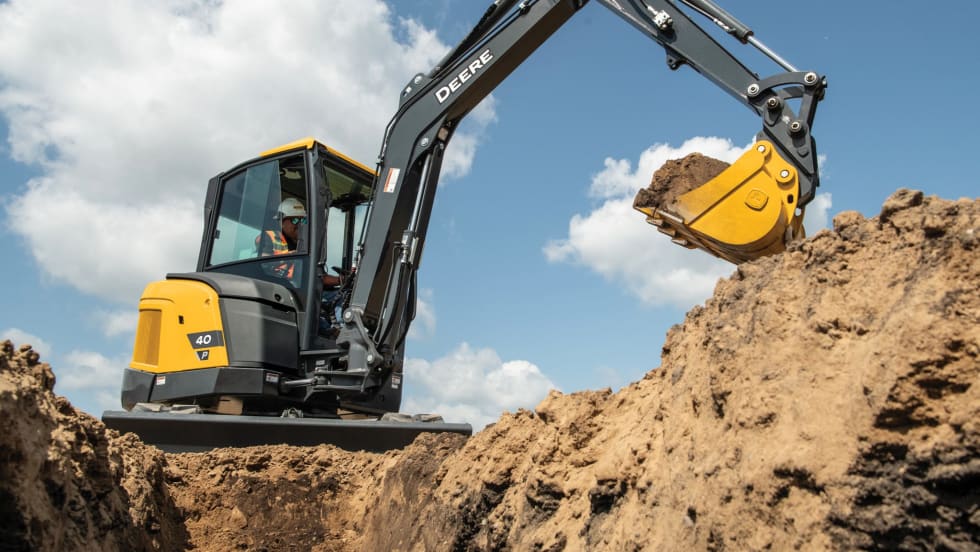
John Deere is adding a compact excavator designed for crews that need to move equipment between jobsites and handle multiple types of work with one machine. The 40 P-Tier weighs less than 10,000 pounds and offers configurable hydraulics, attachment options, and connected fleet-management capabilities.
Read More →
This week, we look at what past Leading Fleet winners can teach us about making progress, plus how to build a business plan your fleet will actually use.
Read More →