




Edmonton's Program for Transformation: Working Together for Positive Changes
Provincial capital city Edmonton, Alberta, has the largest integrated municipal fleet operation in Canada and has earned numerous accolades for major improvements made over the last few years. However, focus on workplace culture may be its most significant achievement to date.

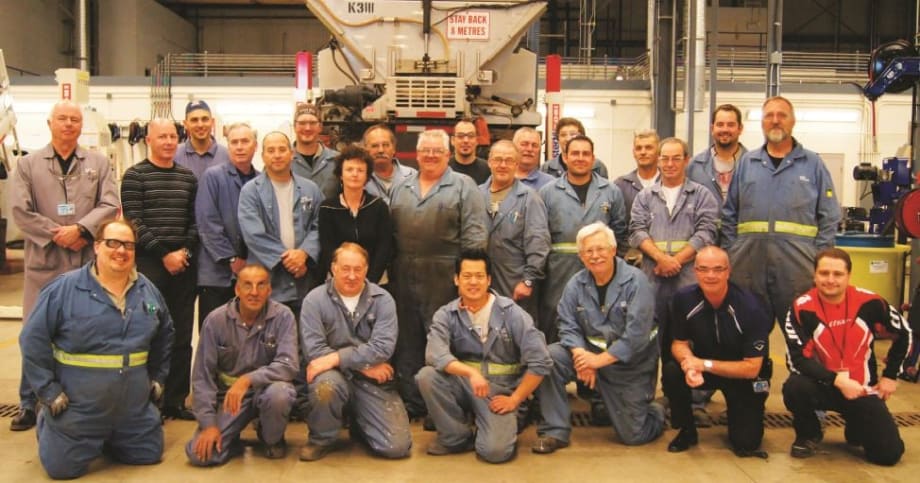
The City of Edmonton's fleet staff is what makes its Fleet Services Branch one of the best in North America. Photo courtesy of the City of Edmonton.
The City of Edmonton's fleet staff is what makes its Fleet Services Branch one of the best in North America. Photo courtesy of the City of Edmonton.
At a Glance |
At the Edmonton, Alberta, Fleet Services branch, workplace benefits include:
|
Comprised of 4,742 units, the City of Edmonton’s Fleet Services Branch in Alberta is the largest integrated municipal fleet operation in Canada, according to the branch. With 15 maintenance facilities, it serves 34 departments/branches, working to ensure all units are well maintained, equipped, safe, and available for use on a daily basis.
Earning Impressive Accomplishments
While the fleet’s size and scope is one thing, there are a number of other reasons it has earned a spot among the Top 20 of North America’s 100 Best Fleets in 2012. Over the last few years, the fleet has made major transformations — and has achieved numerous accomplishments as a result of its efforts.
To name a few, the fleet has:
● Achieved environmental stewardship and 100% environmental regulatory compliance.
● Worked with clients to reduce City rental fleet expenditures by $1.38 million.
● Implemented a fleet management information system (FMIS) with an initial investment of $7.5 million.
● Improved the time it takes to perform bus mechanical and body midlife refurbishments by 19%.
● Reduced overtime by 39% over 2011.
● Improved heavy truck fleet downtime by 29% through redesign of shifts and production line management to increase client fleet availability.
While Edmonton’s Fleet Services Branch has much to be proud of, its focus on employees and workplace culture may be the branch’s most significant achievement to date.
Transforming the Workplace

Rapanos. Photo courtesy of the City of Edmonton.
Without the people who make up Fleet Services, the branch could never achieve so many milestones. “Our staff of 723 are very knowledgeable, proficient, and proud of the work they do,” Branch Manager Steve Rapanos said. “They develop innovative solutions to complex mechanical, fabrication, and engineering challenges.” Branch personnel, divided into six sections, are the City’s experts in all things fleet-related, such as procurement, maintenance and repair, engineering, fuel management, safety, and administration.
With the level of value Fleet Services staff provides, the City has made a conscious investment in developing, training, and protecting its people. The fleet makes it a point to consistently recognize staff for length of service, educational achievements, commitment to safety, innovation, and leadership in service. It also offers leadership training for supervisors and foremen to promote professional growth, while helping the leadership team create action plans for accomplishing goals.
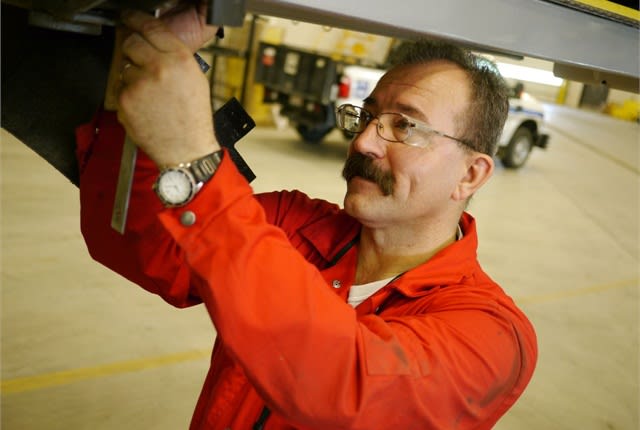
Edmonton fleet staff at work. Photo courtesy of the City of Edmonton.
In 2012, the branch is on track to complete 18,128 personnel hours in fleet-related technical, safety, and operational training to maintain and upgrade staff technical skills. “Training is key to a diverse fleet services operation like ours. Employees need the best knowledge and resources available to be productive and successful in their work while maintaining such a diverse fleet,” Rapanos explained. “Our clients are also attracted to having the newest units and technologies, so we have to keep up with the latest maintenance techniques.”
Safety is a top priority at the City. Fleet Services provides user departments with proactive and preventive fleet safety programs, with the goal of increasing safety for all City drivers, and offers workplace safety training for all branch employees. “Our branch has reduced lost-time frequency by 18% and lost-time severity by 83% through training with an emphasis on the proper procedures while on the job and what to do in the event of an injury,” Rapanos said.
[PAGEBREAK]
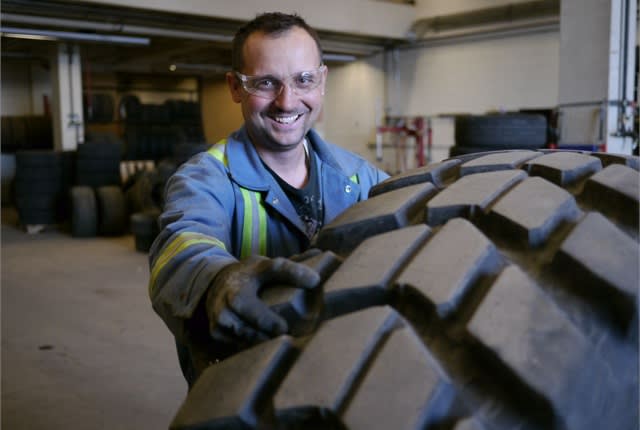
Edmonton fleet staff at work. Photo courtesy of the City of Edmonton.
Measuring Workplace Culture
Although the fleet is clearly seeing progress in its efforts to improve conditions for its staff, the branch seeks ways to provide evidence of the cultural shifts in the organization.
Every two years, the City administers an Employee Engagement and Diversity Survey. “It’s an opportunity for all employees to identify our strengths and weaknesses as a workplace,” Rapanos said. “It’s also one of the most important ways in which we learn how to improve — both as a place to work and as an organization that is building on its vision to be vibrant, inclusive, and innovative.”
Since 2008, Fleet Services has also conducted two organizational culture surveys to better assess leadership performance; shop supervisors and foremen are included in the survey. “The survey explores our current culture. When comparing the 2008 results to those in 2011, we had improved in 11 of 12 dimensions, showing we are closer to our desired culture,” Rapanos said.
Fleet Services has made several improvements as a result of these surveys. For one, it has placed more emphasis on improving communication through regular staff meetings, monthly employee newsletters, and town halls. New in 2011, the branch started hosting quarterly Fleet Services leadership sessions with more than 100 shop foremen, controllers, supervisors, and directors that focus on professional development and management skills. The meetings have increased communications within garages and management and have received positive feedback from participants. In addition to daily client communications, Fleet Services encourages two-way communications through informal conversations, a client forum, a quarterly client newsletter, and through an annual client survey.
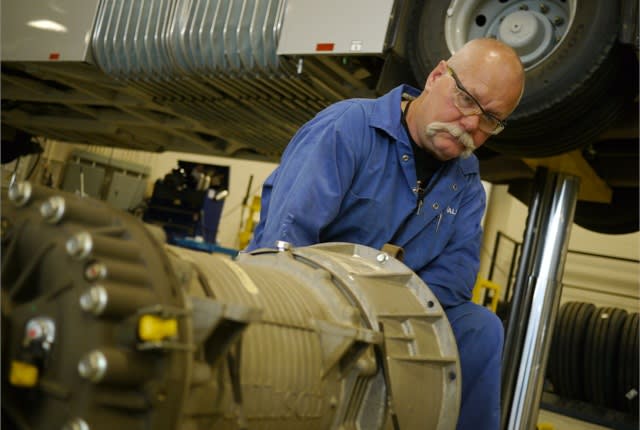
Edmonton fleet staff at work. Photo courtesy of the City of Edmonton.
“When we first embarked on our transformation program, it was clear we needed to act more as a client-focused and accountable organization,” Rapanos said. “That meant a change in the way we do business, and we needed to equip our leadership with new skills to lead employees through that change. We also included a tier of people in supervisory roles (foremen and controllers) directly in the management conversation instead of relying on garage supervisors to cascade information.”
And finally, Edmonton’s Fleet Services Branch created employee engagement committees, both at the local shop level and at the branch level. These committees meet regularly to address and share employee concerns and successes in the workplace and have an opportunity to interact monthly with senior management. “Improving workplace culture isn’t just a one and done fix. To create a culture of leadership, you have to continually measure, make new goals, and work toward them,” Rapanos said.
The Transformation Continues
The City’s strategic focus for 2013 reflects its continued commitment to a positive, high-performing culture. In the coming year, the fleet plans to:
● Increase employee engagement.
● Create and execute strategies to improve customer service.
● Leverage information technology to increase efficiency and effectiveness.
● Improve communication internally and externally.
● Optimize apprenticeship training.
● Advance Fleet Services as a leading best practice fleet maintenance provider.
With a clear agenda for the year to come, the City of Edmonton’s Fleet Services Branch is set to further its evolution and likely continue its history of achievement. Of course, in Rapanos’ words, the work is never done.
SOURCE:
Steve Rapanos, branch manager, City of Edmonton Fleet Services Branch, Alberta, Canada.
More Operations

AI, Police Fleet Readiness and Fire Apparatus News
See how AI, a reworked police-vehicle upfitting process, and a fire apparatus acquisition could affect public fleet operations.
Read More →
Stay ready, set and safer with verified fleet inspections.
When fleet inspections aren’t verifiable, missed defects can quickly become downtime, safety risks, and service delays. This white paper shows government and municipal fleet leaders how digital inspections can improve accountability, catch issues earlier, and keep vehicles ready when they’re needed most.
Read More →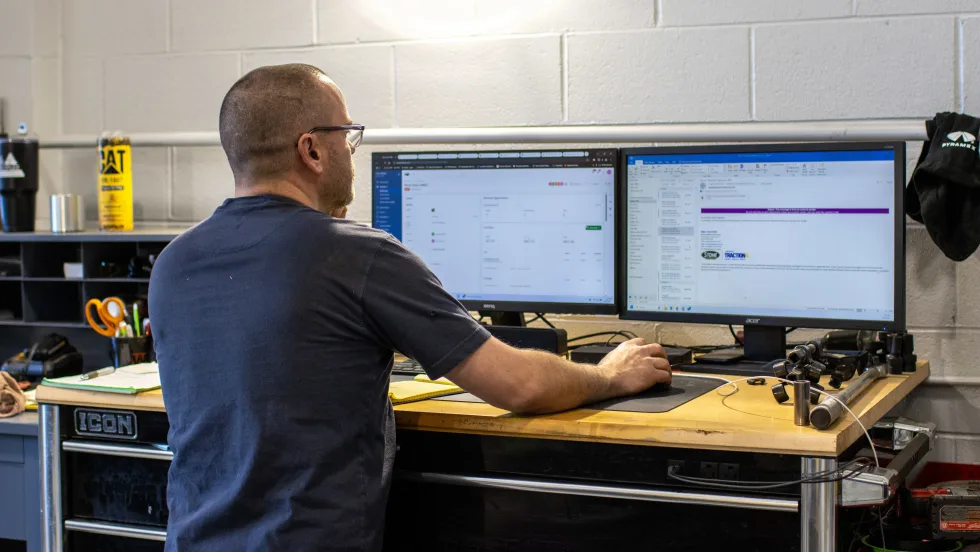
How AI and Automation Work Together to Reduce Government Fleet Downtime
As their assets age and their budgets’ purchasing power shrinks, government fleet managers are facing growing pressure to do more with less.
Read More →
Police Fleet Innovation, EV Strategy and AI
See how public fleets are rethinking police vehicle readiness, electrification, workplace culture, and driver workflows.
Read More →
From What He Inherited to What He’ll Leave Behind: David Renschler’s Lessons in Leadership
David Renschler walked into Fairfield with plenty to learn and no idea what awaited him. Twenty years later, the lessons from what came next are still shaping his approach to fleet.
Read More →
Turning a Bottleneck Into a Blueprint: How Tallahassee Rethought Police Fleet Readiness
For Tallahassee, finally receiving 87 delayed police cruisers created a new problem: how to get them on the road without creating a massive backlog. The solution would change more than the upfit process.
Read More →
Have Fleets Changed Enough to Solve the Technician Shortage?
Are government fleets finally closing the gap on the technician shortage, or are critical challenges still holding them back?
Read More →
How Public Fleets Are Rethinking Vehicles, EVs, and Culture
From mission-specific vehicles to EV planning and culture change, this week’s stories show how public fleets are rethinking the way they operate.
Read More →
How Salem, Oregon, Turned Culture Change Into a No. 1 Fleet Ranking
Fleet availability reached 98.95% after Salem empowered employees and used performance data to guide years of steady improvement.
Read More →
EV Shifts, Salem’s Rise and GFX 2027
From hybrids and extended-range electric vehicles, to the changes that helped Salem, Oregon, become the No. 1 Leading Fleet.
Read More →