




Equipment Pools Aid Cost-Cutting and Utilization
Increasingly, Intra- and Interagency government jurisdictions are collaborating to share pooled equipment and vehicles. The practice not only helps procure expensive specialty equipment, but also helps right-size fleets.

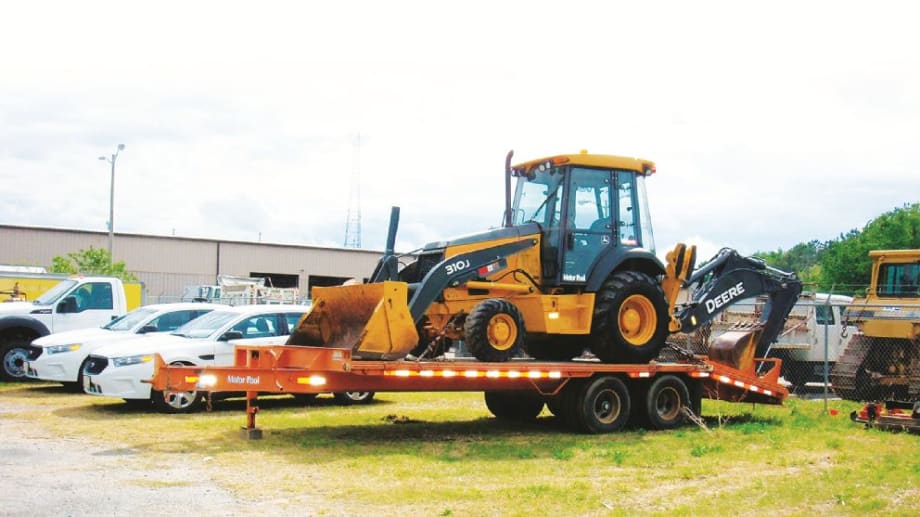
An equipment motor pool at the City of Chesapeake, Va., consists of 29 units.
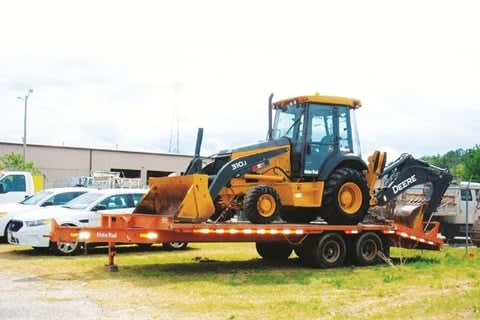
An equipment motor pool at the City of Chesapeake, Va., consists of 29 units.
At a Glance
Key elements of organizing a vehicle/equipment pooling program include:
A comprehensive utilization study and analysis.
Fleet reduction with disposal of underutilized vehicles.
Buy-in from senior management.
Establishing good working relationships with intra- and interagency partners.
Neighbor helping neighbor — a time-honored American community ideal. And as a business concept, neighboring public-sector jurisdictions, large and small, are finding vehicle and equipment sharing can save costs, create efficiencies, and serve as a best practice in resource utilization. Intra- and interagency vehicle and equipment pools are growing in popularity in municipalities and counties throughout the country. At its best, it’s simply a matter of mutual aid.
Mutual Aid a Cultural Value in Rural Michigan

Chelsey Foster, city manager, City of Ithaca, Mich.
That’s how Chelsey Foster describes the pooling agreements the City of Ithaca, Mich., has established with neighboring jurisdictions. “It’s a mutual aid arrangement, part of the culture here in Gratiot County,” said Foster, who has served as Ithaca’s city manager for the past three years.
Nestled in the center of Michigan’s Lower Peninsula, the City of Ithaca’s four square miles are home to 3,000 residents. Founded in 1855, the City is the Gratiot County seat, a rural agricultural area with a population of 42,000.
Equipment pooling among the City of Ithaca and its neighbors provides a solution for smaller cities and towns whose budgets cannot accommodate the expensive specialty vehicles and equipment.
“We find the times we need advanced equipment are not frequent enough to justify purchasing,” Foster said. Yet the equipment is required for public works activities.
For example, in 2009, Ithaca considered purchasing a new $100,000 street sweeper, a big-ticket item, particularly during difficult economic times. However, officials at the nearby City of St. Louis agreed to share use of the sweeper, paying Ithaca about $9,000 in annual rental fees, plus the cost of replacement brushes, based on the State of Michigan Department of Transportation’s Schedule C.
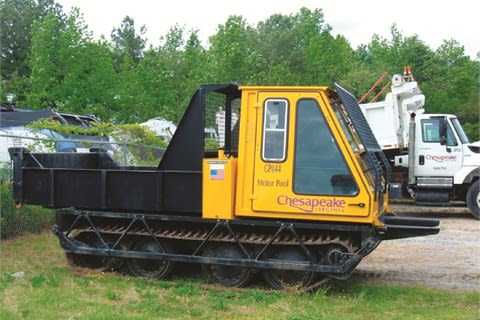
An equipment motor pool at the City of Chesapeake, Va., consists of 29 units.
The City of Ithaca uses revenue from renting the street sweeper, a sewer vacuum truck, and gravel road grader to build its equipment fund, Foster said.
In return, Ithaca has agreements to rent such items as specialty sewer tools, underground boring equipment, and post-digging gear from neighboring villages and townships.
In addition, Foster said, “when any construction projects are being planned, we touch base with each other to see who may have equipment we need.”
Pooling arrangements for big specialty equipment and vehicles are detailed in formal agreements specifying usage, compensation, labor rates if applicable, and liability issues.
For single-day, smaller equipment needs, Ithaca and its neighbors offer each other informal “in-kind support,” Foster said. “The City of Alma had a sewer flow meter we needed recently, so an Alma City employee dropped off the equipment to us while on a lunch break.”
Much of this cooperation happens at local municipal managers’ informal meetings. “We meet the last Tuesday of the month, over lunch, to share information and look for opportunities to collaborate,” Foster explained.
He advised jurisdictions interested in starting pooling agreements to establish working relationships with neighboring governments and look for opportunities to share equipment and vehicles among each partnering agency’s inventory.
Be sure the final pool agreement stipulates adequate fees to cover the equipment owner’s costs, plus all consumable materials, Foster cautioned. And, he added, “Have an attorney review the agreement for liability concerns, because accidents do happen.”
Equipment Pooling Works on a Larger Scale in Denver
Equipment pooling works well in larger-scale applications, as demonstrated in the consolidated city-county government of Denver, which covers 154 square miles populated by nearly 620,000 residents.
“We pool all types of heavy equipment — loaders, tractors, backhoes — the big items. And we pool cars and light vehicles as well,” said Ernie Ivy, Denver’s director of fleet management.
His division’s equipment pooling customers are Denver’s public works agencies: Solid Waste, Street Division, Traffic, Engineering, Parks and Recreation, and Waste Water.

Ernie Ivy, director of fleet management, City and County of Denver.
A 42-year fleet veteran with 25 years of management experience, Ivy began considering a pooling program for Denver’s Department of Public Works in 2003.
“I met with Jim [Wright, president of Fleet Counselor Services], and we looked at utilization,” Ivy recounted. “Out of that study came pooling because so much of the fleet was underutilized.”
Ivy formed a utilization committee consisting of Denver’s mayor and chief of staff, the finance manager, and budget director. They brought Denver’s equipment and vehicles under centralized fleet management and identified underutilized units.
“We took a lot of that equipment and sold it or reassigned it, and saved millions of dollars,” Ivy said. The initial equipment sale proceeds totaled $3.2 million.
Once right-sized, the fleet implemented an equipment pooling program to adequately support customer needs, particularly specialty equipment and vehicles. Public works agencies pay an hourly fee and delivery charge for each pool unit.
Ivy plans additional equipment locations throughout Denver to improve customer delivery and return of pooled units. In the future, Ivy also wants to install electronic monitoring and rental administration systems to reduce staffing requirements and facilitate customer use.
In addition to streamlined, cost-efficient inventories, the pool program cuts maintenance costs and improves replacement schedules, Ivy said.
“Certain maintenance tasks must be done every year. Performing maintenance on underutilized units is a waste,” he explained. “We can get more mileage and usage out of equipment and can replace it in a timelier manner.”
For Ivy, cost-effective fleet utilization is an ongoing effort. “We examine utilization yearly, although unofficially, I look at it every quarter. Utilization is key, and thinking outside the box. How can things be changed — as we did with equipment pooling — to save money without affecting operations or your customers’ needs?"
[PAGEBREAK]
City of Chesapeake Motor Pool Offers Flexibility
Vehicle flexibility is another way the City of Chesapeake, Va., motor pool offers cost savings for City fleet customers, according to George Hrichak, CEM, CPFP, fleet manager.

George Hrichak, CEM, CPFP, fleet manager, City of Chesapeake, Va.
The City of Chesapeake — a 353-square-mile municipality in southeastern Virginia with a population of 223,647 — owns and operates a fleet totaling 1,400 vehicles and 800 pieces of off-road, construction, and turf and garden equipment. Hrichak directs the centralized fleet management organization, funded with a $14 million budget.
Following a utilization analysis conducted to reduce fleet size and uncover vehicle and equipment duplication, Hrichak pulled low-use vehicles from their assigned City agency and established the motor pool. Tracking usage further, he sold off or otherwise disposed of underutilized units.
“It’s not easy to get departments to give up low-use vehicles. It requires a top-down approach,” developing a utilization policy with buy-in from senior city management, Hrichak noted.
Limited to use within City limits, the 29-unit Chesapeake motor pool’s heavy-duty pool vehicles include backhoes, trailers, and dump trucks.
Half the pool’s truck chassis are designed to accommodate interchangeable bodies to enhance utilization flexibility. For example, a truck can be equipped with a stake body for Parks and Recreation use and, at other times, a salt spreader for Street and Highways or a dump body for Stormwater. Incorporating multipurpose truck chassis and a variety of bodies in the motor extends each truck unit’s use, providing cost savings for both the fleet and its client agencies.
While a staff person handles client contact for heavy-duty pool units, a Fleet Focus system tracks customers and use, and manages accounting details.
On the light-duty side, use of the motor pool’s vehicles are limited to within City limits. When drivers need to leave City boundaries, the policy requires that they check out a rental car through the City’s rental agreement with Enterprise.
Hrichak continues to work on improving fleet utilization percentages, working toward his goal of a more efficient, effective, optimally utilized fleet with vehicles spread throughout the City to serve customers.
[PAGEBREAK]A 10-Step Guideline to Perform a Utilization Study
A well-designed equipment pooling program begins with a fleet utilization study. Jim Wright, president of Fleet Counselor Services (FCS), offers these tips to conduct a utilization study.
An equipment/vehicle pool should be managed by fleet management.
Obtain an up-to-date fleet inventory, sorted by class and sequenced by age, with the most recent meter reading and date. Creating the report in a spreadsheet program such as MS Excel allows a variety of sorting methods.
Develop usage standards for the fleet. FCS recommends a monthly average of 300 miles for vehicles and 20 hours for the past year for hour-metered equipment.
Determine usage, then develop a list sorted by class or all low-usage vehicles and equipment.
Develop a report with specific recommendations for each unit. Recommendations for individual unit utilization might include starting a pool, placing in storage for later use, off-setting replacement needs, or disposal.
Develop an agency-wide utilization policy with no exemptions. However, certain individual vehicles, such as a Zamboni ice resurfacer, may be exempted from usage studies.
Pool rental rates should follow private sector prices (daily, weekly, monthly, long term) and must cover the unit’s ownership and maintenance costs or the vehicle should be disposed. Departments renting pool units should be responsible for fuel costs.
Detail the annual average maintenance cost by class. These costs are direct and indirect savings.
Identify the original purchase price and projected replacement cost of each low-use vehicle that stays in the fleet, and have them ready to show potential savings numbers to management.
A utilization study of pooled equipment and vehicles should be performed annually.
Is Private Rental an Option for Equipment Pools?
While equipment pooling is often the most cost-effective way to servie fleet customer needs, commercial rentals are an appropriate option in certain circumstances.
Emergencies and local disasters frequently push equipment needs beyond fleet capacity. An open purchase order with local equipment and vehicle rental agencies can provide the extra resources quickly.
“Worry about the cost after the emergency is under control,” advised Jim Wright, president of Fleet Counselor Services. “The critical task in an emergency is getting vehicles where they’re needed.”Private-sector rentals can also be employed as a reserve resource. When a right-sized fleet pool occasionally runs short of a daily rental unit, fleet staff can arrange vehicle delivery from a rental agency to the fleet customer.
Short-term leases are a valuable option in covering seasonal equipment demands. For example, a parks and recreation department requires six extra pickups during spring cleanup, but the fleet pool cannot afford to deplete its supply without impacting other clients. A negotiated, three-month lease agreement with a private rental company is the solution.
Sources
Chelsey Foster, city manager, City of Ithaca, Mich.
George Hrichak, CEM, CPFP, fleet manager, City of Chesapeake, Va.
Ernie Ivy, director of fleet management, City and County of Denver
Jim Wright, president, Fleet Counselor Services
More Equipment
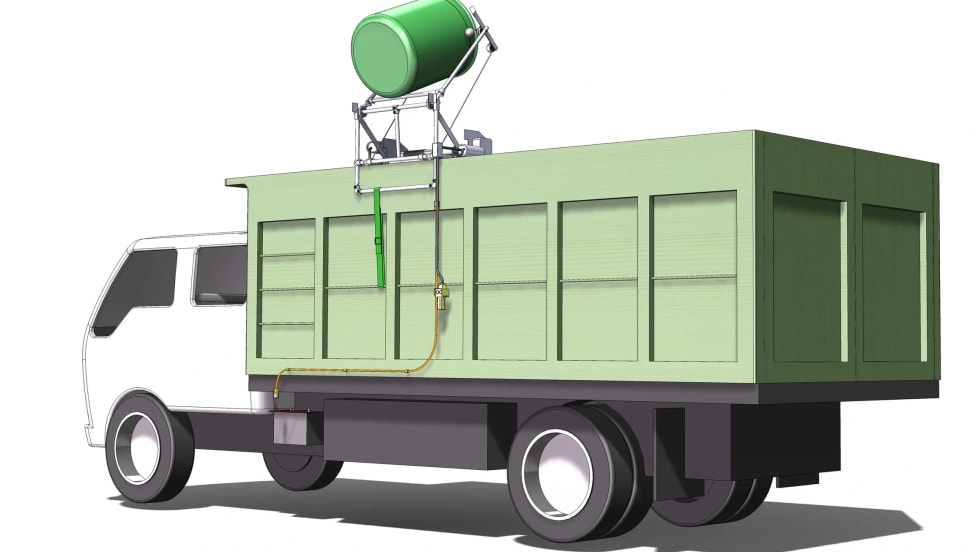
New Powered Carry Barrel Lift Helps Crews Dump Heavy Barrels Into Trucks With Less Manual Lifting
The Carry Barrel Lift is a new truck-mounted attachment designed to help landscape and municipal crews lift and dump heavy 60-gallon barrels more efficiently while reducing manual strain.
Read More →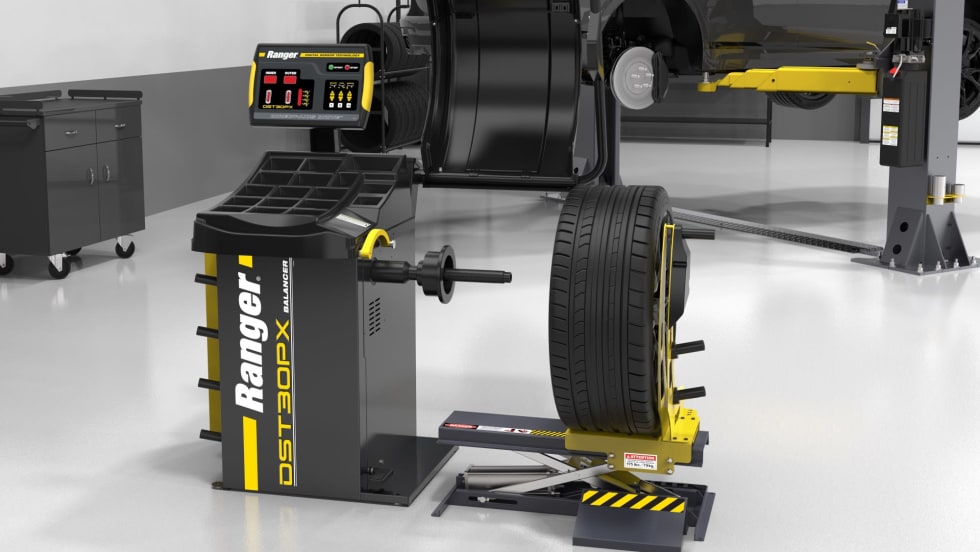
New Ranger RWL175 Universal Wheel Lift Delivers Faster, Safer Mounting on Most Wheel Balancers
Ranger’s new RWL175 Pneumatic Wheel Lift is designed to help technicians safely mount wheel assemblies up to 175 pounds while reducing strain and improving shop efficiency.
Read More →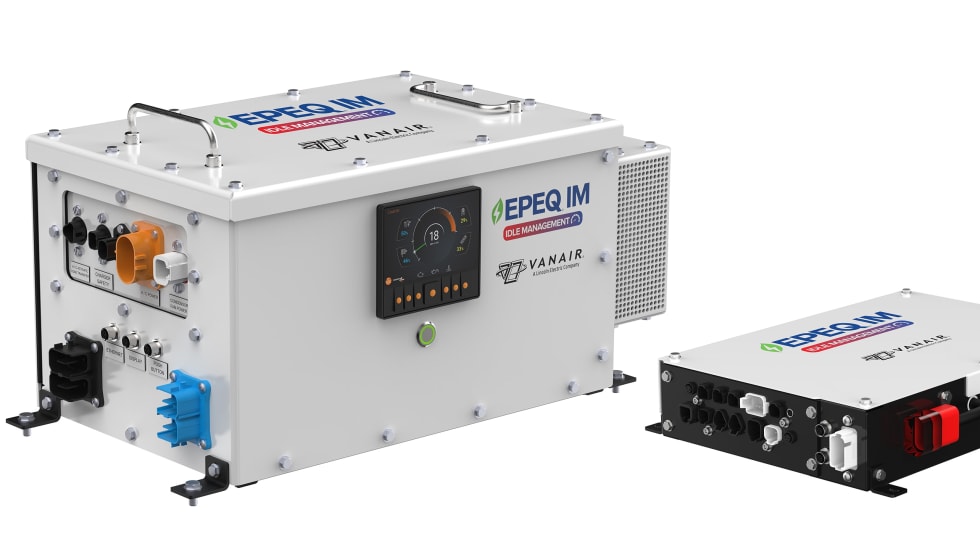
Vanair Introduces EPEQ IM HVAC System
Vanair introduced its EPEQ IM HVAC idle management system, designed to reduce engine idling, lower maintenance costs, and extend vehicle life through factory HVAC integration and automated climate control.
Read More →
Panasonic Connect Launches the TOUGHBOOK 56
Panasonic introduces the TOUGHBOOK 56, a rugged, modular laptop designed for public safety and field operations, featuring AI-ready processing, expanded connectivity, and enhanced security.
Read More →
Sonim XP5plus 5G Available on AT&T and FirstNet
Sonim’s XP5plus 5G rugged device is now available on AT&T and FirstNet, combining push-to-talk capabilities, LMR interoperability, and 5G connectivity for public safety and enterprise users.
Read More →
New BendPak Wheel Spotting Dish Simplifies Lifting and Parking
BendPak added a wheel spotting dish kit as standard on its two-post lifts, designed to improve vehicle positioning accuracy and reduce setup time in service bays.
Read More →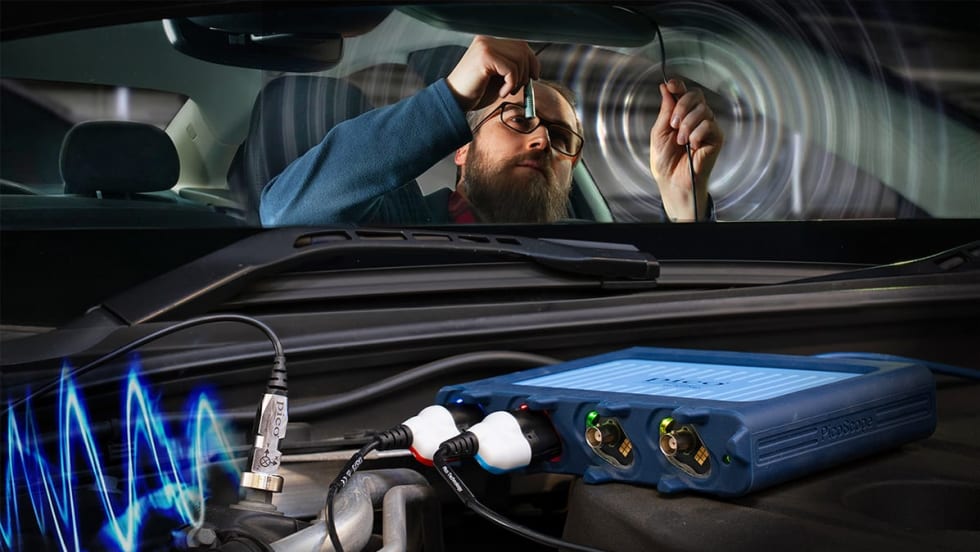
Pico Technology Introduces NVH Diagnostic Probes and Kits
Pico Technology introduced new NVH diagnostic probes and kits designed to streamline noise and vibration testing, enabling multi-axis data capture in a single test while reducing setup time and configuration errors.
Read More →
Tenhold Debuts Next-Generation Vehicle Systems for Law Enforcement and Public Safety
Tenhold launches a new line of vehicle mounting systems for first responders, including a firearm lock designed for durability and in-field security, with deployment across more than 25 states.
Read More →
Pierce Manufacturing Updates & Resource Introduction
Pierce delivers its 1,000th Paccar MX-13-powered fire apparatus, a 107-foot aerial ladder truck built for the Broussard Fire Department with a 510-hp engine and integrated pump system.
Read More →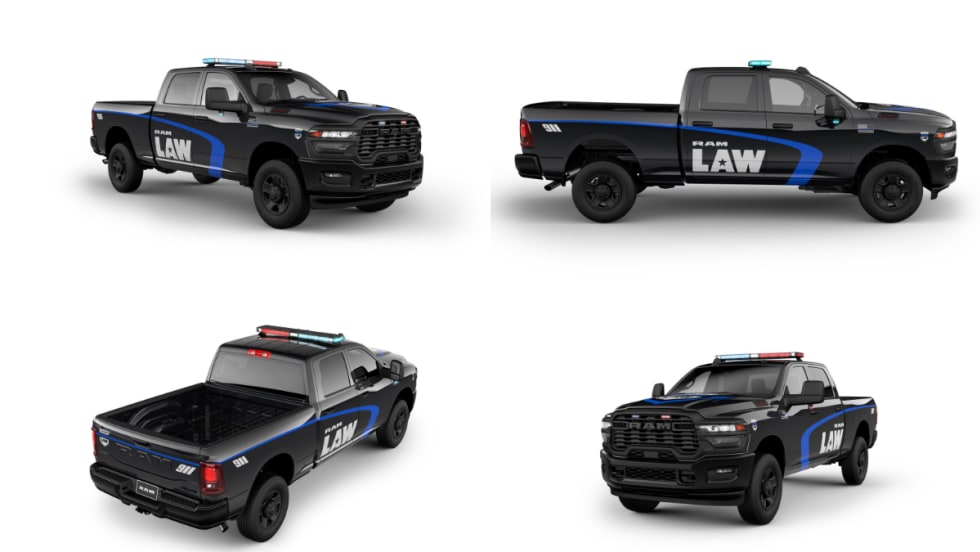
2027 Ram 2500 Emergency Response Vehicle Debuts as Pursuit-Capable Heavy-Duty Truck
Ram introduces a pursuit-capable 3/4-ton emergency response truck, with V-8 power, 400-amp electrical capacity, and performance validated in Michigan State Police testing.
Read More →