




Calif. Mandates State Agencies Use Reconditioned Parts & Order Solar-Reflective Colored Vehicles
SACRAMENTO – The California Department of General Services (DGS) recently issued management memos mandating steps that State agencies must take the reduce fleet costs and protect the environment.
SACRAMENTO – The California Department of General Services (DGS) recently issued management memos mandating steps that State agencies must take the reduce fleet costs and protect the environment. Memo 12-06, issued May 18, requires that State agencies request reconditioned, previously used, and/or remanufactured automotive parts whenever possible, as well as us re-refined or synthetic motor oil and lubricants. Memo 12-03, issued April 16, states that State agencies ordering light-duty vehicles must order them in solar-reflective colors (white, silver metallic, and gold metallic).
According to Michael Liang, assistant deputy director, Office of Public Affairs, DGS, the main driving factor behind using reconditioned parts is reduction in repair costs.
“The Department of General Services identified the use of reconditioned, used, remanufactured auto parts as a current best practice being employed by some agencies to save costs. It was decided to make this informal practice a formal policy in order to extend the practice across more agencies and thereby save the State additional costs,” Liang wrote in an e-mail to GF.
Most state agencies outsource some or all their fleet maintenance, and fleet managers can decide on the use of used parts on a case-by-case basis, depending on availability, cost, vehicle age, etc.
The State requires agencies to reduce their fleets’ consumption of petroleum products, and use of synthetic lubricants is one way to achieve this.
All State entities under jurisdiction Government Code §11000, unless specifically exempted, are affected by this memo.
Memo 12-03 requires agencies to select solar-reflective vehicles when practical when purchasing off the California contact. This mandate is expected to reduce fuel consumption through reduced use of vehicles’ air conditioning systems. The mandate stems from a solar-reflective vehicle color study the DGS conducted with Lawrence Berkley National Laboratory. The study found that “solar reflective coatings for opaque surfaces of the vehicle shell can decrease the ‘soak’ temperature of the air in the cabin of a vehicle parked in the sun, potentially reducing the vehicle’s ancillary load and improving its fuel economy by permitting the use of a smaller air conditioner.”
Liang said the results of the study prompted the State to incorporate solar-reflective vehicle colors in the fleet in 2011. White has been the default color of the State’s vehicle contracts, and this mandate makes silver metallic and gold metallic standard colors as well.
“This policy still provides flexibility if vehicles must be a specific color, for emergency response purposes, for example,” Liang stated.
All State entities under jurisdiction Government Code §11000 are affected by this memo. Pre-approved exemptions include vehicles over 8,500 GVWR, vehicles not rated for highway speeds, such as electric carts, and emergency vehicles equipped with emergency lights. Fleet managers may send written requests for exemptions to this policy.
By Thi Dao
More Maintenance

Freeing Technicians for Higher-Priority Repairs
Could paid interns help public fleets free up experienced technicians for more complex repairs?
Read More →
Stay ready, set and safer with verified fleet inspections
When fleet inspections aren’t verifiable, missed defects can quickly become downtime, safety risks, and service delays. This white paper shows government and municipal fleet leaders how digital inspections can improve accountability, catch issues earlier, and keep vehicles ready when they’re needed most.
Read More →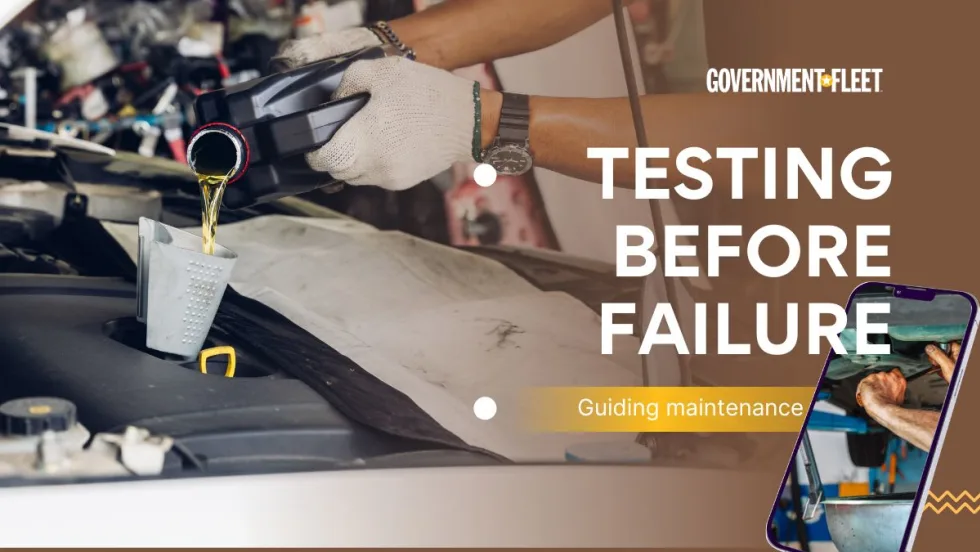
Using Oil Analysis to Help with Engine Losses
How a Texas city changed its lubrication practices and began tailoring preventive maintenance intervals after test results showed oil degradation and fuel dilution.
Read More →
Hidden in Plain Sight: Fleet Compliance Risks
Fleet compliance isn't just about having policies — it's about consistently enforcing them. This practical guide reveals six hidden compliance risks common in public sector and shared fleet operations and outlines proven strategies to improve visibility, accountability, and audit readiness.
Read More →
Is Your Fleet Garage Holding Back Your Operation? | The Fleet Breakroom
Norman Barrientos of Barrientos Design & Consulting explains how agencies can use operational data to show decision-makers why a replacement or major renovation is needed.
Read More →
Reducing Long-Term Maintenance Costs and Downtime
Downtime is rarely caused by a single surprise failure but rather by an issue that builds over time through setbacks ranging from deferred maintenance to poor replacement planning. So what's the fix?
Read More →
The Future of Government Fleet Technicians with Mike Cleary
Insight on preparing for hybrid and electric vehicle service, what fleets need to know about recruiting technicians in a competitive market, and how to make the most of limited training budgets.
Read More →
Work Orders Are More Than Records. They're a Roadmap to Fleet Availability
What if your work orders could predict failures, uncover hidden costs, and boost fleet availability? Here's how leading fleets are using the data.
Read More →
Drive More Profit with Greater Fleet Uptime
Fleet downtime costs money. JASPER helps keep vehicles on the road with quality remanufactured components, fast nationwide delivery, and reliable solutions that boost uptime and profitability.
Read More →
Smart Seasonal Maintenance Tips for Government Fleets
Government fleets carry extra weight, and routes, schedules, and public trust depend on reliability. A systematic spring checklist keeps vehicles in service when agencies need them most.
Read More →