




Sweeper Test Results Highlight Impact of Sweeping on Reducing Storm Water Pollution
ELGIN, IL – Elgin Sweeper,the leading manufacturer of street sweepers, has released results of a rigorous sweeper test performed by an independent group of storm water control experts, that demonstrate the efficiency of Elgin Sweeper street sweepers in removing storm water pollutants.
ELGIN, IL – Elgin Sweeper,the leading manufacturer of street sweepers, has released results of a rigorous sweeper test performed by an independent group of storm water control experts, that demonstrate the efficiency of Elgin Sweeper street sweepers in removing storm water pollutants. The test was conducted on four Elgin Sweeper models – a prototype Crosswind NX high-performance filter regeneration sweeper with dust control, the regenerative air Crosswind, the vacuum Whirlwind MV and the mechanical Waterless Eagle FW.
“In today’s economy, everybody has to do more with fewer resources,” said Brian Giles, sweeper products manager at Elgin Sweeper.
“Municipalities are required to put best management practices in place to reduce storm water pollution, and many are using structural treatment devices like underground vaults and drain catch basin inserts that are expensive to install and maintain.” However municipalities are spending their money, Giles emphasized the importance of getting a measurable return. “From the standpoint of dollars per pound of pollutant removed from the storm water, these test results confirm what we already knew – that nothing comes close to matching the effectiveness of Elgin Sweeper street sweepers in removing storm water pollutants,” Giles added.
The sweeping industry has long been looking for a way to quantify repeatable effectiveness of sweepers on picking up street debris. “Over the last 20 years, several tests have been conducted to try to determine if street sweepers reduce storm water pollution,” Giles said. “A number of sweeper manufacturers are making claims about what their machines can do to reduce storm water pollution without any supporting data.”
[PAGEBREAK]
Elgin Sweeper made a significant investment in conducting an independent, credible, repeatable test to measure the sweeping efficiency of its sweepers. “Now we can provide our customers and the industry with solid, factual data on the efficiency of our sweepers in picking up street debris and removing storm water pollutants,” Giles said.
According to Giles, Elgin Sweeper wanted quantifiable results of what the storm water experts say about the performance of its street sweepers. The company sought out Pacific Water Resources, Inc. (PWR), one of the most credible, recognized independent experts on storm water control in the United States.
“PWR has developed a state-of-the art load estimation procedure called SIMPTM (simplified particulate transport model) that can quantify urban pollution loadings and accurately estimate optimum cleaning practices for streets and catch basins,” Giles said. Developed and refined over a period of approximately 20 years, SIMPTM has been used on numerous occasions to predict pollutant loading and wash-off processes and is considered by many industry experts to be the most credible storm water quality modeling package in the United States.
“Roger Sutherland, the president of PWR and a leading storm water control expert in his own right, was directly involved in the test conducted on our sweepers,” Giles said. Sutherland is a senior water resources engineer with 30 years of professional engineering experience in drainage master planning, water quality management planning, riverine hydraulics, flood management and water quality facility design.
Using modeling tools that accurately simulate the sediment accumulation and wash-off behaviors and their interaction with cleaning practices, Sutherland and PWR designed and implemented a series of controlled street dirt pick-up performance tests for the four Elgin Sweeper models. The purpose of the field test was to measure the efficiency of the Elgin Sweeper machines operating under conditions typically found throughout the United States.
According to PWR’s test results, Elgin Sweeper’s prototype Crosswind NX high-performance filter regeneration sweeper with dust control removed 97.5 percent of the pollutants; the standard regenerative air Crosswind removed 96.4 percent of the pollutants; the vacuum Whirlwind MV removed 93.5 percent of the pollutants; and the mechanical Waterless Eagle FW removed 91.5 percent of the pollutants. The Waterless Eagle with water spray was also tested and removed 81.0 percent of the pollutants.
[PAGEBREAK]
Giles said Elgin Sweeper encourages other sweeper manufacturers to take this independent test and see what results their sweepers achieve. “We would like the sweeper industry to consider making this a standard test to measure the efficiency of all sweepers on the market.”
As part of the field test, five controlled pick-up performance tests were conducted by PWR on the four Elgin Sweeper models over a three-day period at a curbed test track. Giles said the controlled street dirt accumulations were formulated to simulate average street dirt. Each test was based on initial street dirt accumulation of approximately 792 pounds per curb mile – 7.5 pounds (3405 g) spread evenly over a 50-foot by 2-foot track. The street dirt loadings used for these tests were well within the range of both accumulated mass and particle size distributions (PSDs) observed as part of the Nationwide Urban Runoff Program conducted more than 20 years ago.
The average forward sweeping speeds for these tests were specified at 5 mph and were measured from 4.7 to 5.1 mph. The use of water spray for dust suppression was not used in five of the six tests. One test with the Eagle Waterless FW sweeper was conducted with the use of water spray. The same unit was also tested without the use of water.
Overall pick-up efficiency for each sweeper tested was computed as a percentage of the initial weight removed and was based on the weight of the remaining material collected after the sweeping operation, compared to the known weight of stimulant spread evenly among the test track. A sieve analysis was conducted by a certified third-party soils lab on each of the six remaining material samples collected after each test and on a single sample of the stimulant itself. The results of these analyses allowed PWR to estimate the overall pick-up efficiency of each sweeper test and the pick-up efficiencies for each of the eight particle size groups used in the sieve analysis.
“Elgin Sweeper is committed to providing municipalities with environmental solutions that reduce storm water and air pollution,” Giles said. “From our alternative fuel-powered sweepers and waterless dust control sweepers, to our regenerative filtration systems, Elgin Sweeper is a technology leader in developing innovative products that result in cleaner streets, water and air.”
[PAGEBREAK]
Located in Beaverton, Ore., Pacific Water Resources, Inc. is an engineering consulting firm specializing in the fields of hydraulics, hydrology, water quality modeling and evaluation, fluvial geomorphology, sediment transport, and computer-aided mapping. Recognized as a leader in watershed management planning and design, PWR’s technical expertise has been at the forefront of every major regulatory and technical advancement for assessing, enhancing and protecting water resources since 1978. For more company information, or to learn more about the SIMPTM test procedure, visit www.pacificwr.com.
To learn more about Elgin Sweeper’s role in reducing air and storm water pollution, find out how to make Elgin Sweeper’s proven waterless sweeping technology part of your community’s best management practices, or download a free white paper outlining the results of the sweeper efficiency test, please visit www.elginsweeper.com/airandwater.
For additional information on Elgin Sweeper’s line of sweepers or to schedule a demonstration, please visit www.elginsweeper.com or see your local Elgin Sweeper dealer.
More Operations
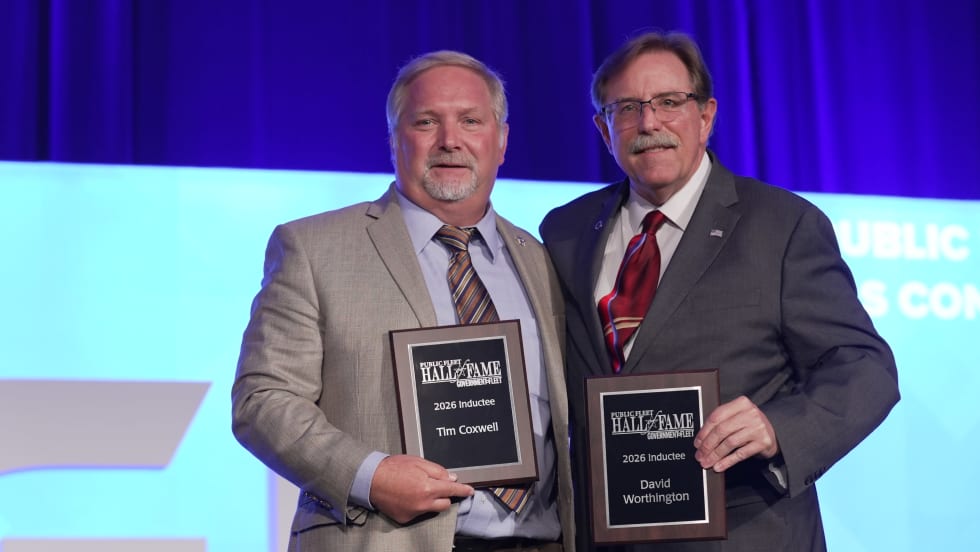
2026 Public Fleet Hall of Fame Inductees Honored
Honorees are recognized industry leaders and pioneers who have significantly contributed to the public fleet profession.
Read More →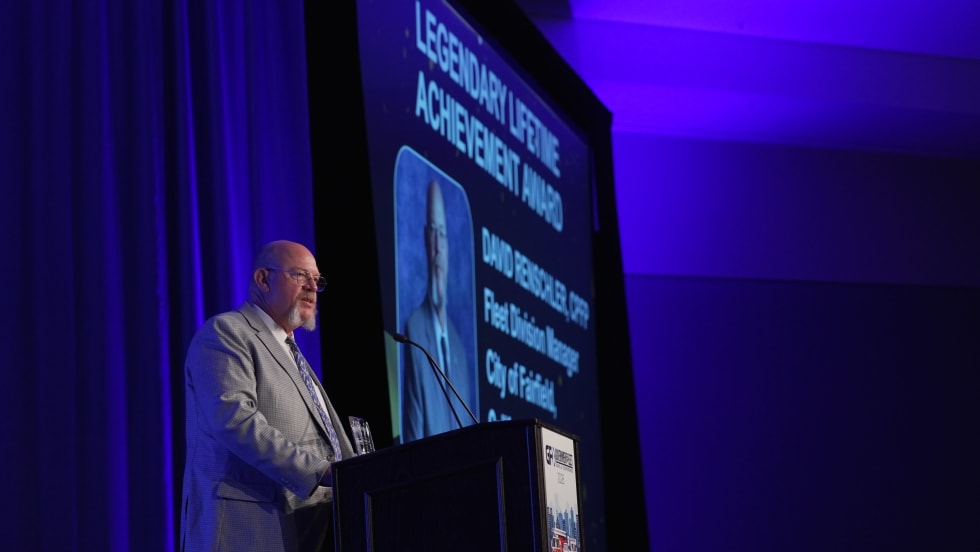
David Renschler Receives 2026 Legendary Lifetime Achievement Award
Andy Campbell of Sourcewell, which partnered with Government Fleet in presenting the award, recognized Renschler.
Read More →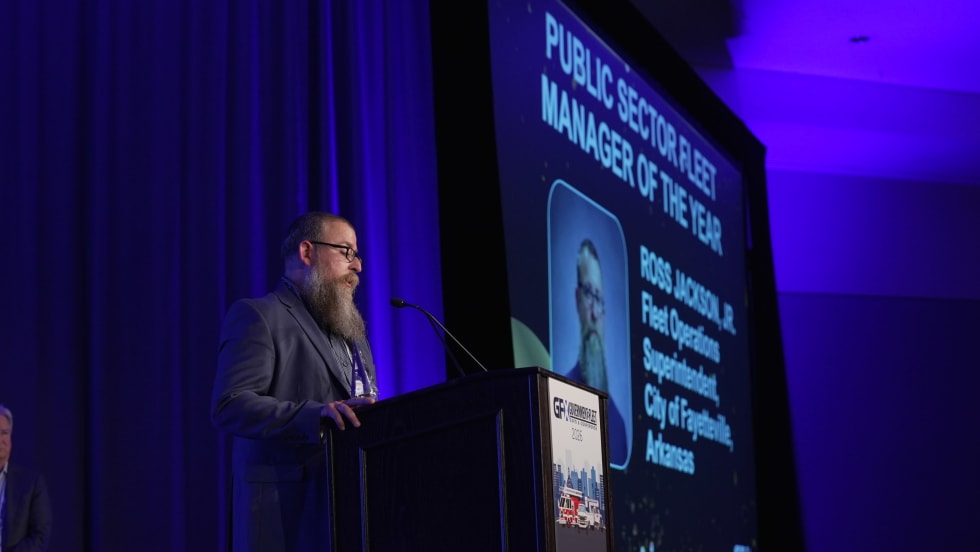
Ross Jackson Jr. Named 2026 Public Sector Fleet Manager of the Year
Ross Jackson Jr. is the Fleet Operations Superintendent with the City of Fayetteville, Arkansas.
Read More →
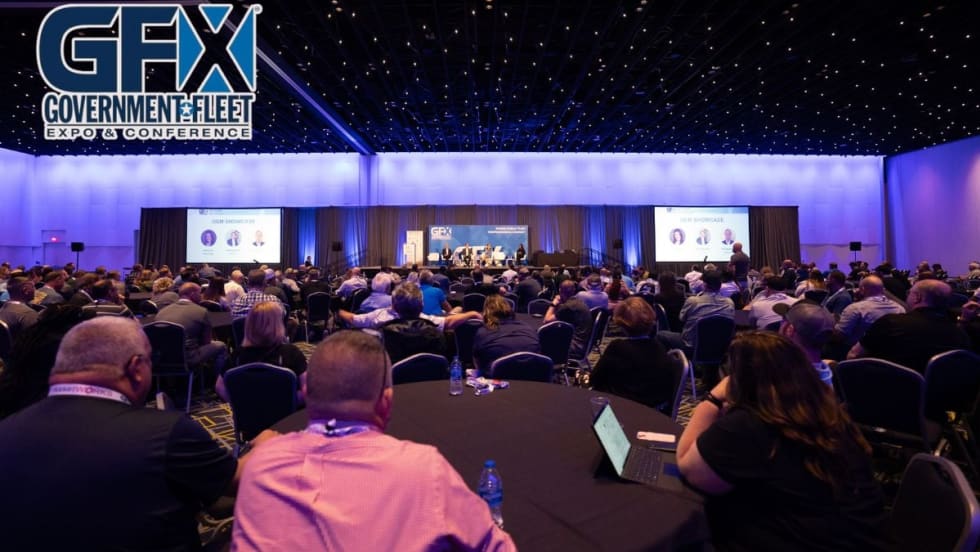
Public Fleet Professionals Set to Converge as GFX Gets Underway
Known as the largest gathering of public fleet professionals in the nation, GFX will feature in-depth training sessions, emerging fleet technologies, and access to leading suppliers and service providers.
Read More →
The Technician Pipeline: Finding, Keeping, and Promoting Techs Within the Operation
A look at where to find good talent, what fleets are doing to incentivize those techs to stay within the fleet, and what promotion looks like for a technician within the public sector.
Read More →
5 Public Fleet Stories Worth Revisiting Before GFX | The May Dispatch
Public fleet leaders are being asked to prepare for more, communicate better, and make decisions that hold up under pressure.
Read More →
Drive More Profit with Greater Fleet Uptime
Fleet downtime costs money. JASPER helps keep vehicles on the road with quality remanufactured components, fast nationwide delivery, and reliable solutions that boost uptime and profitability.
Read More →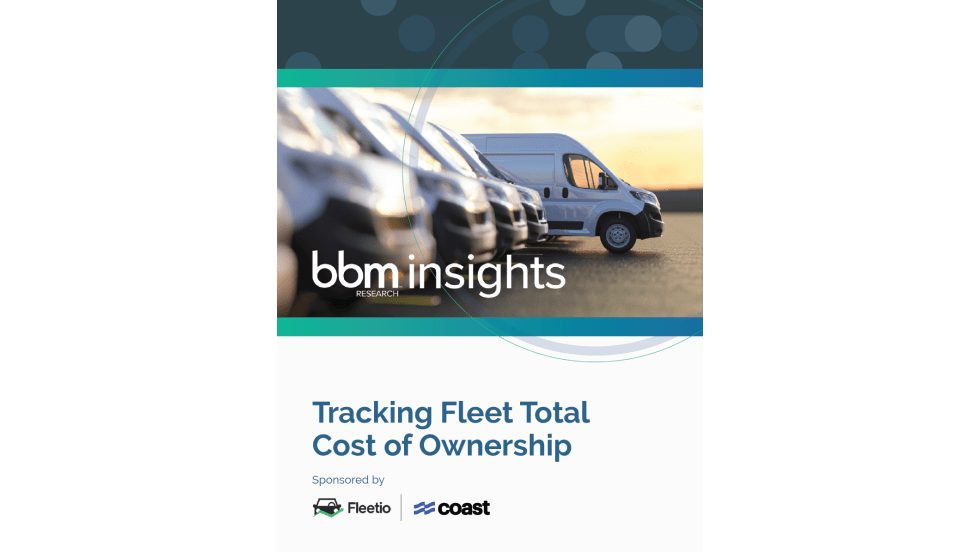
Are You Tracking Your Fleet's True Total Cost of Ownership?
Bobit Business Media surveyed 190 fleet professionals and found that while most fleets are tracking costs, fragmented systems and data gaps are keeping true TCO visibility out of reach. With rising pressure to control spend in an increasingly volatile environment, the gap between what fleets think they know and what the data actually shows is wider than you might expect. See how your peers are managing costs today and where the industry still has room to improve.
Read More →
Minneapolis Fire Department Prepares to Add Three New Pierce Enforcer Pumpers to Front-Line Fleet
The order, secured through Pierce dealer MacQueen, marks the department’s move from commercial chassis pumpers to Pierce custom fire apparatus designed to meet the operational demands of Minnesota’s largest city.
Read More →
The Human Side of Fleet Leadership: Lessons from Larry Campbell
As public fleets navigate rapid change through AI, telematics, and increasing operational pressures, Larry Campbell believes the fundamentals of leadership matter more than ever. The longtime fleet leader reflects on accountability, integrity, and why earning trust remains the foundation of a successful fleet operation.
Read More →