




Spec'ing the Right Fire Apparatus for the Job
Writing specifications for a new fire apparatus can be daunting. Determining the intended purpose is the first step, but there are many paths to take from there.

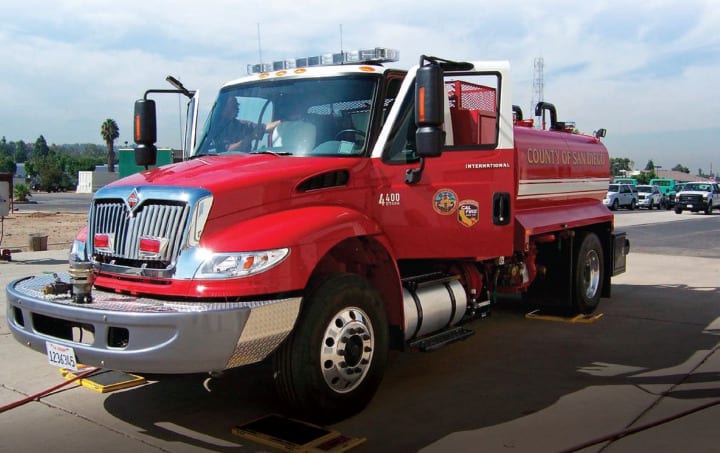
Selecting a fire apparatus is a detailed job requiring hours of research. Factors such as determining the vehicle's function and essential apparatus capabilities are important.
The first step in spec'ing a fire apparatus is to determine its intended purpose.
"In my opinion, the key to acquiring any vehicle is acquiring the right one for the job and/or intended purpose. This might seem like a simple concept; however, any vehicle acquisition will be unsuccessful if the final product does not fulfill its intended mission from an operational, cost, safety, and acceptance standpoint," said John Clements, manager, fleet operations, San Diego County.
According to Gordon Schoonmaker, fleet operations supervisor, Spokane Valley, Wash., Fire Department, the next step is determining the fire apparatus capabilities. He then looks at what apparatus type would suit his fleets' needs best.
"We ask questions, such as do we need top- or side-mount pumps; custom or commercial chassis; mid- or rear- mount aerial; small, medium, or large rescue body, etc.," said Schoonmaker. "How a new apparatus fits into the department is a consideration as well. We try to keep similar apparatus as much as possible. It eases training requirements for mechanics and firefighters and helps reduce parts inventory."
These factors are even more critical, according to Clements, because a fire apparatus is "life and safety equipment, complex, very specialized, expensive, and a long-term investment for the owning agency."
Fire Apparatus Spec Preparation Varies
Once the intended use and purpose of a fire apparatus is defined, the next step is to prepare the specs.
Corey Call, fleet operations chief, CALFIRE and Napa County, Calif., Fire Department first questions personnel who will use the apparatus. "I then meet with the Battalion Chief or chief of that area. I contact fire apparatus manufacturers I know and advise them that I am looking to build."
San Diego County's Clements takes a similar approach. "Our first step in preparing fire apparatus specifications is to meet with the end-user (fire agency) and define their needs, including items specific to their department such as four-wheel drive due to rural terrain."
Currently, the county's fire support program is unique as it acquires apparatus, assigns them to existing fire departments, and then, from a fleet perspective, provides maintenance and fuel support. Due to the county's situation, officials concurrently meet with fire services staff who manage the fire program, to provide assistance in defining requirements, standardizing apparatus and equipment between departments, and determining additional equipment needs such as hoses, nozzles, etc.
"I think the practical application of our process for other agencies is to be sure and obtain input from all the players - direct and indirect," said Clements.
The next step in San Diego County's fact-finding process is identifying all accessory equipment (breathing apparatus, hose, tools, etc.). County staff thoroughly researches equipment available in the industry, including current and anticipated regulatory requirements related to the type of apparatus under consideration.
"I hear some agencies say their purchasing department restricts them from talking to potential vendors to avoid favoritism," said Clements. "Although communications with a manufacturer is sometimes abused, it is essential an agency know what manufacturers are capable of supplying."
San Diego County employs a few final steps in the specification process.
"First, we never assume we know it all. Involving all major players in the process, seeking information from other fire agencies and experts are all part of our process," said Clements. "Second, and probably most important, we have end-users review the specifications before the bidding process." This pre-bid review can also include manufacturers, noted Clements.
The county's final step in developing specifications is to research how a given apparatus can best be acquired. Options include a traditional bidding process, an existing bid from another agency, and/or purchase of an already built demonstrator unit.
Schoonmaker has a standard spec for pumpers, the bulk of his purchases. "Each time we buy another pumper, an apparatus committee consisting of firefighters, myself, and an assistant chief review the spec and determine what worked and what didn't and incorporate changes. We also look at any new options or technology that may work well for us."
Timothy Calhoun, director of fleet services, Palm Beach County Fire Rescue, Fla., works with an apparatus committee that includes members from every level within the department.
"We meet bimonthly to discuss capital purchases and apparatus specifications. Last year, we started a new subcommittee of operators on specific apparatus to survey EMTs, driver operators, etc., to get their opinions and concerns," said Calhoun. "We also sent a 28-question online survey about the design of our current fire trucks that received a 67-percent response rate."
Members of the Palm Beach County Fire Rescue committee have also visited other fire departments, requested demos from vendors, and used manufacturer site visits to review not only their assembly process, but other department designs as well.
[PAGEBREAK]Spec'ing Objectives
Objectives in spec'ing a fire apparatus vary by department or user group.
"We have only one objective in purchasing fire apparatus," said Clements. "Upon completing due diligence, developing technical specifications, completing a purchasing process, receiving the apparatus, and finally placing it into service, we want that apparatus to be the best value for the County of San Diego and the using organization."
According to Greg Stone, captain of the Los Angeles Fire Department, objectives are driven by many factors, including dimensional constraints (fire station), performance criteria (district limitations such as narrow streets or steep grades), safety concerns (vehicle stability control), etc.
"In the specification process, some of these objectives are spelled out in a 'Capacities and Dimensions' section of the spec," said Stone. "This is where the critical dimensions that form the basis for the overall size, carrying capacity, and performance criteria are articulated."
Examples of these dimensions are overall length, overall height, wheel base, and hose-carrying capacity. In each section of the specification, the objective is to correct the current apparatus.
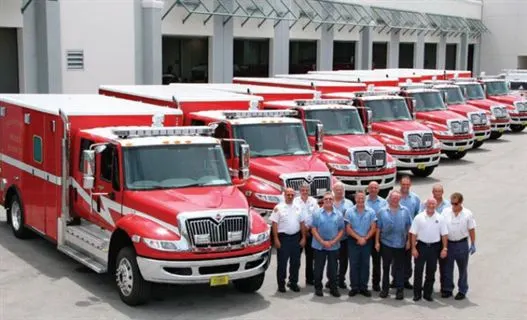
Schoonmaker sums up his objectives, "I try to get the best bang for the taxpayer's buck. My goal is to spec a durable, reliable apparatus that will give good service over its lifespan. We do not award contracts based on the lowest bidder; we award contracts to the bidder who most closely meets the spec and is responsive to the needs of the department."
Spokane Valley's fire department puts approximately 10,000 miles on its apparatus annually. "If an apparatus is not available because it's in the shop, then it's not providing good service to our customers - the citizens of our district," said Schoonmaker.
Another of Schoonmaker's objectives is to provide a safe apparatus that meets standards set forth in National Fire Protection Association (NFPA) #1901.
According to Calhoun, "The apparatus must be designed to operate in our communities. Pumps need to match the pressure delivered by the hydrants and be capable of drafting from canals or ponds. The vehicles need to maneuver well in some of our very dense communities and also be capable of carrying necessary fire extinguishing equipment, extricate people from crashed vehicles, and provide advanced life support service."
More Operations
Who Deserves Fleet Recognition and What Could You Teach at GFX?
Who helped shape your fleet career, and what have you learned that could help someone else?
Read More →
What’s Haunting Public Sector Fleets?
Public sector fleet challenges rarely happen in isolation, and addressing one often means understanding how it connects to another.
Read More →
Is Keeping Older Fleet Vehicles Really Saving Money?
Is keeping vehicles longer saving money, and what happens when a diagnostic test points to the wrong fix?
Read More →
How Smart Fleet Strategy Can Help Local Government Agencies Do More with Less
Keeping a vehicle longer may ease this year’s budget, but what does it cost the next one? A closer look at fleet decisions can reveal opportunities to reduce spending while protecting essential services.
Read More →
Connect with Government Fleet on LinkedIn
From industry news and fleet management strategies to conversations with peers, Government Fleet's LinkedIn page offers public-sector fleet professionals another way to stay informed and connected.
Read More →
Town of Queen Creek Named Most Successful Fleet Award Winner of Inaugural RTA Fleet Success Awards
Five fleets were honored at RTA Connect 2026 in Chicago for excellence across resource efficiency, intentional culture, risk management, and stakeholder satisfaction.
Read More →
A buyer's guide to fleet management software in 2027
Buying fleet management software in 2027 means looking beyond features and price. As fleet operations, technology and expectations evolve, this guide explores what today’s fleet professionals should consider when choosing a system that can deliver value now and adapt to what comes next.
Read More →
Hazard Alerts, Fleet Car Sales Rise and a New Shuttle Concept
Fleet car sales doubled, but the bigger picture tells a different story in this week’s roundup.
Read More →
How St. Johns County Turned Fleet Data Into Better Replacement Decisions
St. Johns County, Florida, had fleet data, but turning it into reliable decision guidance was another matter. Instead of starting over with a new fleet management system, the county connected existing tools and built a scoring system that gives managers an objective look at fleet health.
Read More →
Fleet Forward Conference Introduces One-Day Passes for 2026
New one-day registration lets fleet professionals attend Tuesday, Wednesday, or Thursday, with passes available for $249.
Read More →