




Open vs. Closed End Leasing: Which Is Right For You?
Choosing between the two types of commercial leases involves understanding your fleet driving patterns, your internal fleet management capabilities, and your appetite for risk.

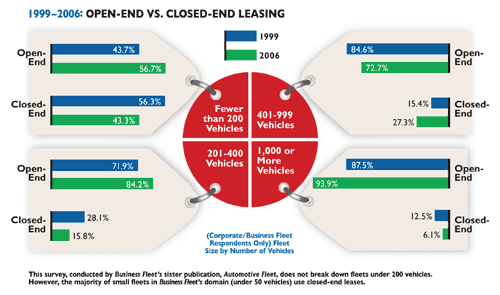
Commercial leases are divided into two types: the open-end TRAC lease and the closed-end lease. Each has a different set of rules and parameters. Each works better for different fleet situations.
Very simply, in an open-end lease the lessee assumes the depreciation risk but has more flexible terms. In a closed-end lease, the lessor assumes the depreciation risk but the terms are more restrictive.
We asked lessors at three fleet leasing and management companies to dig a little deeper into both to help you determine the lease that works best for your situation. All four write both types of leases, and have no vested interest in one over the other. The first step is to understand the definitions of both types of leases.
Open-End TRAC (Terminal Rental Adjustment Clause) Lease
This type of lease is also known as a finance lease, which as the name implies, permits the lessee to determine the vehicle's service life after a short minimum term, usually 12 months.
After this period, the lease may be terminated at any time without penalty. - The lessee can select the depreciation factor, used to amortize the capitalized cost (with some limitations). Different factors can be used for different vehicles based on specifications and usage.
- The lessee assumes the depreciation risk. The capitalized cost (original purchase price) is reduced monthly by a predetermined amount (depreciation factor) for as long as the vehicles remain in service.
- When the vehicle is taken out of service, the sales proceeds are applied to the book value (capitalized cost minus accumulated depreciation) with any resulting gain passed on to the lessee. If the selling price is less than the book value, the lessee must pay the difference, although provisions for a percentage sharing of gains or losses between lessee and lessor may sometimes be available.
Closed-End Lease (aka Net, No Risk or Walk-Away Lease)
There is a fixed rate and term, usually 12 to 48 months. The lease agreement will only show the monthly rental amount, and not the rate factors involved over the lease period. Rate factors are calculated using the average outstanding balance over the full lease term, as opposed to the "step down" method in TRAC leasing.
Lessor sells used car at lease-end for market value. Lessee/employee may purchase at a price set by lessor.
The lessor is responsible for gain or loss on resale, although provisions for a percentage of gains or losses between lessee and lessor may sometimes also be available.
The lessor establishes depreciation factor.
The lessor can influence choice of make, model and equipment to enhance residual value for the client, though the lesee has final say.
A closed-end lease is rate-sensitive by make, model and lease term, with prime consideration being the vehicle's residual market value.
A closed-end lease traditionally has preset mileage restrictions over lease term (usually 12,000 to 15,000 miles annually). The lessee is responsible for excess mileage charges that can vary from $.10-$.15 per mile or on a graduated scale, i.e., $.05 for first 200 miles, $.15 for all additional mileage.
Anticipated higher mileage may be "purchased" at lease inception with cost added to monthly payment, or a graduated allowance may be available. Some lessors will write closed-end leases with no mileage restrictions.
The lessee is responsible for excessive wear and tear as well as early termination penalties.
Narrowing Your Decision
Those terms and conditions are a lot to digest, but you can narrow your decision by filtering your own fleet profile through three "big picture" parameters.
1. Understand Your Fleet Usage and Driving Patterns
Defining how you use your fleet is the first step to defining your lease type. Do your sedans stay relatively damage free, or do your trucks and vans get banged up on the job? Do you drive set routes, and a set number of miles per year? Do you put a lot of miles on your fleet vehicles?
Is turning over your fleet every three years important to you, or do you plan to run them until they "drop?" Fleets that are subjected to rough usage and incur high mileage are better suited for open-end leases.
"The greater the percentage of the vehicle's life that is going to be consumed by the fleet, the greater the likelihood it'll be an open-end lease," says Jack Leary, president of Motorlease. "Consuming 50 to 60 percent of a vehicle's life, the client would probably be on a closed-end lease. Consuming 95 percent of vehicle's life, the client is better on an open-end lease."
On the open-end lease, the lessee will use up, and pay off, a great percentage of those vehicles' useful lives, so their residual values at end of term are less of a factor. The lessee will often pay off these vehicles down to a dollar and leave them on the fleet management company's books, who will continue to handle the vehicle's taxes, licensing and management reporting.
Fleets with passenger vehicles that run predictable yearly mileages, such as sales reps, are better candidates for closed-end leases. Wear and tear is more predictable, and the lessor can more definitively match the pre-set mileage cap to the driving pattern.
2. Know Your Appetite for Risk
On an open-end lease, the lessee is responsible for the vehicles' residual value. Are you comfortable with exposure at lease end when a vehicle's worth drops unexpectedly?
Generally the open-end leased vehicle will be depreciated properly to reflect its end-of-term value, says Jack Manning, president of American Leasing. Yet sometimes extenuating circumstances throw those values off and a company can unexpectedly lose a lot of money.
The aftermath of 9/11 is a case in point-travel came to a standstill and rental cars flooded the used car market, driving values down considerably. Fleets with open-end leases took a steep hit on de-fleeted vehicles, says Robert Singer, vice president of Merchants Leasing.
In a less dramatic scenario, large SUVs recently have experienced a more precipitous drop in value than expected because of high gas prices, Singer says. This is not much of an issue for fleets that run their vehicles into the ground. But the risk is greater for those open-end leases with substantial life, and thus residual value, left in de-fleeted vehicles.
On the closed-end lease, this is the worry of the lessor, not the client. "In the closed-end situation the client is right every time," says Leary. "If we happen to be wrong it doesn't affect their payment."
3. How involved do you want to be with fleet management?
Larger companies pay dedicated fleet managers to run the fleet as efficiently as possible. They use a leasing company to put vehicles into service at the lowest rate possible, and retain much of the fleet management duties in house.
Open-end leasing gives the fleet manager to arrange purchase agreements with manufacturers, set a depreciation rate that reflects the company's financial needs and cycle the fleet to take advantage of favorable buying and selling conditions.
However, because you're reading this magazine, you're in charge of a small fleet among a host of other concerns. You've got a business to run, and fleet is not your priority.
"I generally recommend to my customers that because running a fleet is not their core business, don't take the residual risk," says Singer.
The closed-end lease is part of the big picture for outsourced fleet management. Under this philosophy it's the lessor's job to estimate the vehicle's value at lease end, so better leave it to the experts. With this burden, the fleet management company chooses optimal reserves for depreciation and has a greater say in fleet selection.
The closed-end lessee is also subjected to mileage restrictions, which sometimes feels like a "heads I win, tails you lose" situation, says Leary. The fleet is penalized for exceeding the mileage cap, but doesn't get a check back for driving under the cap. Lessors have ways to remedy this.
If a fleet falls considerably under the cap some lessors will make a "goodwill adjustment" and credit the client. Conversely, if a fleet blows the cap out of the water, the lessor may not stick the client for $.15 on every mile, but a reasonable amount that reflects the vehicle's drop in value because of high mileage.
Some lessors pool mileage for the entire fleet. Factoring the aggregate mileage across the fleet will help to smooth out any spikes or dips incurred by single vehicles. Ultimately, if drivers are continually over the mileage cap lessor will rewrite the lease to reflect the current conditions, Singer says.
4. Know your business's cash-flow, budgeting and accounting needs
Companies on open-end leases that want a greater short-term cash flow can adjust their monthly reserve for depreciation. This flexibility can be a valuable accounting tool, though the fleet knows full well a balloon payment will come down the line if the reserve is set too low.
The open-end lease bill breaks down the monthly depreciation, management fee, interest and taxes. Monthly payment amounts vary, usually stepping down year-over-year as the asset is amortized. At end of term, the final accounting will show a loss or gain, reconditioning and transportation charges and a disposition fee.
The closed-end lease statement makes life easier on the accountant: All taxes and fees are bundled into one fixed monthly payment. Budgeting is simpler, as the fixed term determines the cost of the lease upfront. The car is returned to the lessor, and the lessee walks away, provided the mileage is within limits and there is no vehicle damage.
Some fleets budget for excess wear and tear, others do not. Smaller companies are more apt to reserve for wear and tear, where larger companies generally pay those losses as they occur. Leary estimates that a Motorlease client should be paying for damages on less than 10 percent of the fleet.
If the percentage runs higher, "We need to sit down and have a conversation on their expectation of usage," he says. When repairs are warranted, the leasing company should provide the client with the photos of the damage and the actual repair invoice if requested.
The client has the right to repair the vehicle, though the fleet management company can secure wholesale pricing and thus generally repair for cheaper, Leary says. However, on an open-end lease the lessee does not get away any easier, Singer says, as the damaged unit will simply return less at resale.
The Bottom Line
Unlike many retail transactions, the reputable fleet lessor is not in the business of steering you to one type of lease over the other, because both lease types are viable for most situations.
Yes, the lessor is looking to preserve his profit margin, but the driving force is to keep the client satisfied and thus preserve the business. "If you're going to nickel and dime a guy, it's going to be a short-term relationship," Singer says. "If you're fair and equitable, things have a way of working out. I'm doing everything within my power to add value to the relationship."
Fleet management companies are constantly analyzing the fleet to wring greater efficiency out of the present situation, Leary says. A little flexibility goes a long way. "If the sales guy covering Chicago moves to the suburbs, he'll be driving more. We'll write a new contract.
What good is it to hold the client's feet to the fire?" says Leary. "We're supposed to go to the client with this information, not the other way around." Ultimately, your fleet costs should come out equal with either lease. "Long term, a well-executed open-end lease and a well-executed closed-end lease are not going to differ greatly in total cost," Leary says. "However you shake this, the client is going to pay for the part of the vehicle's life that they consume."
More Funding
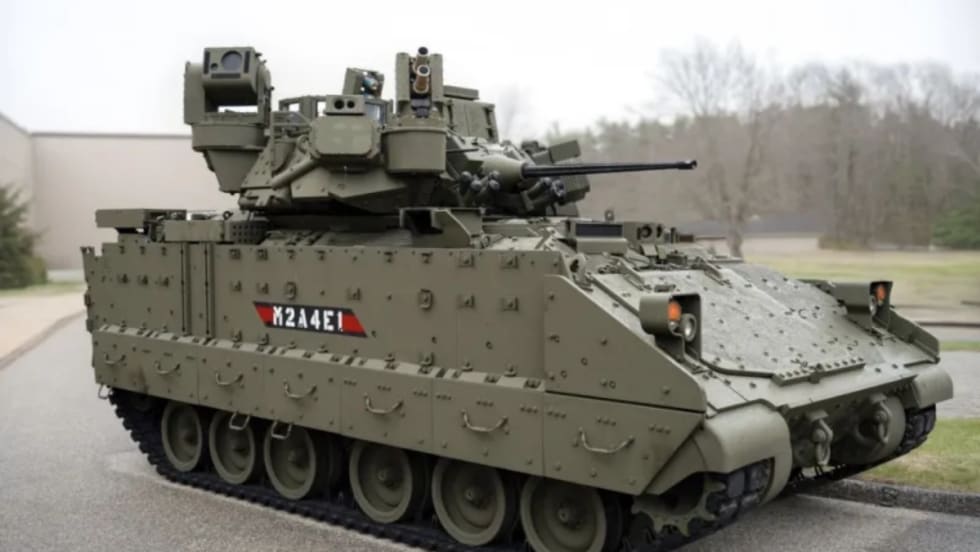
Elbit Systems Awarded $228 Million Follow-on Contract to Provide Iron Fist APS for U.S. Army Bradley IFV Upgrades
Elbit Systems has received a $228 million contract to supply its Iron Fist Active Protection System for the U.S. Army’s Bradley Fighting Vehicle program, expanding the platform’s defenses against modern battlefield threats.
Read More →
Advocating for Vehicle Replacements: Asking for What You Need
Go after the data, know your fleet operations, and be tenacious in advocating for sufficient vehicle fleet replacement funds.
Read More →
Budget Season: 6 Stories to Help You Plan for the Upcoming Fiscal Year
A roundup of news and features that can help you find the best approach to keeping costs down in your budget.
Read More →
Fleet Management Lessons from the Private Sector
Fleet professionals with private- and public-sector experience share best practices and hard-won advice for government fleet managers.
Read More →
Kentucky House Budget Bill Would Allow ICE-Only State Fleet Purchases
Language included in the budget bill states fleet vehicle replacements must be powered by internal combustion engines. The bill
Read More →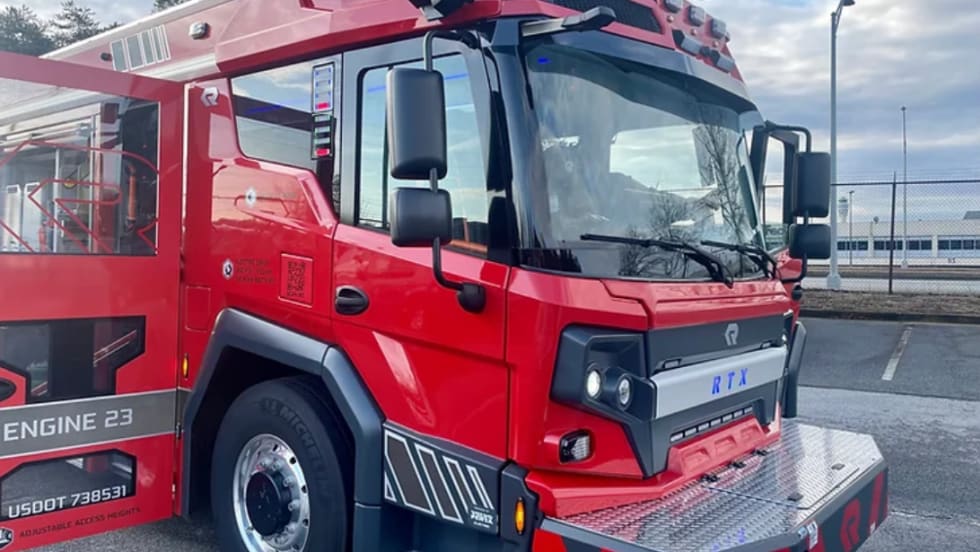
Campaign Launched for Atlanta Fire Rescue Department Innovation, Sustainability
The campaign was launched by The Atlanta Fire Rescue Foundation to provide additional equipment for the Atlanta Fire Rescue Department with a $500,000 inaugural gift from Norfolk Southern.
Read More →
Atlanta Council Approves Up to $19M for Fire Department Fleet Upgrade
The Atlanta City Council approved legislation to authorize executing a master lease agreement with JP Morgan Chase Bank to provide for the city’s acquisition of replacement equipment and vehicles for the Atlanta Fire Rescue Department.
Read More →
Taking a Forward-Thinking Approach with Your Fleet Budget
How the supply chain crisis has forced public sector fleet managers to look much further ahead when making financial decisions.
Read More →
Baltimore Fire Department Receives Funding to Replace Aging Vehicles
The city council approved additional funding for fire apparatus replacements. The entire city fleet department's vehicle replacement budget was also boosted.
Read More →
Oregon College Receives Nearly $3 Million to Expand EV Tech Workforce
Fifteen two-year colleges in the region are part of consortium developing EV technician programs.
Read More →