




Two NYC Agencies Invest in CNG and Hybrid Power Alternatives
CNG-powered street sweepers and hybrid buses help New York City’s Department of Sanitation and the NYC Transit tackle cost and environment issues.
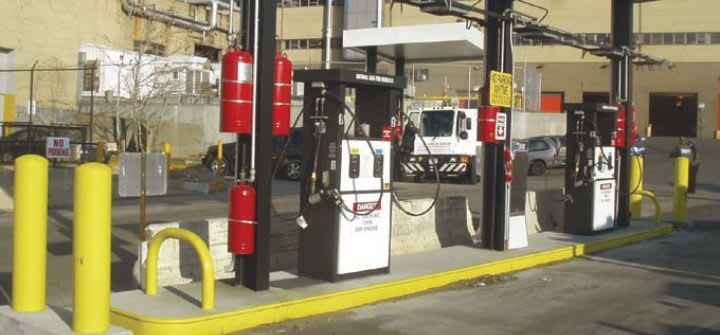
New York City’s Department of Sanitation invested $2.9 million to build a state-of-the-art CNG station on its own property.
Fleet managers now must tackle issues of emissions, fuel economy, and global warming to mitigate the problems of pollution, taxes, and climate change.
The issues aren’t new for many government fleets and certainly not new for fleets in New York City (NYC). In the aftermath of the energy crises of the 1970s, New York State and City have been seeking and applying innovative technology to appease both government concerns and the public worried about health problems and environmental justice.
Now past the early setbacks ("teething" problems) that come with every new technology and with serious miles or years under their belts, two fleets were contacted for their views on how new technology is helping meet service goals while minimizing unwanted side effects. The fleets are the New York City Department of Sanitation (DSNY) compressed natural gas (CNG)-powered street sweeper fleet and the NYCTransit (NYCT) series-type hybrid buses.
A proud and famous city agency, DSNY is hardly a newcomer to cleaning things up, either in solid waste or vehicle emissions. It currently maintains a fleet of about 450 sweepers distributed among the City’s five boroughs and eight million-plus citizens.
Department employees do their work primarily during the day, along routes established in cooperation with the NYC Department of Transportation, which set up the well-known "alternate side of the street" parking system to eliminate a buildup of solid waste that attracts vermin and harbors disease.

Because sweepers are essentially low-speed work vehicles and high-energy users, the fleet was identified early as a candidate for CNG operations. On its own initiative, DSNY incorporated CNG sweepers into its fleet in 1992. Like many CNG projects of the time, implementation was a work-in-progress. DSNY depended on local utilities (Con Edison and Keyspan Energy) to provide CNG at off-site locations and usually at 3,000 psi. Range was limited. Reliability was less than desired and pricing was higher.
Still, DSNY perceived potential in this vehicle, which was a modified stretched Johnston Model 4000. (Johnston is now Allianz Sweeper.)
In 2001, four additional CNG sweepers were delivered and in 2005, an additional five were added to the fleet. Each generation has improved on the previous version. Current fleet size is 19. The 2005 models fit very well with the rest of the DSNY sweeper fleet. The drivers like the new sweepers, and the vehicles are quieter. In addition, range is no longer a problem. They run on the same routes as diesel-powered sweepers. Reliability has improved.
The sweepers are used year-round in NYC’s true four-season environment. Climate temperatures run from 0 to 100 degrees Farenheit.
To help ease problems created by heavy vehicles, the cleaner-exhaust CNG sweepers are stationed in areas where high levels of asthma cases are reported. Hence, they sweep the streets of contamination and reduce the amount of air contaminants in the local environment.
DSNY’s faith in CNG is exemplified by its investment of $2.9 million to build a state-of-the-art CNG station on its own property. This station has 800 standard cubic feet per minute (SCFM) pumping capacity to deliver gas at a temperature compensated nominal 3,600 psi pressure. The department will take advantage of Congestion Mitigation and Air Quality (CMAQ) and Clean Cities program funding to secure a 50-cent/gasoline-equivalent gallon federal incentive to own and operate a refueling facility.
Rocco DiRico, assistant commissioner for the DSNY Bureau of Motor Equipment, is pleased with the progress he has seen over the years. To minimize dependence on imported petroleum, the assistant commissioner feels CNG technology has evolved and that fleets who may have tried CNG in the past should "get back to this now." They should also pursue federal tax incentives to avoid extra burden on local taxpayers.
[PAGEBREAK]
NYCT is actually part of the Metropolitan Transportation Authority (MTA) a New York State agency. NYCT is the nation’s largest transit agency with more than 4,500 heavy-duty buses in its fleet. When it comes to hybrid buses, they also were early investors in the technology. Today, the agency is reaping the benefits of its efforts.
If you visit Manhattan, it is hard to find a NYCT bus that is not a hybrid. They operate on both the long uptown/downtown routes as well as the much shorter cross-town routes. By the end of 2007, the agency expected to operated more than 800 hybrids in the metro New York City area.

Once again, initial operational problems had to be tackled and overcome. That process started in 1996-98, with the agency working with the Orion Bus Company and British Aerospace (BAE), which committed to a series-hybrid design for the New York City buses.
After several prototype models, quantity deliveries began in 2004, followed by 2005, 2006, and 2007-models. Each uses a relatively inexpensive lead acid battery pack that needs periodic charge balancing every six months to maintain optimum performance and battery life. In the future, the buses will be powered by lighter, more efficient lithium ion batteries.
The benefits from this addition to maintenance efforts are several: reduced brake wear due to the regenerative braking that occurs on hybrid bus in urban traffic; reduced brake squealing at each bus stop; reduced wear and tear on the engine; and an approximate 30-percent improvement in fuel economy relative to a conventional bus in similar service. Additionally, series-hybrid buses lack a conventional transmission so those corresponding service needs are eliminated.
More Articles
2026 Public Fleet Hall of Fame Inductees Honored
Honorees are recognized industry leaders and pioneers who have significantly contributed to the public fleet profession.
Read More →
David Renschler Receives 2026 Legendary Lifetime Achievement Award
Andy Campbell of Sourcewell, which partnered with Government Fleet in presenting the award, recognized Renschler.
Read More →
City of Glendale, Arizona, Earns Revived CFMO Certification at GFX 2026
The Certified Fleet Management Organization Program returned to GFX with a new honoree.
Read More →
Ross Jackson Jr. Named 2026 Public Sector Fleet Manager of the Year
Ross Jackson Jr. is the Fleet Operations Superintendent with the City of Fayetteville, Arkansas.
Read More →
Salem, Oregon, Named No. 1 Leading Fleet for 2026
The Port of Long Beach, California, was named the No. 1 small fleet, while Leon County Sheriff’s Office Fleet Management, Florida, was named the No. 1 medium-sized fleet.
Read More →
2026 Police Fleet Innovators Named
Police fleet innovators are those who overcome hurdles in law enforcement management through modern, proactive techniques and technologies.
Read More →
Announcing the 2026 Leading Fleets
The Leading Fleets for 2026 were announced at the Government Fleet Expo & Conference in Long Beach, California.
Read More →
A Snapshot of GFX Prep | GovCast Cheat Sheet
On the go and want a snapshot of our top industry news? Check out Government Fleet's new video short of what's been happening.
Read More →
Public Fleet Professionals Set to Converge as GFX Gets Underway
Known as the largest gathering of public fleet professionals in the nation, GFX will feature in-depth training sessions, emerging fleet technologies, and access to leading suppliers and service providers.
Read More →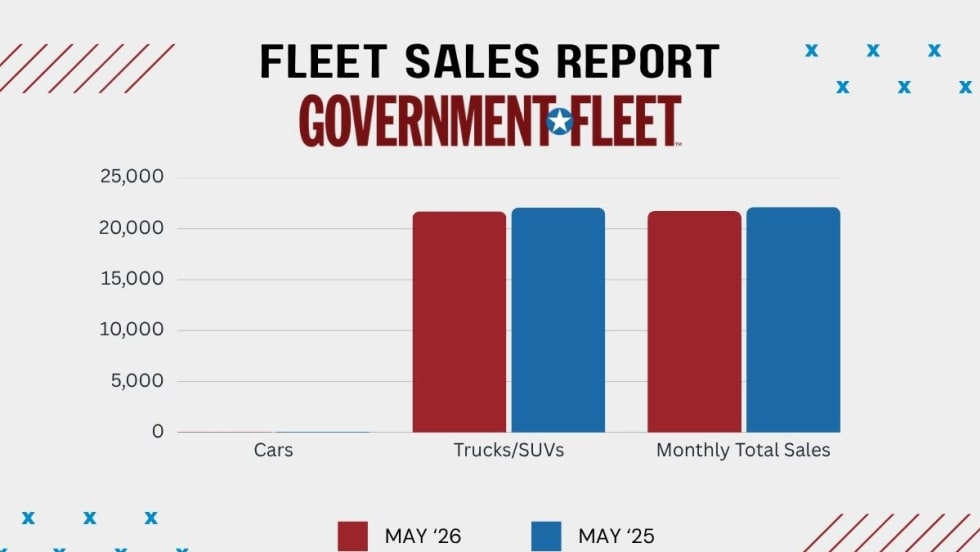
May Government Fleet Sales Slip Below 2025 Pace
Despite last month's sales increase, May vehicle numbers took a downward turn.
Read More →