




Charlottesville Goes 'Green'
A city initiative to become more environmentally responsible prompted the Charlottesville Fire Department to pilot-test a Ford Escape Hybrid as an emergency response vehicle.

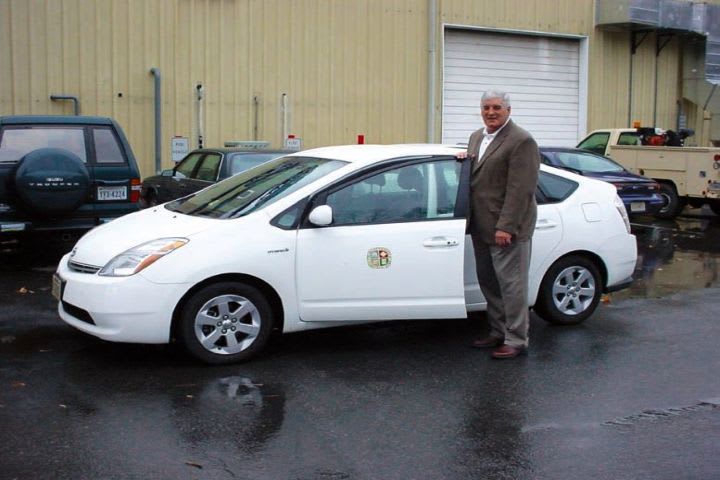
Fleet Manager Jim McClung shows off the City's Toyota Prius.
Charlottesville, Va. is working to change the way things are "usually done" with its initiative to "green" the city’s fleet, most recently with the addition of a new gas-electric Ford Escape Hybrid to its fire department fleet.
The Charlottesville Fire Department (CFD) is a combination career and volunteer fire department, consisting of 90 career personnel and 20 volunteers. CFD is also an advanced life support emergency medical system (EMS) protection service for the County of Albermarle and the University of Virginia. CFD operates five engine companies, a truck company, and battalion chief vehicle.
Government Fleet caught up with Kristel Riddervold, environmental administrator for the City of Charlottesville public works department, and Charles Werner, fire chief of the Charlottesville Fire Department, to learn more about the city’s green initiative. Werner has 29 years of experience with the fire department and has served as fire chief the past two years.
The City of Charlottesville has taken a city-wide view on greening its fleet due to a vision of becoming an environmentally sustainable city. As part of the city’s commitment to environmental sustainability, various opportunities have been taken to green fleet vehicles with the goal of fuel efficiency and environmental stewardship.
"One of the main ways the City has been working towards environmental improvement is through the development of an ISO14001-based environmental management system (EMS)," said Riddervold. "Our public works fleet division has been involved in this process since mid-2004."
Green fleets can have a positive impact on air quality, greenhouse gas emissions, and waste reduction. The city’s greening initiatives currently include:
Conversion of gasoline- to electric-powered golf carts at the municipal golf course.
A fleet right-sizing study in 2005 that reduced fleet size by 10 percent.
Biodiesel pilot project initiated in a portion of the City’s fleet in 2006, involving more than 60 vehicles and displacing approximately 25,000 gallons of petroleum diesel.
A city-wide anti-idling policy formally adopted in 2007.
Recycling and other pollution prevention activities now part of the fleet shop operations.
A review of each vehicle replacement request to identify the most environmentally responsible option available.
Of Charlottesville’s 675 vehicles/pieces of equipment, the city’s fleet now includes 21 gas-electric hybrids, two dedicated CNG school buses, several dual-fuel CNG vehicles, and two E-85 vans. According to Riddervold, the city plans to continue expansion of the alternatively-fueled portion of its vehicle fleet. These vehicles are spread throughout the organization (e.g. social services, public works, neighborhood development services, parks and recreation, police, and the city managers’ office). A majority of the hybrid vehicles are Toyota Prius and Honda Civic sedans.

According to Riddervold, the greening of Charlottesville’s fleet was an obvious component of municipal operations, providing opportunities for improvement and management. Technology continues to change, and it is imperative that opportunities to reduce the city’s environmental footprint be continually evaluated, said Riddervold.
"This sends an important message to the community that the city is implementing the types of environmental practices we promote and results in a cleaner and safer environment for staff and the community," she added.
Getting buy-in from some users that alternative-fueled vehicles work as efficiently as their petroleum-fueled counterparts has been a challenge, but like Werner, Fleet Manager Jim McClung welcomes the challenge.

Charlottesville Fire Department has been an active player in the city’s overall green efforts.
"The fire department is dedicated to providing the best service, being environmentally responsible, and a leader in moving forward with such initiatives," said Werner. "The Ford Escape Hybrid 4WD was selected to serve as a response vehicle and a pilot program for the CFD, because it is 4WD."
The new unit has all the lights, sirens, and communications equipment found in traditional vehicles; however, it does pose a few challenges.
"We needed space for operational needs, radio and siren/light controls, and also have light amperage limitations," said Werner. "The size of this vehicle is smaller, so it limits the number of vehicles we can replace."
Operationally, the space offered in the Escape is sufficient for Werner as the secondary incident commander. However, it is inadequate to replace primary incident commander vehicles due to space requirements and installed equipment.
"As new, larger hybrid vehicles become available, I will re-evaluate this decision. CFD ordered another hybrid vehicle (sedan) that will be used by the fire inspector," Werner said.
A few challenges posed by the Escape Hybrid have already been met. Space for radio and emergency/siren light controls was provided by new technology. According to Werner, Charlottesville utilizes Motorola for its public safety radio system.
"Motorola offers a new radio that integrates the controls into the handset, removing the traditional bulky radio control head," said Werner. "The light/siren bar also has controls now integrated into a handheld mechanism."
New LED emergency lightbars and lights have been added, which use very little amperage to accommodate a limitation in the Ford Escape Hybrid, without sacrificing visibility or lighting levels.
"All of our new technology allows for installation of traditional emergency communication warning systems without invading the vehicle’s control space," said Werner. "A side benefit was the preservation of cup holders typically lost by the need to install custom vehicle consoles."
Despite a few concerns, Werner is confident the City will find the right hybrid vehicles for the CFD.
"The goal of CFD is to continue to evaluate every alternative-fuel vehicle and replace current vehicles with those that will meet emergency operational needs combined with environmentally friendly technology," Werner said.
In addition to the new hybrid vehicle, the department is changing other vehicles to run on B-20. "Our goal, after testing one of the older pumpers on B-20, is to transition over six months," Werner said. The switch to B-20 responds to the City’s environmentally responsible initiative to use alternative fuel and produce fewer emissions. Prior to a full transition, the department must clean its regular diesel fuel tanks. Werner also cited the potential for more frequent changing of vehicle filters, although this has not been the experience with other city vehicles using biodiesel.
"The unique thing about the switch to B-20 is that it reduces the amount of petroleum we’re using and is a cleaner-burning type of fuel as well," said Werner. "It’s been an interesting challenge, but it’s well worth it."
More Green Fleet

Hawaii Passes Clean Fuel Policy
Hawaii lawmakers passed clean fuel legislation that could support renewable natural gas production, biogas-powered transportation, and lower-carbon fueling options for public and commercial fleets.
Read More →
Are You Tracking Your Fleet's True Total Cost of Ownership?
Bobit Business Media surveyed 190 fleet professionals and found that while most fleets are tracking costs, fragmented systems and data gaps are keeping true TCO visibility out of reach. With rising pressure to control spend in an increasingly volatile environment, the gap between what fleets think they know and what the data actually shows is wider than you might expect. See how your peers are managing costs today and where the industry still has room to improve.
Read More →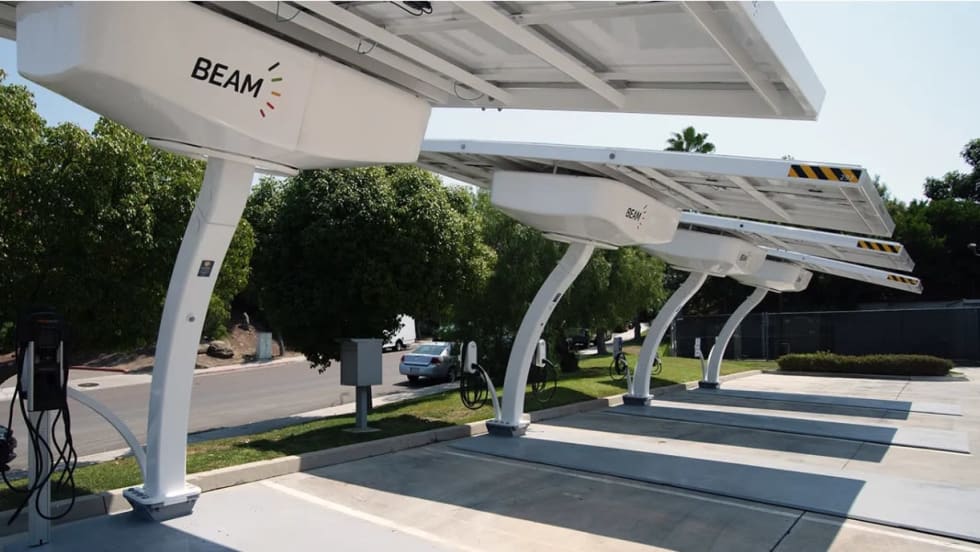
Stanislaus County Deploys Ten Beam Global EV ARC Systems to Support County Fleet Electrification
Stanislaus County deployed 10 off-grid solar-powered EV charging systems and a mobile charging trailer from Beam Global to support its electric fleet operations and emergency response flexibility.
Read More →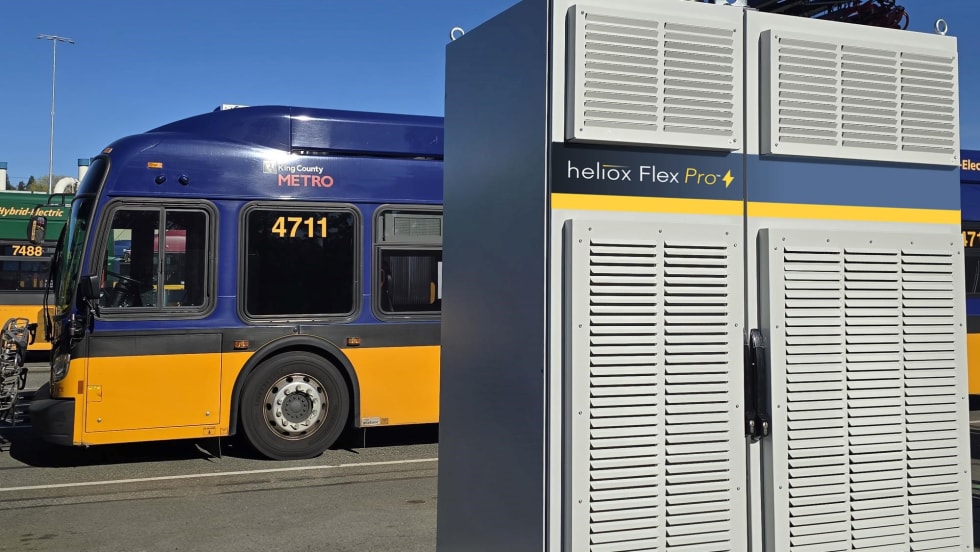
Heliox Pilots 480-kW Bus Charger with King County Metro
King County Metro is piloting Heliox’s new 480-kW Flex Pro charger to support expansion of its battery-electric bus fleet and depot charging infrastructure. The compact charging system supports pantograph and plug-in charging configurations for high-density transit operations.
Read More →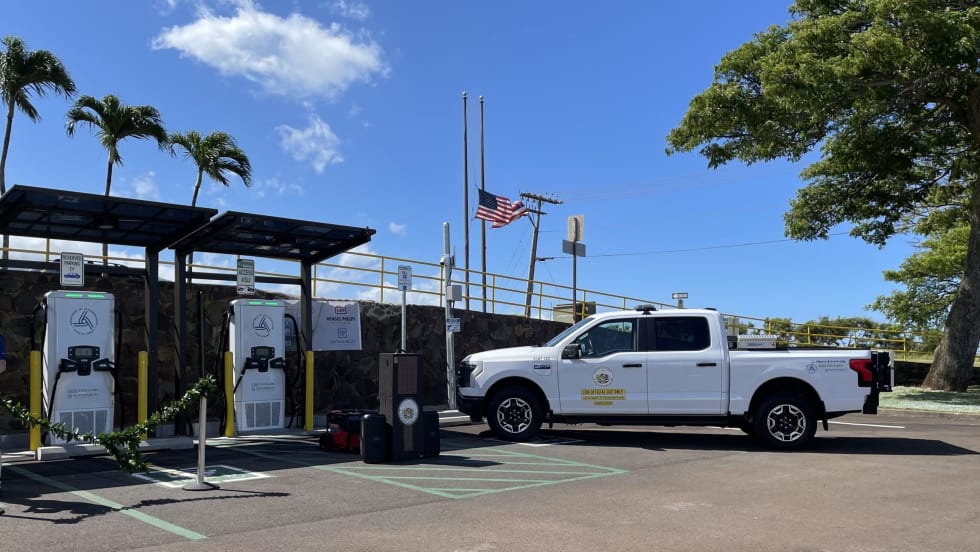
HDOT Commissions New NEVI Fast-Charging Site at Maui Kapalua Airport
HDOT, community leaders and project partners recently participated in a commissioning and blessing ceremony celebrating the opening of the new charging site.
Read More →
EV Efficiency Beyond the Battery
Eastman launched Saflex Evoca XIR.SR, an infrared-reflective interlayer for EV panoramic sunroofs designed to reduce cabin heat, improve occupant comfort, and support battery efficiency.
Read More →
Revisiting the EV Conversation | The Fleet Breakroom
EVs have been a major part of the fleet conversation for years, but where does that conversation stand now?
Read More →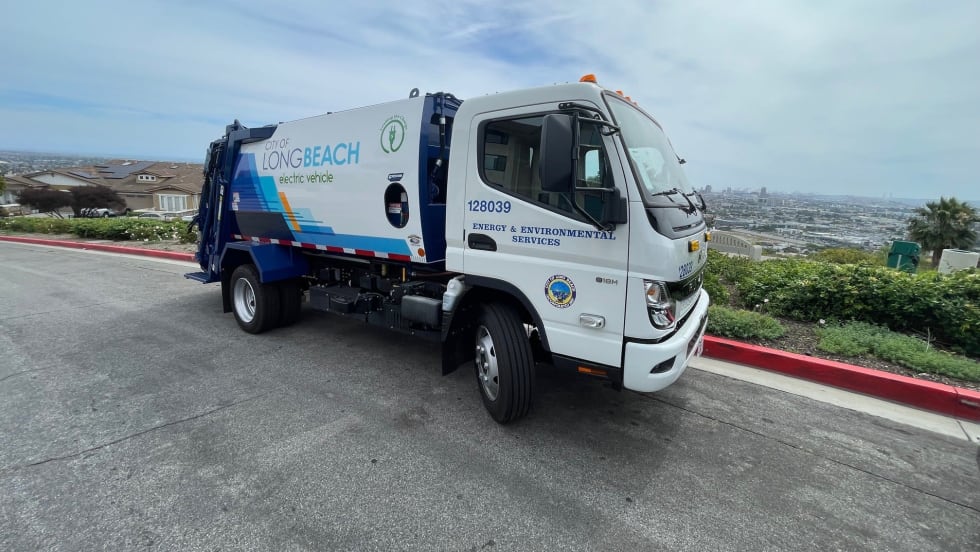
Long Beach Debuts First Electric Refuse Trucks in Fleet Pilot
The City of Long Beach, California, has unveiled its first two all-electric garbage trucks, marking the start of a pilot program as the city evaluates a broader transition away from compressed natural gas.
Read More →
Beam Global and HEVO Inc. Launch Market Ready Autonomous Charging Platform for Autonomous Vehicles
Beam Global and HEVO have launched an integrated autonomous wireless charging system that pairs off-grid solar EV infrastructure with wireless charging technology, designed to support autonomous vehicle operations and electric fleet deployments.
Read More →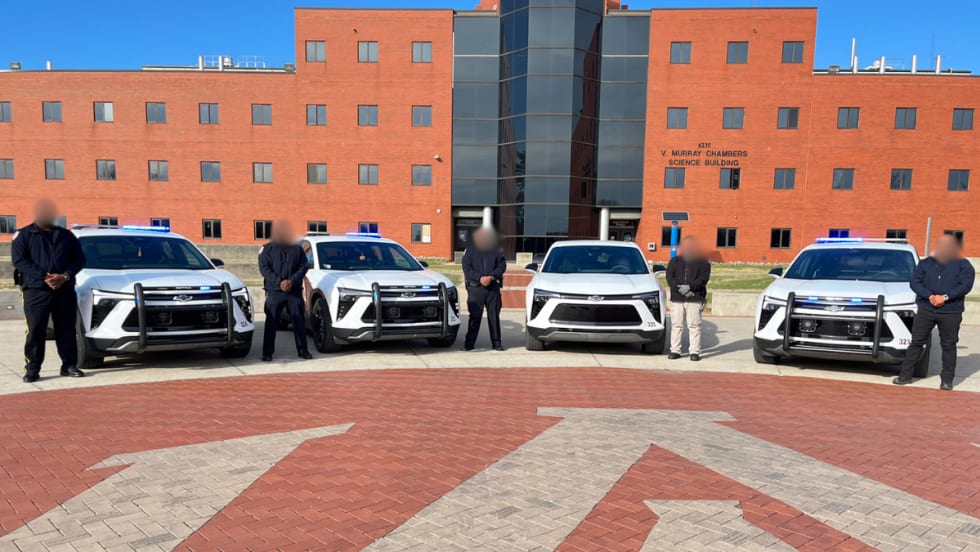
New EVs Part of Long-Term Investment Toward Zero Emissions
Alabama A&M University has added four electric patrol vehicles to its Department of Public Safety fleet, becoming the first university in the state to deploy electric police vehicles.
Read More →