




How Washtenaw County's Outsourced Maintenance Turned its Light Fleet Around
After analyzing various options, Washtenaw County decided to outsource maintenance of its light-duty fleet. Not only was it the best projected option, but actual costs are coming in at lower than estimated costs.
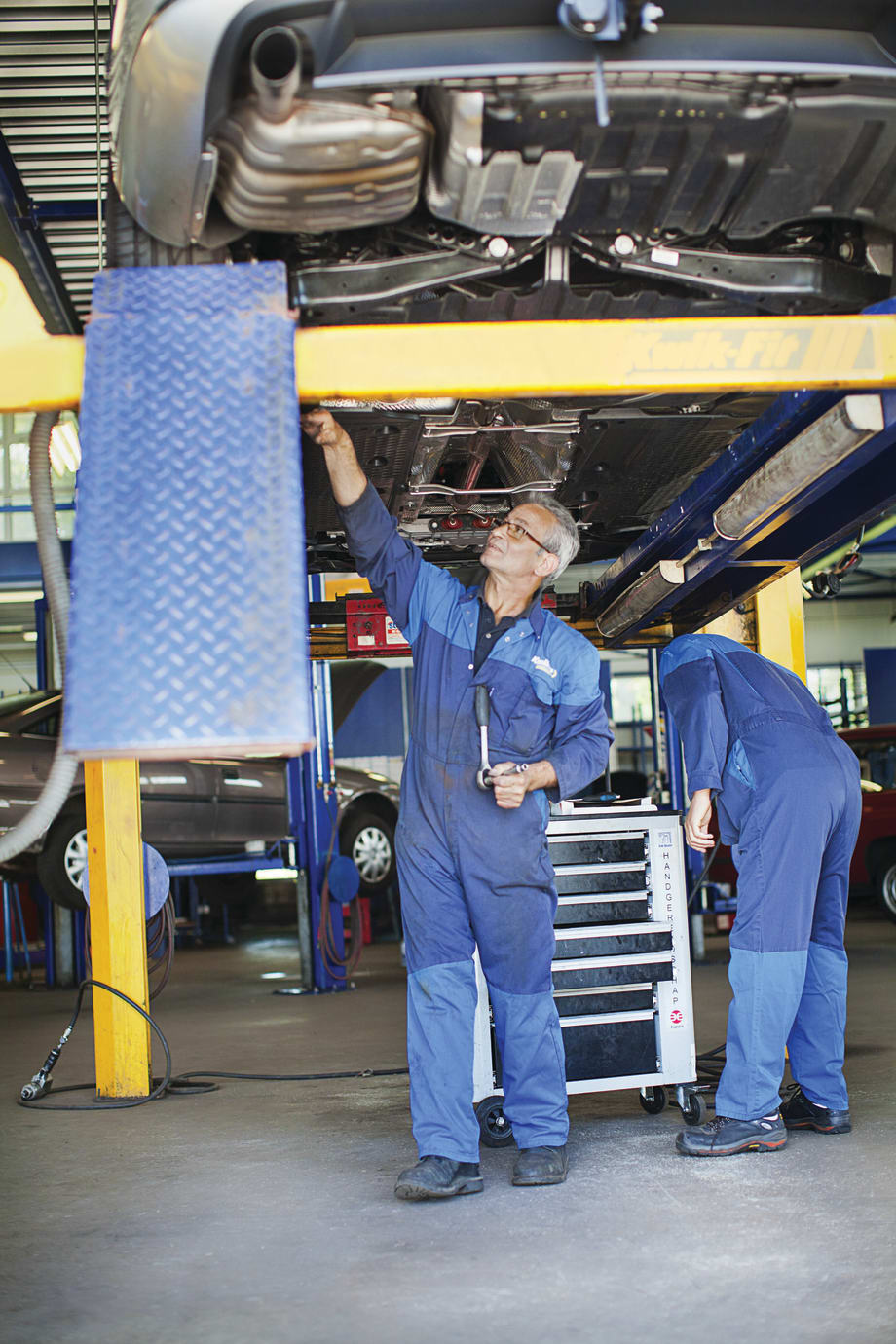
Photo by Thomas Lestrup for LeasePlan USA.
At a Glance |
Washtenaw County has found these advantages to outsourcing its maintenance:
|
Photo by Thomas Lestrup for LeasePlan USA.
While most fleets achieve efficiencies through a combination of in-house services and outsourced repairs, one county fleet manager is finding a fleet management company (FMC) worked best for his fleet. After analyzing the options, Bob Mossing, fleet manager and business manager for Washtenaw County, Mich., has seen significant savings as a result of outsourcing maintenance of his light-duty fleet to LeasePlan USA.
Analyzing the Problem
Mossing was hired from private sector fleet management in 2007, to a fleet department that had a revolving door of fleet managers in the past, he said. As a result, the fleet was poorly managed, ran at a deficit, had poor customer service and slow return times, and was severely understaffed. The department, which maintained a fleet of about 300 passenger vehicles and light trucks, had a staff of two technicians. The Department of Public Works maintained a large fleet with its own garage, but consolidation wasn't feasible at the time.
Mossing analyzed costs and determined the operating budget for calendar-year 2005-2007 was $878,000. He increased the labor rate by 143 percent in his first year to accurately reflect fully burdened rates. The rate was previously lower than technicians' hourly wages. This change increased the operating budget to $1.25 million (for three years) and for the first time in a long time, led to a balanced fleet fund.
"We explained to [users] that one way or another, you're going to pay for it because we were taking general fund dollars away just to cover the garage," Mossing said.
However, this still didn't solve the problem of customer satisfaction - the garage was still severely understaffed and departments with non-emergency vehicles sometimes had to wait a while before their vehicles were returned. The customer service rate was around 30 percent. Although the rate did increase, some departments still weren't getting vehicles serviced on time.
[PAGEBREAK]
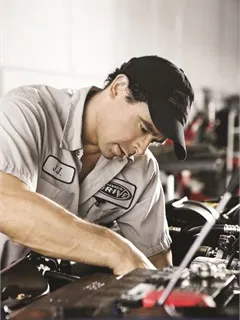
Photo by Thomas Lestrup for LeasePlan USA.
Jumping at an Opportunity
When County officials told Mossing the County was going to renovate the jail - located in the same building where the garage was housed - they asked if they should renovate the garage as well or if he wanted to explore another solution. Mossing began studying four options:
1. Keeping maintenance in-house and hiring more technicians.
2. Sending work out directly to other national maintenance shops.
3. Partnering with the City of Ann Arbor for maintenance.
4. Working with an FMC.
Keeping maintenance in-house would require rebuilding the garage, putting in new equipment for the facility, and adding four additional staff members, a costly alternative. The second option, sending out work directly to shops, was projected to cost $1.5 million for three years, a cost that included the hiring of administrative staff. Partnering with the City didn't turn out to be the best option. The fleet department eventually chose LeasePlan USA, which submitted the winning proposal, expected to cost $1.26 million for three years, about equal to the fleet's operating cost. Mossing, however, expected it would come with better customer service, which it did.
One of the two fleet technicians retired when Mossing began, and the County had hired a temporary technician in his place. The other permanent technician, eligible for retirement, soon retired. No fleet personnel lost their jobs due to the change. The County did not have to renovate the garage, and department vehicles are serviced faster and report higher customer satisfaction.
"What we have now works very well. Our customers are getting the best service, we're operating our vehicles at the lowest operating cost ever, and it's easy to budget," Mossing said.

Bob Mossing, fleet manager and business manager, Washtenaw County, Mich.
Preventive maintenance is being performed on time, leading to fewer major repairs. The FMC tracks and stores maintenance history, and provides monthly reports and one monthly invoice.
What's more, the County has been coming in at below the original estimated cost, at $300,000 per year, or about $357,000 less than the estimated three-year amount. In 2011, maintenance costs dropped even further - from $314,703 in 2010 to $254,216 in 2011.
"We are now operating at the lowest operating cost based on what we did before, and we can actually benchmark it year-over-year and see how we're doing," Mossing added. In the third quarter of 2011, the fleet was operating at $0.05 per mile, down from $0.08 per mile the same time in 2010.
Find a Solution Based on Fleet Needs
Having come from private sector, where working with an FMC is more common, Mossing already had experience with the FMC that won the bid. However, while this solution worked for Mossing, he's not saying it's a good fit for everyone.
"We were in a position where it worked for us," Mossing said. "We had an outdated garage. We were in an area that was going to be renovated anyway, so we could have built a garage, but we were providing poor service and we were grossly understaffed. Because we were in the position we were in, and because we have a light-truck and sedan fleet, it made sense for us to go ahead and try this option."
For agencies that maintain heavy equipment or already run highly efficient fleets, this may not be the best alternative. But for those on the cusp of a large capital investment, or for those who can separate light vehicle maintenance from heavy equipment maintenance, Mossing said this may be an option to consider.
More Operations

Is Keeping Older Fleet Vehicles Really Saving Money?
Is keeping vehicles longer saving money, and what happens when a diagnostic test points to the wrong fix?
Read More →
How Smart Fleet Strategy Can Help Local Government Agencies Do More with Less
Keeping a vehicle longer may ease this year’s budget, but what does it cost the next one? A closer look at fleet decisions can reveal opportunities to reduce spending while protecting essential services.
Read More →
Connect with Government Fleet on LinkedIn
From industry news and fleet management strategies to conversations with peers, Government Fleet's LinkedIn page offers public-sector fleet professionals another way to stay informed and connected.
Read More →
Town of Queen Creek Named Most Successful Fleet Award Winner of Inaugural RTA Fleet Success Awards
Five fleets were honored at RTA Connect 2026 in Chicago for excellence across resource efficiency, intentional culture, risk management, and stakeholder satisfaction.
Read More →
A buyer's guide to fleet management software in 2027
Buying fleet management software in 2027 means looking beyond features and price. As fleet operations, technology and expectations evolve, this guide explores what today’s fleet professionals should consider when choosing a system that can deliver value now and adapt to what comes next.
Read More →
Hazard Alerts, Fleet Car Sales Rise and a New Shuttle Concept
Fleet car sales doubled, but the bigger picture tells a different story in this week’s roundup.
Read More →
How St. Johns County Turned Fleet Data Into Better Replacement Decisions
St. Johns County, Florida, had fleet data, but turning it into reliable decision guidance was another matter. Instead of starting over with a new fleet management system, the county connected existing tools and built a scoring system that gives managers an objective look at fleet health.
Read More →
Fleet Forward Conference Introduces One-Day Passes for 2026
New one-day registration lets fleet professionals attend Tuesday, Wednesday, or Thursday, with passes available for $249.
Read More →
ENC Unveils its ZAVIR Medium-Duty Shuttle
Two variants of the concept shuttles were revealed: a low-floor configuration and a high-floor configuration.
Read More →
Could Your Next Fleet Technician Start as an Intern?
What if your next technician hasn’t worked in a fleet shop yet? What fleets are doing to free up time.
Read More →