




City of Fort Worth Establishes First-Ever National Fuel Contract
By creating and using a national fuel contract, the City of Fort Worth, Texas, saved $40,000 in its first year alone. The City expects savings to increase as more agencies join the cooperative contract.

According to Wayne Corum of Fort Worth, Texas, freight is an important factor in many fleet agencies' fuel purchasing decisions. The freight on the Fort Worth/National IPA contract benefits large agencies.

According to Wayne Corum of Fort Worth, Texas, freight is an important factor in many fleet agencies' fuel purchasing decisions. The freight on the Fort Worth/National IPA contract benefits large agencies.
At a Glance
Some benefits of the City of Fort Worth's national fuel contract include:
Reduced transactional costs by eliminating need for multiple quotes or bids.
Savings in bulk fuel costs.
No fees to use the contract.
Lowered pricing as more agencies join.
Fuel costs are the largest expense for most public fleet departments around the country. Some fleets are coping by cutting fleet size or implementing fuel-saving policies, while other agencies are looking at a macro way to help reduce fleet costs and control prices.
Fort Worth Establishes Fuel Consortium
The management of fuel costs is dependent on effective contract price management, which is why the Fort Worth (Texas) Fuel Consortium Contract is such a significant step. An initial fuel consortium was created by Fort Worth in 2002 that gathered a number of governmental entities together to buy fuel at a reduced rate.
However, resource constraints began to limit Fort Worth's ability to recruit new agencies to participate, said Wayne Corum, director of the Equipment Services Department for the City of Fort Worth. While the initial model had been one that other local consortiums wanted to take advantage of, Fort Worth was looking for an opportunity to expand its fuel program nationally. No other fuel contract was available for public agencies nationally.
And during the last few years, suppliers have increased their collective capacity to serve a national group of fuel customers.
Meanwhile the fluctuating nature of fuel prices increased the urgency for something to be done to control costs so Fort Worth and its fellow consortium members could better manage their budgets.
So Fort Worth began to work with National IPA, a nationwide cooperative purchasing organization dedicated to public agencies. Its focus is on helping agencies reduce procurement costs by leveraging group volume.
"When we first developed the consortium, there were many others who wanted to join it based on the level of savings they could expect to achieve," Corum said. "But we determined that it was possible to get even more gallons (under an agreement) so that we could negotiate the lowest possible price. The goal is to use leveraged buying as much as possible."
Converting to a National Contract
Under the National IPA program, cooperative contracts are publicly solicited and awarded by a principal procurement agency and made available for use by other participating agencies across the country. Public agencies may also utilize any agreement in the National IPA portfolio by registering with the cooperative. There are no minimum requirements or fees to participate and all agreements are non-exclusive in nature.
As Corum and his team sought to develop such a fuel agreement, they spent three months putting together the proposal. During that process, they needed to get fuel pricing information from each rack city in the 48 contiguous states to get an accurate representation of prices.
"We wanted to take our agreement from a local to a national program," said Corum, whose department uses approximately two million gallons of fuel per year. The remaining 30-odd agencies under the initial consortium contract would total another 12 million gallons of fuel annually.
[PAGEBREAK]
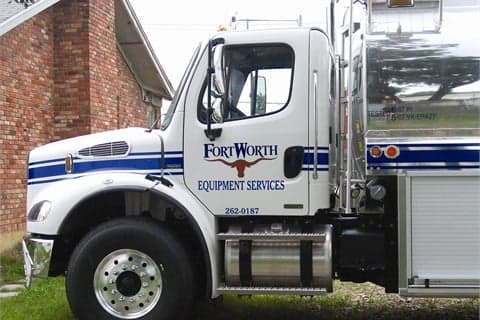
The Fort Worth, Texas, fleet has a fuel budget of almost $1 million per month. The first year of the national fuel contract resulted in $40,000 in fuel savings, and savings are expected to increase.
Corum and his colleagues in Fort Worth spoke with a number of agencies nationwide to get a sense of the type and amount of fuel they needed to use so that affordable bulk fuel pricing could be realized. Under the Fort Worth/National IPA cooperative fuel contract, unleaded, diesel, and other blends including ethanol and biodiesel fuels are available, and the contract covers bulk fuel purchases only.
Each agency is responsible for its own purchases and it must meet the supplier's credit terms. Payment terms are net-10 days from the date of delivery. Those deliveries are subject to testing to ensure compliance with specifications.
"We determined that freight was a major deciding factor for many organizations and that freight on this contract benefits large agencies," Corum said. Deliveries can be made using transport load or bobtails. The City of Fort Worth takes all deliveries via transport loads.
To generate the prices, representatives from the awarded suppliers developed procedures where they look at prices over a one- to two-month period to get an average of true costs that minimizes the impact of volatile fuel prices daily, Corum said. The suppliers who were awarded the contract are Martin Eagle Oil Company, available to agencies in Texas, and TAC Energy, available to agencies in all 48 contiguous states.
The pricing structure is also based on a specific formula that includes the benchmark index, plus market differential, freight, and any applicable taxes. Refunds are a direct pass-through to the agency.
Additional Agencies Lead to Lower Prices
Along with Fort Worth, several large municipal and state agencies have joined this contract, including the City of Las Vegas, the City of Boca Raton, Fla. and the State of Texas. Within the State of Texas, departments of public service, transportation, parks and wildlife, and other departments are covered. National IPA is working with many other cities and counties nationwide. Currently 19.8 million gallons of fuel are projected to be consumed in the second year of the contract.
For the City of Fort Worth, Corum realized a savings of $40,000 for the first year on fuel costs, a significant but not overwhelming number for a fuel budget that can average almost $1 million per month. But the major cost savings benefit will come later, Corum hopes, as more agencies are added to the contract.
"Right now, I am saving about two cents per gallon, and every cent I save equals out to about $20,000," Corum said. "But every new agency we add helps with our negotiations for next year and the years after that, so I would expect our savings to continue to increase as more agencies come aboard."
As part of his role, Corum is encouraging other agencies across the country to sign up and complete the analysis offered by National IPA for whether such a pricing structure makes sense. The analysis would include reviewing the current contract commitment, benchmark index used for pricing, and any mark-up and transportation costs. Corum also encourages agencies to obtain copies of current invoices for each fuel product purchased, including freight and taxes and a physical list for all storage tanks, to develop a thorough analysis. From there, a historical analysis can be requested.
The biggest challenge to getting agencies to consider this type of national contract is just the knowledge that it exists, Corum said. Ideally he would like to see more agencies publicize it because that alone will generate more "buzz."
"Really, it comes down to the fact you need to know this option exists, and I am surprised that many agencies have never heard of it," Corum said. "I think that is our biggest roadblock because once you do the analysis, the potential savings you could experience is significant, especially as more agencies are added."
National Contracts Result in Savings & Reduced Administrative Costs
The National Intergovernmental Purchasing Alliance Company (National IPA) is a national cooperative that works with agencies that serve the public (including states, counties, cities, educational agencies, non-profits, and excluding federal agencies) to gather master agreements for aggregated use. National agreements enable agencies to obtain better pricing due to bulk purchases and by "piggybacking," agencies do not have to handle the administrative duties of issuing requests for proposal (RFP) and reviewing the requests.
How it works: A public agency functions as the principal procurement agency and competitively solicits a national master agreement. The agreement incorporates language to make it accessible for other agencies, where allowed, to piggyback the contract. The public agency evaluates and awards the contract. National IPA markets the contract to agencies that may benefit from it.
Why it's beneficial: Some public agencies allowed to use intergovernmental contracts can only do so if the principal procurement agency is a government entity, according to Andrea Scobie, vice president of marketing for National IPA. This makes National IPA's structure open to a larger group of agencies.
Full transparency is another important element of what National IPA offers, Scobie added. All documents related to master contracts are available online, allowing fleets considering a contract to view the original RFP, proposals that come in, and the final award. In addition, National IPA employs a team of certified public procurement professionals to work with the principal procurement agency and awarded supplier to ensure the process is done right and the language in the contracts are correct. They also advocate for further adoption by other agencies, leading to potentially lower costs as purchase volume increases.
Other fleet-related master agreements currently available through National IPA include parks and grounds maintenance equipment and maintenance supplies. New solicitations will soon be issued for auto parts and tires, Scobie said. There is no fee for agencies to use the National IPA contracts.and tires, Scobie said. There is no fee for agencies to use the National IPA contracts.
[PAGEBREAK]
Exploring Fuel Contract Details and Benefits
Bulk fuel products available under the contract are unleaded gasoline of all octane levels and including ethanol blends, and all grades of diesel including biodiesel blends. The contract is available to public agencies in the 48 contiguous states.
The benchmark index establishes a verifiable baseline price per gallon based on the date of delivery. The daily index utilized is published by Oil Price Information Service (OPIS).
Agencies participating in the program choose from one of two benchmarking indexes based on the most effective pricing strategy specific to their agency, thus providing additional value through flexibility, according to National IPA.
Boca Raton Benefits from Contract Use
The City of Boca Raton, Fla., currently uses the contract with TAC Energy for biodiesel from BQ-9000-certified marketers, used to fuel its trucks to minimize the fleet's dependency on foreign oil, according to Tony Remige, automotive fleet maintenance superintendent for the City. Boca Raton will consider purchasing gasoline and ULSD through the contract in the near future.
Remige said some benefits of using the National IPA contract with TAC Energy have been: access to multiple contracted suppliers in the State of Florida, access to terminals in multiple cities, an emergency contingency plan, 24/365 availability for ordering and invoicing fuel, OPIS daily rate sheets, and 10-day ACH payments with no additional fee.
"Utilizing the National IPA cooperative contract for TAC Energy provided a cost-effective, time and resources savings procurement method to purchase fuel at volume discounts without any minimum fuel quantity requirements or commitments," Remige stated.
More Fuel

Clean Energy to Build Hydrogen Station for Orange County Transportation Authority
The new station will support the agency’s growing fleet of zero-emission hydrogen fuel cell buses.
Read More →
How Fleet Managers Reduce Fuel Waste and Protect Budgets
When fuel prices swing, fleet averages don’t tell the whole story. This white paper helps fleet and operations leaders uncover where fuel waste really hides and what data they need to build a smarter, more resilient fuel strategy.
Read More →
Planning for Future Technologies: Hydrogen and Beyond
As public agencies work to cut emissions from off-road operations, fleets are turning to a mix of renewable fuels, hybrid systems, battery-electric equipment and emerging hydrogen technology.
Read More →
RoadFlex Expands Fuel Network with Refuel Partnership
RoadFlex expands its fueling network for public sector fleets through a new partnership with Refuel, adding more than 250 locations across the Southeastern U.S. to improve access, savings, and efficiency.
Read More →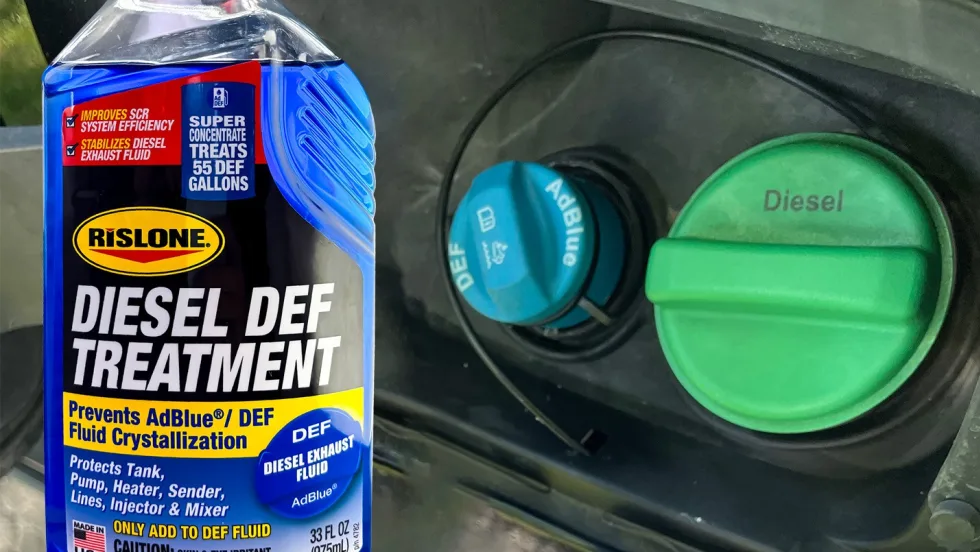
Rislone DEF Treatment Designed to Keep Diesel Exhaust Fluid Crystal-Free
Rislone is rolling out a super-concentrated version of its Diesel DEF Treatment that is designed to stabilize and improve diesel exhaust fluid.
Read More →
Are Bi-Fuel Propane Autogas Vehicles Making Law Enforcement Fleets More Resilient, Cost-Effective?
How a Florida sheriff office’s choice in fuel system led to a healthier budget, increased resiliency, and decreased emissions.
Read More →
Fleets All-In On Fuel Management Tech
Fuel management can become a tricky obstacle, but smart strategies and new tech have turned it into a well-oiled machine where price prediction is art, and cost control is science.
Read More →
Prepare Diesel Trucks for Winter with Diesel Exhaust Fluid
Understand proper DEF purchasing, handling, and storage practices in order to meet regulatory requirements and operates at peak performance.
Read More →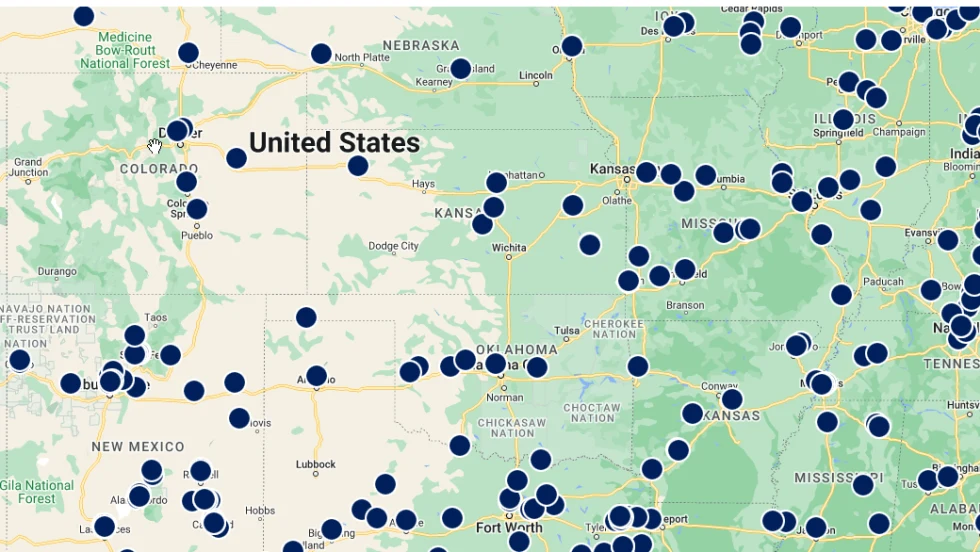
Diesel Exhaust Fluid (DEF) Locator
Yara, a diesel exhaust fluid (DEF) producer, offers a DEF locator website to help get the fluids fleets need.
Read More →
Gas vs. Diesel: The Bad Investment Only Fleet Managers Know About
A major point of debate in fleet management is using diesel vs. gas cars and trucks. Choosing to purchase gasoline engines instead of diesel ones for medium-duty trucks may be an unpopular decision, but is it the right one?
Read More →