




The Good, the Bad, & the Ugly of Centralizing Fleet
The City of Columbus, Ohio, fleet organization centralized operations in 2008. The fleet manager’s first-person account relates challenges, pitfalls, and rewards experienced in the process.
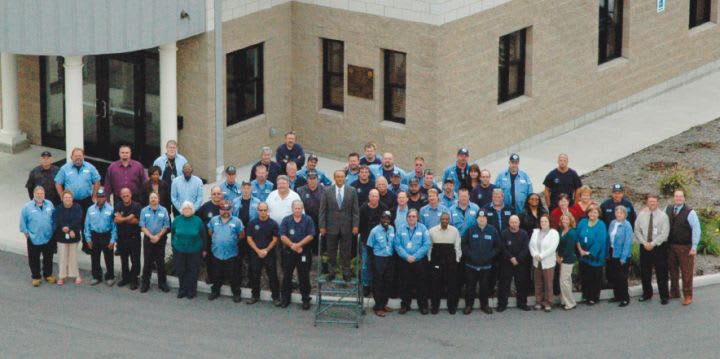
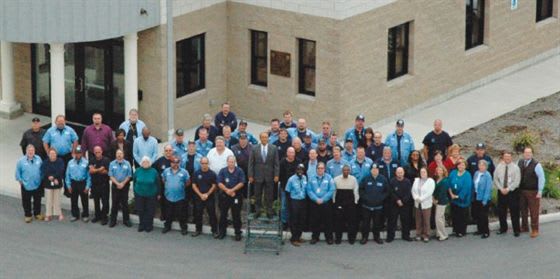
Fleet centralization undoubtedly leads to positive results. But don’t think a fairy-tale ending is indicative of the whole story — along with the good comes the bad and even the ugly. When time came to centralize our fleet, the City of Columbus, Ohio, we jumped in with both feet, excited to have a new facility, a better opportunity to train our technicians, and the likelihood we’d be running a much more efficient operation. However, we weren’t prepared for what came next.
We experienced many unforeseen challenges in the process of centralizing a fleet management operation. But, if fleet managers know what to expect, they can plan accordingly for these growing pains. Through our story — the good, the bad, and the ugly parts — we hope fleets can see the power of centralization and learn how to better tackle the challenges that come with the process.
The Bad: Challenges Before Centralization
Before we centralized, our six operational facilities were undersized, inefficient, and extremely out of date. Each facility supported a specific city division, and even though a new facility could better service every agency’s vehicles, those agencies didn’t want to lose their perceived control at their existing facilities.
Other divisions were upset by increased travel times to bring vehicles to the new facility. Although turnaround times would be faster after centralization, with the Columbus city limits at 227 square miles and a population of 780,000 citizens, towing to only one facility seemed too burdensome.
Complicating matters further, labor unions were apprehensive about the transition to a new facility; getting buy-in from union leadership and dispelling misconceptions became critical to the project’s success.
Despite these initial challenges, our new, state-of-the-art, 150,000 square-foot fleet maintenance facility became a reality in 2008. However, these initial challenges were only the beginning. We’d conquered the bad, but then we faced a worse reality — the ugly.
The Ugly: Difficulties at the New Facility
Once the new facility opened, the true challenges began. On the actual day of “move-in” and facility consolidation, a major snow storm hit, dumping more than 14 inches of snow on Columbus. This act of Mother Nature caused increased breakdowns and very quickly taxed the facility to its limits, before we’d even broken it in. We should have recognized the situation as an omen.
Remember the agencies that opposed the new facility? That attitude didn’t change once the consolidation began, and we started rolling facilities together into the new site. In fact, some agencies decided to test fleet operations — to teach us a lesson, of sorts — by submitting many repair requests immediately. For example, front-line emergency apparatus would normally have no more than 8-10 pieces down for service during any given day of the week for one division; but within the first two weeks of operations, fleet was consistently presented with more than 40 down units daily.
[PAGEBREAK]
Another division submitted a similar increase in service requests. Where we’d typically see 15-20 down units daily, within the first week of operations, an additional 45 pieces of equipment were brought into the facility needing various repairs. Maybe it was a coincidence, but fleet was being tested, and the testing continued. For the first nine months of operation, we were taxed to our limits.
In some cases, changes we saw as positives ended up tagged with associated negatives. Excited we had everyone available for training in one place, we scheduled 2,800 Emergency Vehicle Technician (EVT) training hours with more than 30 technicians. While training is a major focus of our operation, it required pulling technicians from the floor. In other words, when workers were needed most, many of them were in training.
Another positive-turned-negative was the facility’s cleanliness. Before, the age and wear of “dated” city facilities made it difficult to tell whether they were clean; now, every speck of dirt shows up on our sparkling clean floors, making it much more difficult to keep the facility looking great. And, chaos continued as we diligently worked to arrange our new home.
Further, we were proud to open our facility 24/7 to provide fire operations our complete support. However, with this consolidation came skyrocketing costs over time. We provided more and better services, but at a price.
Aside from the unexpected circumstantial challenges, centralization presents components that simply take work, no matter who you are. Consolidating the parts departments was a mess. We were forced to evaluate all incoming parts and begin reducing inventories as well as cross training parts personnel. A parts keeper traditionally familiar with ordering sweeper parts was completely unfamiliar with fire or police equipment.
Cross-training personnel was critical to the continued success of the centralization process at the new facility. Finding a place for everything and getting everything in its place took a great deal of work, too, including getting rid of the old, junky furniture and bringing in new furnishings.
The Good: It Was Worth It
Despite the many challenges we faced, fleet centralization has paid off for the City. Over time, people began to accept the new facility as a positive. Workloads evened out. Training paid off. In fact, the City of Columbus fleet now carries 55 emergency vehicle technician (EVT) certifications among 20 technicians on the floor, plus four Master EVT technicians. Technicians also hold more than 550 Automotive Service Excellence (ASE) certifications, with 23 Master certifications among another 71 technicians.
Columbus is now the largest city in the nation to receive ASE Blue Seal certification and one of only two municipalities in Ohio to receive this recognition in the past two years.
We also provide cross training for refuse, fire, and recreation and parks departments, and police and transportation trucks and equipment. With most fleet employees in one place, we can do more training and do it better.
[PAGEBREAK]
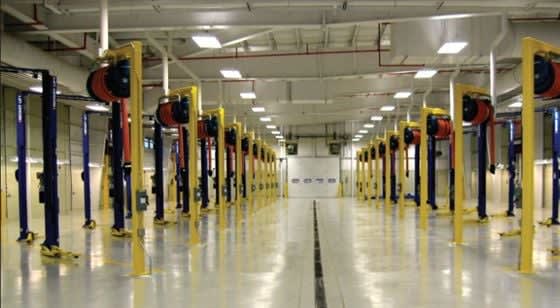
Safety has also seen major improvements with the new facility. Seldom on site will you see a tech on a “creeper” rolling under a vehicle to service the unit. Thirty-two lifts are available for servicing any vehicle that enters the facility.
We now provide enhanced safety training for fleet employees. This additional focus on safety and training and the new fleet facility’s safety features led, by November 2009, to realizing an additional 12-percent reduction in incidents on the floor. Overall injury “severity” rates dropped, based on the OSHA Severity Rate from 476 in 2007 to 295 in 2008, representing a 38-percent decrease. As a result, City of Columbus medical costs were reduced from $209,522 in 2007 to $24,294 in 2008, producing an 88-percent reduction in pay-out. Results for 2009 claims are even more impressive due to a continued reduction in OSHA Severity Rate.
In addition to improving important performance metrics, the new facility simply looks and works better. The bright, clean facility boasts 75 bays, 32 vehicle lifts, and a modern fluid management system. Teamwork and diagnostics have improved, as has employee morale, resulting in savings to the taxpayers of the City of Columbus.
The facility operates 24/7, and in the event of a major power failure, can run off the grid via a 1,500kW generator for up to a week. At any time of day, regardless of emergency situations, fleet vehicles can be fueled and serviced. Conversely, the facility can be locked down during an emergency event and is a Homeland Security support site.
Ultimately, customers see much better service in our centralized operations. One major improvement was the inclusion of a Customer Service area that changed the entire customer service work flow. Previously, fleet processed about 38,000 work orders annually at different sites — more than 100 vehicle repairs per day in our new facility, operating every day of the year.
Now, most units go through one of two bays. Customers drive into the building and have their vehicles immediately assessed for service. This process allows us to review the vehicle’s needs with the customer and electronically enter all customer and vehicle information into the work order system. With this process we now collect more accurate information while the customer is still with the vehicle, thus eliminating the possibility of errant, vague, or incorrect information. The entire facility, with the help of the AssetWorks system, is now paperless.
Today, our budget is lean, our shops are clean, and our practices are green — we’re a lean, clean, green fleet machine. And other fleets can do the same.
About the Author
Kelly Reagan is fleet administrator, City of Columbus, Ohio. He can be reached at kwreagan@columbus.gov.
More Operations
2026 Public Fleet Hall of Fame Inductees Honored
Honorees are recognized industry leaders and pioneers who have significantly contributed to the public fleet profession.
Read More →
David Renschler Receives 2026 Legendary Lifetime Achievement Award
Andy Campbell of Sourcewell, which partnered with Government Fleet in presenting the award, recognized Renschler.
Read More →
Ross Jackson Jr. Named 2026 Public Sector Fleet Manager of the Year
Ross Jackson Jr. is the Fleet Operations Superintendent with the City of Fayetteville, Arkansas.
Read More →
Public Fleet Professionals Set to Converge as GFX Gets Underway
Known as the largest gathering of public fleet professionals in the nation, GFX will feature in-depth training sessions, emerging fleet technologies, and access to leading suppliers and service providers.
Read More →
The Technician Pipeline: Finding, Keeping, and Promoting Techs Within the Operation
A look at where to find good talent, what fleets are doing to incentivize those techs to stay within the fleet, and what promotion looks like for a technician within the public sector.
Read More →
5 Public Fleet Stories Worth Revisiting Before GFX | The May Dispatch
Public fleet leaders are being asked to prepare for more, communicate better, and make decisions that hold up under pressure.
Read More →
Drive More Profit with Greater Fleet Uptime
Fleet downtime costs money. JASPER helps keep vehicles on the road with quality remanufactured components, fast nationwide delivery, and reliable solutions that boost uptime and profitability.
Read More →
Are You Tracking Your Fleet's True Total Cost of Ownership?
Bobit Business Media surveyed 190 fleet professionals and found that while most fleets are tracking costs, fragmented systems and data gaps are keeping true TCO visibility out of reach. With rising pressure to control spend in an increasingly volatile environment, the gap between what fleets think they know and what the data actually shows is wider than you might expect. See how your peers are managing costs today and where the industry still has room to improve.
Read More →
Minneapolis Fire Department Prepares to Add Three New Pierce Enforcer Pumpers to Front-Line Fleet
The order, secured through Pierce dealer MacQueen, marks the department’s move from commercial chassis pumpers to Pierce custom fire apparatus designed to meet the operational demands of Minnesota’s largest city.
Read More →
The Human Side of Fleet Leadership: Lessons from Larry Campbell
As public fleets navigate rapid change through AI, telematics, and increasing operational pressures, Larry Campbell believes the fundamentals of leadership matter more than ever. The longtime fleet leader reflects on accountability, integrity, and why earning trust remains the foundation of a successful fleet operation.
Read More →