




Plane & Simple: Do’s & Don’ts of Surface Planers
Surface planer operation requires multiple considerations, such as choosing the right equipment, using the correct flail, and plugging into the right power source.

Pulling the planer, rather than pushing it, will generally produce a smoother finish and minimize ghosting.
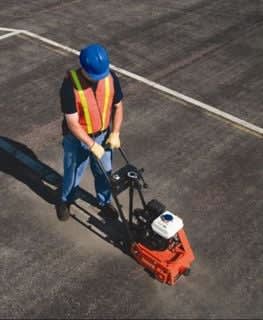
The popularity of small surface planers continues to grow as more and more markets find uses for these machines. Municipalities are no exception, as many continue to add surface planers (also called scarifiers) to their fleets. They do so to equip themselves for everyday maintenance projects, such as eliminating sidewalk hazards, traffic line removal, and any other task requiring the removal of excess concrete.
All surface planers share the same basic platform configuration, so how much is there to know about these machines? The answer may be more than many fleet managers would expect, however, as planer operation requires multiple considerations, such as what type of flails to use. Unfortunately, many fleet managers don’t take time to understand the concept, so they achieve inadequate results. But, by learning the do’s and don’ts of choosing and operating these machines, fleet managers can meet their goals, because these machines are really quite “plane” and simple.
Do: Understand the Job
Before tackling any job with a surface planer, one must first take a step back and define the job at hand. Is the goal to remove a trip-and-fall hazard from a sidewalk? Remove traffic lines? Remove a coating from the concrete floor of the maintenance shop? Since the planing process is considered destructive and unrefined, it’s important to understand the desired outcome before going to work. In fact, after determining what must be accomplished, one may realize that a surface planer is not the correct solution for the job. Rather, less aggressive tools, such as a low-speed surface grinder or floor-covering stripper, may be the correct tool.
Don’t: Use an Incorrect Power Source
As obvious as it may seem, make sure the surface planer uses the correct power source for the location. Engine-powered planers are typically the best option for outdoor applications, since electric-powered units do not work at an outdoor location lacking electrical outlets. Electric-powered machines also won’t suffice at indoor locations without a correct electrical source available. For instance, if a 220-volt surface planer is plugged into a 110-volt electrical source, the machine will not work — the electrical system may be damaged or a fire may start.
Instead, a propane-powered machine might be the best choice when a compatible outlet is not available. And the worst scenario, of course, is attempting to use an engine-powered unit indoors where carbon monoxide poisoning could result.
[PAGEBREAK]
Do: Use the Correct Flail for the Job
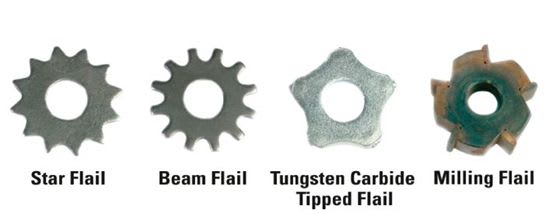
As mentioned, choosing the right machine for the job is very important, but using the correct type of flail with a surface planer is equally critical. Today, four basic flail configurations are sold by most manufacturers — star flails, beam flails, tungsten-carbide tipped flails, and milling flails. Each type is available in various industry-standard diameters and thicknesses, with the specific tooth configuration the designating factor for their respective names.
Star flails. The finish produced by star flails is normally a fine, broom-swept texture. Typical applications consist of cleaning concrete and asphalt surfaces, removing coatings and encrusted materials, de-scaling steel decks, or performing light scarification before applying a new surface coating.
Beam flails. The finish created by beam flails is medium-coarse to coarse in texture, making them ideal for medium-duty concrete and asphalt removal, as well as removing traffic lines, thicker coatings, and encrusted materials.
Tungsten-carbide tipped flails. Tipped flails easily handle harsher applications, such as heavy-duty concrete and asphalt removal, concrete and asphalt grooving projects, and leveling uneven sidewalks that pose a trip-and-fall hazard.
Milling flails. The configuration of milling flails is directional, requiring them to be operated in an “upcut” or “climb cut” mode. Typical uses for milling flails include removing membrane-type materials from concrete surfaces and removing traffic lines from concrete and asphalt surfaces.
Don’t: Start a Job without Understanding the Operation
Even after the proper machine and flail are selected, it is still important to take a step back and look at the big picture before starting up the planer. One must understand the desired outcome and what must be done to achieve it.
If the goal is a smooth finish, pulling the surface planer generally works better than trying to push it, especially when directional milling flails are used. For example, if a worker is removing traffic lines and wishes to minimize ghosting (when phantom lines are left behind), pulling the machine will produce the best results. Pushing the surface planer will result in a rougher finish, and ghosting can be more pronounced. If, on the other hand, the worker is leveling a sidewalk surface, a smooth finish isn’t as important, so a combination of pushing and pulling can be used.
Do: Check for Uneven Flail Wear
After determining the best flail for the job, pay attention to how the flails wear to prolong equipment service life. It’s usually not until the job is completed or during a random maintenance inspection that someone notices excessive wear to one side of the flails, instead of the desired even wear around the perimeter.
If excessive wear exists, the flails may have been loaded too tightly on the drum rods. Tight loading prevents flails from spinning freely as intended. The spinning action allows the wear to be distributed evenly about the flail’s perimeter. If the flails are tight and cannot spin properly, wear will occur predominantly to one side.
Even if manufacturer’s guidelines are followed and the correct number of flails and spacer washers are loaded, variances in manufacturing tolerances and material thickness may require slight adjustments in the field. Adjust the number of flails and spacer washers to allow them to spin freely and thus properly “flail” against the surface.
Don’t: Raise the Planer Off Its Wheels During Operation
Despite some beliefs to the contrary, raising the machine off its front wheels does not increase — but instead decreases — the material removal rate. This occurs because the resulting increase in recoil forces makes the surface planer unstable. The more a machine hops or jumps, the less kinetic energy it effectively transfers to the surface. Consequently, it’s best to keep the wheels in contact with the surface and let the flails do the work.
[PAGEBREAK]
Do: Change Flails Regularly
Obviously, flails are a critical wear part to replace on a surface planer. However, the type of flail heavily influences the frequency of replacement. For instance, tungsten-carbide tipped flails can last up to 250 hours, while the typical service life of beam flails is just 1-3 hours, depending on the application. Hence, maintenance crews must pay special attention to the type of flails used and closely track flail wear.
When changing flails, drum rods should also be replaced if worn to their established limits. If the drum rods are reused, the new flails will not rotate evenly around the rods, and the flails may wear unevenly.
Don’t: Forget Overall Machine Maintenance
While keeping track of the planer’s flails, maintenance crews must not forget maintaining other components. Bearings are one of the most commonly overlooked maintenance items. Since the operation of surface planers tends to create fine dust, capable of penetrating the seals of a bearing, the bearings will wear prematurely if they are not greased regularly.
The surface planer owner’s manual includes a maintenance schedule for other service needs. If the machine is powered by an engine, the engine owner’s manual will contain a separate maintenance schedule that should be followed.
Do: Ask for Help
Finally, ask for help if needed. Too often, operators use their equipment improperly (if they’re even using the correct machine in the first place) and become upset when poor results occur. But surface planer manufacturers typically offer toll-free numbers to reach skilled customer service representatives familiar with many job applications. Also, many manufacturers’ Web sites contain helpful tips and other information, so there is no excuse for doing things wrong. It is in everyone’s best interest — from the end user to the manufacturer — that every job is done correctly and safely.
About the Author
Dennis Von Ruden is president of General Equipment Co., headquartered in Owatonna, Minn. He can be reached at dvonruden@generalequip.com.
More Equipment
New Powered Carry Barrel Lift Helps Crews Dump Heavy Barrels Into Trucks With Less Manual Lifting
The Carry Barrel Lift is a new truck-mounted attachment designed to help landscape and municipal crews lift and dump heavy 60-gallon barrels more efficiently while reducing manual strain.
Read More →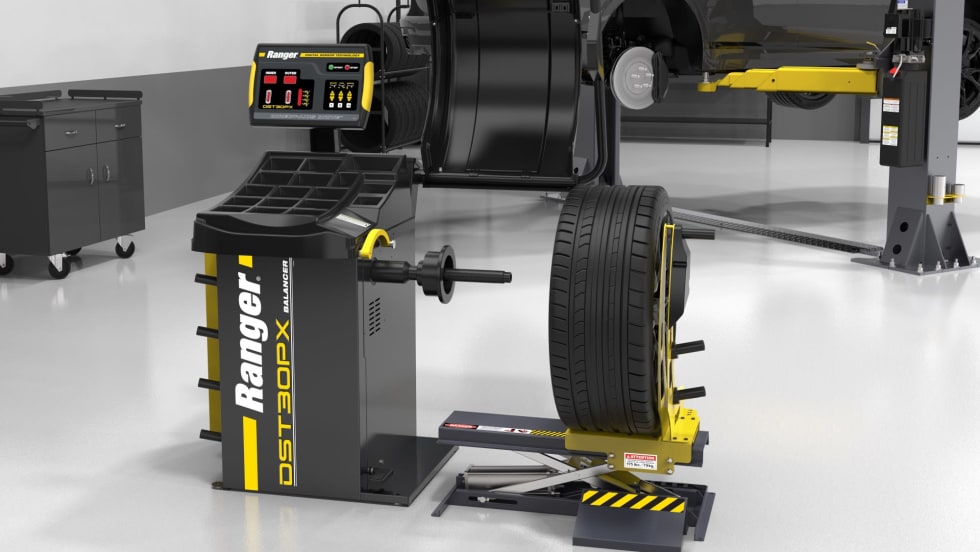
New Ranger RWL175 Universal Wheel Lift Delivers Faster, Safer Mounting on Most Wheel Balancers
Ranger’s new RWL175 Pneumatic Wheel Lift is designed to help technicians safely mount wheel assemblies up to 175 pounds while reducing strain and improving shop efficiency.
Read More →
Vanair Introduces EPEQ IM HVAC System
Vanair introduced its EPEQ IM HVAC idle management system, designed to reduce engine idling, lower maintenance costs, and extend vehicle life through factory HVAC integration and automated climate control.
Read More →
Panasonic Connect Launches the TOUGHBOOK 56
Panasonic introduces the TOUGHBOOK 56, a rugged, modular laptop designed for public safety and field operations, featuring AI-ready processing, expanded connectivity, and enhanced security.
Read More →
Sonim XP5plus 5G Available on AT&T and FirstNet
Sonim’s XP5plus 5G rugged device is now available on AT&T and FirstNet, combining push-to-talk capabilities, LMR interoperability, and 5G connectivity for public safety and enterprise users.
Read More →
New BendPak Wheel Spotting Dish Simplifies Lifting and Parking
BendPak added a wheel spotting dish kit as standard on its two-post lifts, designed to improve vehicle positioning accuracy and reduce setup time in service bays.
Read More →
Pico Technology Introduces NVH Diagnostic Probes and Kits
Pico Technology introduced new NVH diagnostic probes and kits designed to streamline noise and vibration testing, enabling multi-axis data capture in a single test while reducing setup time and configuration errors.
Read More →
Tenhold Debuts Next-Generation Vehicle Systems for Law Enforcement and Public Safety
Tenhold launches a new line of vehicle mounting systems for first responders, including a firearm lock designed for durability and in-field security, with deployment across more than 25 states.
Read More →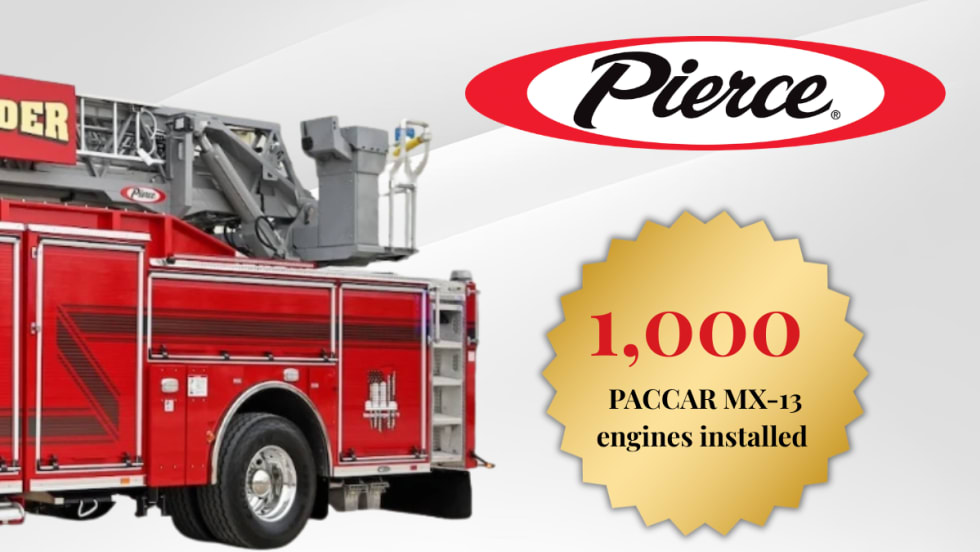
Pierce Manufacturing Updates & Resource Introduction
Pierce delivers its 1,000th Paccar MX-13-powered fire apparatus, a 107-foot aerial ladder truck built for the Broussard Fire Department with a 510-hp engine and integrated pump system.
Read More →
2027 Ram 2500 Emergency Response Vehicle Debuts as Pursuit-Capable Heavy-Duty Truck
Ram introduces a pursuit-capable 3/4-ton emergency response truck, with V-8 power, 400-amp electrical capacity, and performance validated in Michigan State Police testing.
Read More →