




Fleet Manager Saves Millions with Business Approach
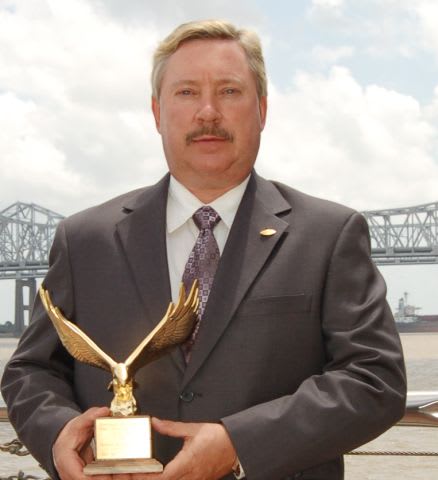
The winner of the 2009 Public Sector Fleet Manager of the Year Award, Doug Weichman of Palm Beach County, Fla., has saved millions by expanding fuel contracts and right-sizing the County’s fleet.

For a PDF of the full article, click here.
Out of a record field of 31 nominees, the title of 2009 Public Sector Fleet Manager of the Year was awarded to Doug Weichman, CAFM, director of Fleet Management for Palm Beach County, Fla. Weichman was recognized April 26 at the 2009 NAFA Institute & Expo in New Orleans.
The award, in its fifth year, is sponsored by ARI and Fleet Counselor Services. The winner was selected by an independent panel of fleet professionals, appointed by Government Fleet magazine.
New Initiatives Allow for Big Fleet Savings
Prior to joining the Palm Beach County fleet team, Weichman, a 31-year industry veteran, was fleet manager for Miami-Dade County, Fla., for nine years and held private sector fleet positions upon graduating from Ferris State University with a bachelor’s degree in automotive and heavy equipment technology. He was the first runner-up for the 2008 Public Sector Fleet Manager of the Year award.
“My college degree was a fleet management-related degree, which was unique in the ’70s,” Weichman said. “I was able to get hired in at mid-level management on my first job on the automotive industry side and have accrued a lot of experience through the years, allowing me to get ahead of the curve.”
Weichman also credits a supportive family, 29-year marriage, and his two children as a constant motivator in his continued hard work.
His recent successes are numerous. In 2008, Weichman wrote Palm Beach County’s policies for vehicle idling, energy conservation, sustainability, emissions, and greenhouse gas reduction. He also instituted several interlocal agreements to supply fleet services to several municipalities located within Palm Beach County, along with State of Florida agencies, the FBI, and Secret Service.
His fleet was ranked in the top 20 “100 Best Fleets in North America” in 2008, as well as the “Vocational Fleet of the Year” by Fleet Owner magazine.
Weichman’s numerous achievements in 2008 include expanding Tier I fuel contracts to include 3 million gallons of biodiesel, expanding the vehicle replacement fund increasing the county’s hybrid fleet to 220 units, and being the first government entity in the Southeast U.S. to purchase three hybrid-bucket trucks. In fact, Palm Beach County collected approximately $70,000 in tax rebates for hybrid vehicles purchased using EPAct 2005 re-write rules.
“In the past few years, we’ve accomplished a lot within our fleet,” Weichman said. “Our savings have been great, and networking has helped us because I’ve been able to pay a lot of attention to what others are doing.”
He also has reduced new-vehicle purchases and eliminating underutilized vehicles and equipment by approximately 250 assets in FY2008, accounting for savings of about $6 million. A strong proponent of continuing education, he enrolled six managers in the CAFM program, one of whom achieved certification in 2008.
“Fleet is highly productive due to established performance measures, policies, and standards that create efficient use of resources,” Weichman said. “Employee recognition programs and monthly team meetings contribute to this.”
[PAGEBREAK]
Technicians and shops receive monthly productivity goals, and employees receive a stipend for ASE certifications. All county repair facilities are Blue Seal-certified, technicians attend OEM and technical training, and supervisors have attended NAFA Fleet Management Seminars, Dale Carnegie, Six Sigma, management, and skills improvement training.
Customer service ratings of County personnel remain high. Assets serviced at a repair facility receive a customer feedback hangtag with four yes/no satisfaction questions; 98 percent “receive yes” responses. After new assets are put into service, customers complete a survey, with results averaging a 97-percent positive rating. Annual customer surveys rate both satisfaction and importance of services.
“This concept enables fleet to see what services are most important and evaluate if resources are being allocated to best meet customers’ expectations,” Weichman said. “The last survey received a 91-percent satisfaction rating.”
Also, annual customer meetings include dialog on customer satisfaction and a “kudos program” allowing supervisors to present gift certificates to employees performing excellent customer service.
Industry-Involved Manager Stays Ahead of Curve
Weichman has been a member of NAFA since 1987 — holding a national officer position for the past eight years — is a Florida Association of Governmental Fleet Administrators member, and was a Governor of Florida appointee to Clean Cities. He also teaches fleet maintenance management at the University of Wisconsin, has published numerous articles, and has worked on the development of several NAFA educational products.
Weichman established the first NAFA Green Fleet Award in 2008 and is a member of NAFA’s carbon footprint calculator project, dedicated to creating a user-friendly greenhouse gas calculator. In addition, he is rewriting NAFA’s Fleet Information Management Guide.
Not only has Weichman remained on top of his game by involvement in the industry, but he credits his coworkers — both above and below him — for helping him succeed. Supervising a staff of 70, Weichman has eight direct reports.
“We are a tight-knit group and interact very well with each other,” he said. “We have a very dedicated staff.”
Constant and open communications through regular staff meetings, educational opportunities, and e-mail updates remain key to Weichman’s success.
“Letting your team know what’s going on empowers them,” he said.
He also feels support from senior county leaders helps him move forward with new ideas and initiatives.
“They let me think out of the box, have flexible policies and procedures, and run with ideas,” Weichman said. “They give me tools and resources to be creative, which allows me to be effective.”
The bottom line for Weichman is to work hard, play hard, and reward top performers. His fiscal-year budget for 2009 is $41 million for a 4,818-unit fleet, plus fuel service for an additional 2,000 vehicles.
Palm County Operates as a Business
Palm Beach County’s fleet department operates according to a business plan, which defines a strategic vision and incorporates short- and long-term goals. It also promotes achieving improvement, autonomy, and self sufficiency, as well as attaining stature, influence, and credibility.
As an internal service fund, county-provided services are billed to customers and must be competitive; customers can choose who provides their services — the County or retail vendors. County-wide policy and interlocal agreements spell out performance and service costs.
A strengths, weaknesses, opportunities, and threats (SWOT) analysis is used, along with the Harnessing Organizational Performance (HOP) model, to update county-wide mission statements and link objectives and the fleet business plan’s components performance measures.
[PAGEBREAK]
The business plan includes providing safe and reliable vehicles that meet their intended use, have high rates of availability, are provided at a competitive price, provide sustainability related to the environment, and provide opportunities for growth and professional advancement for all fleet team members.
The department uses a management information system to track technician productivity, warranties, parts inventory/bar coding, loaner/pool, work orders, asset management, and financial information. This system interfaces with the “Ward CANceiver” fuel management system that captures OBD II information while fueling.
Additionally, monthly billing and preventive maintenance schedules are sent via e-mail and are available on the county’s Intranet, displaying vehicle status and all fleet-related information. All County shops are wi-fi, allowing everyone access to the information system, Internet, and OEM information (with OEM warranty approval.)
The department also communicates this information to fleet team members via e-mail.
“Utilizing this type of current technology creates efficiency, increasing productivity, and improves customer communication and service,” Weichman said.
The County’s fleet team sees a good return on investment, averaging about a 28-percent return, good for a government fleet, according to Weichman. “We control the fleet from a replacement policy. Each department pays a monthly fee to the fund, almost like an internal leasing department, so we are able to control the capital and final purchases. This drives us to be more efficient, especially in current economic times.”
Fleet manages the vehicle/equipment replacement policy fund, established to centralize and standardize purchases in implementing programs such as greening the fleet. It uses a financial formula of monthly payments to forward-fund replacement of vehicles owned by the County.
Fund guidelines for replacement and formulas are outlined specifically, allowing the use of lifecycle costing, condition reports, and guidelines of time, mileage, and hours for asset replacement.
“Although fleet controls the fund, customers are partners in the decision making of replacing assets, accomplished during the budget process, as well as during annual customer meetings,” Weichman said.
He recently created a rating system for strategic decisions on extending lifecycles, which reduced replacement purchases from $20 million to $7.5 million for the next fiscal year. Light vehicle replacement periods were extended to an average of 3.5 years.
More than 300 county vehicles/equipment scheduled to be replaced have been turned in this fiscal year, resulting in purchasing savings of more than $6 million. Another 150 vehicles are scheduled for turn-in the next fiscal year, reducing purchases by another $3.5 million, in addition to maintenance and fuel savings.
Coordination Between Business Units Essential
The fleet department’s established policy and procedure (P&P) manual covers all disciplines of how business is conducted, as well as the interaction between the various fleet business units. The department’s P&P coincides with county-wide P&P on fleet management that includes best management practices on vehicle management, downsizing, sustainability, replacement policy, operations, repairs, preventive maintenance (PM), environmental issues, inventory, asset management, vehicle/equipment assignment, utilization, risk management, personnel, financial, fueling, vehicle use including travel, ethics, and vehicle budget procedures.
[PAGEBREAK]
The P&P enables fleet to achieve its mission, objectives, and performance measures, published via the Internet with customer manuals and the business plan (also available in hardcopy).
Continuing communication concerning the County’s PM program is essential to operations and is the core of its vehicle maintenance and total lifecycle-costing principles, said Weichman.
“The program allows fleet to achieve over a 70-percent scheduled work order ratio,” according to Weichman. “Our program is committed to reducing liability and assuring operator safety. We have gone more than 17 years without a single lawsuit lost related to inadequate maintenance.”
Using enhanced OEM guidelines, fleet’s PM program ensures warranty coverage and exceptional high resale values averaging more than 28 percent of purchase price in past years. PM schedules are set up on various tables, using mileage, time, hours, and combinations of these indicators. Four methods of notification are used, including window stickers with mileage and time due, County Intranet listings of vehicles due through the work order system, e-mail notification, and phone calls to department coordinators.
County Continues to Examine Alternative Fuels
Palm Beach County was one of the first to buy Honda Insights in 2000 when few fleets were purchasing hybrids. In 2004, fleet established a policy directing hybrid purchases if they were available for the application in question.
To date, hybrids utilized in the County fleet include the Toyota Prius, Ford Escape, Saturn Vue, Chevrolet Malibu, GMC Sierra pickups, and International hybrid bucket trucks. Currently, the fleet’s alt-fuel vehicle count has reached 220 vehicles.
“We just took delivery of three hybrid-electric bucket trucks that have been in the market for a year,” Weichman said. “In Florida, I believe we’re the first governmental fleet to purchase medium-duty bucket trucks in our fleet operation.”
Three years ago, to help control fuel costs and increase driver safety, fleet switched to using nitrogen in tires.
“Studies show that keeping the tire pressure constant with nitrogen, we get a 2- to 3-percent increase in fuel economy, as well as extended tire life,” Weichman said.
Other environmentally friendly programs implemented at the County include:
• An idling program that requires vehicle shut-off within 10 seconds of putting the vehicle in park.
• A sustainability policy to purchase the most efficient vehicles available.
• Weight reduction on utility trucks. Instead of buying a metal body, the fleet now specifies aluminum. The cost is higher up-front, but the reduced weight and fuel consumption balance the cost in the long term.
• Roll-resistant tire installation on heavy-duty trucks to help increase fuel economy.
• Vehicle downsizing to buy the smallest vehicle possible.
Moving into the future, Weichman feels the County’s positive momentum will carry forward.
“We’ll continue to set goals and benchmarks,” Weichman said. “Although tough economic times are in our near future, this is causing us to be more creative and pulling together as a team. Palm Beach County, Florida, has always been progressive, and with our talented employees and great leadership, we will end up being a leaner and more desirable place in which to live, work, and do business. Our sustainability and greening efforts will continue. Plus, having some of the greatest weather and coastline in the U.S. does not hurt our future either.”
[PAGEBREAK]
2009 Public Sector Manager of the Year Finalists
The 2009 Government Fleet Public Sector Fleet Manager of the Year program recognizes outstanding fleet management across jurisdiction levels, including county and large and small city. Second-place runner-up John Alley is fleet director for the City of San Diego. Paul Condran, equipment maintenance manager for the City of Culver City, Calif., and Rick Longobart, fleet manager, City of Inglewood, Calif., tied for the third place finalist spot, a first in the five-year history of the award.
Among Alley’s 2008 accomplishments were earning the NAFA and Bell Canada Larry Goill Quality Award of Excellence for the City of San Diego’s fleet consolidation, saving the City $3.5 million annually, and implementing the Fleet Consortium for Fuel Purchases in Southern California. Alley’s fleet operations also was one of only three city services exempted from managed competition in 2008. Alley also serves as the Western Region Trustee on the NAFA Board of Trustees.
A four-time nominee, Condran helped stage the first CleanAirReg Technology Summit in 2008. A Certified Green Model shop and finalist for the WestStart-CalStart Blue Sky Clean Air award, the City of Culver City’s fleet operations removed over 60,000 tons particulate matter and 20,000 tons NOx and reduced petroleum fuel consumption over 800,000 gallons annually using CNG vehicles. Condran directed a partnership with Santa Monica College using $400,000 in federal grants for no-cost skills-training and received over $500,000 in air quality grants for the expansion of CNG station and purchase of CNG vehicles.
In addition to streamlining the fleet operation, Rick Longobart and his fleet team improved efficiency and air quality within the City of Inglewood by converting 150 fleet vehicles to operate on alternative fuel, creating a savings of $800,000 annually. The fleet group also received more than $2.8 million in grant funding. Through implementing an accident management system and integrating technologies, the City’s accident rate dropped by 25 percent, with estimated annual savings of 1.2 million. Longobart directed the adoption of an online motor pool reservation system, reducing fleet sizes by vehicles and saving $225,000.
More Operations
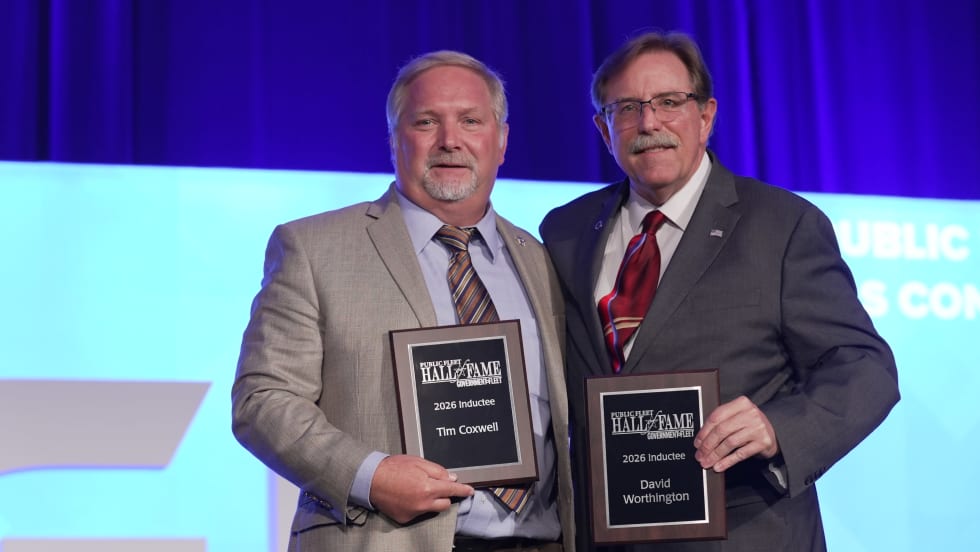
2026 Public Fleet Hall of Fame Inductees Honored
Honorees are recognized industry leaders and pioneers who have significantly contributed to the public fleet profession.
Read More →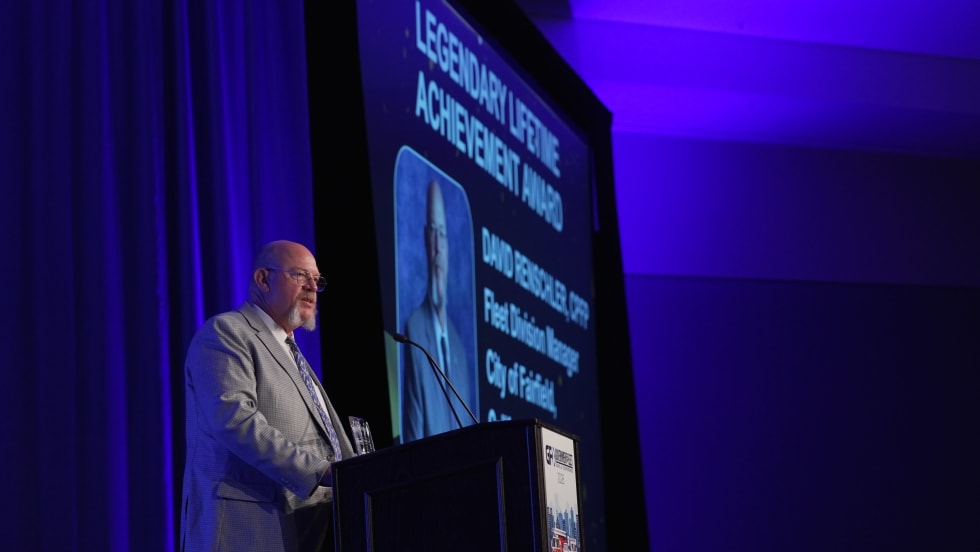
David Renschler Receives 2026 Legendary Lifetime Achievement Award
Andy Campbell of Sourcewell, which partnered with Government Fleet in presenting the award, recognized Renschler.
Read More →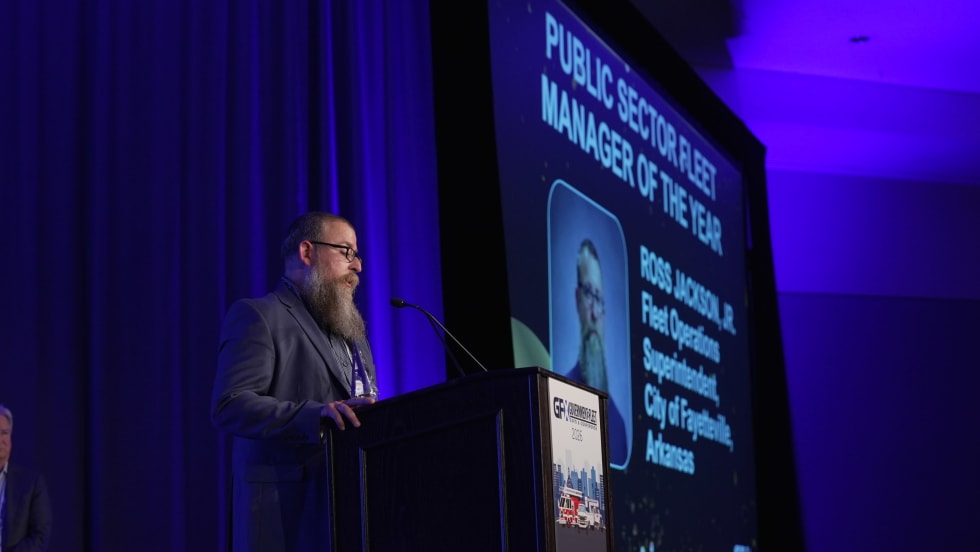
Ross Jackson Jr. Named 2026 Public Sector Fleet Manager of the Year
Ross Jackson Jr. is the Fleet Operations Superintendent with the City of Fayetteville, Arkansas.
Read More →
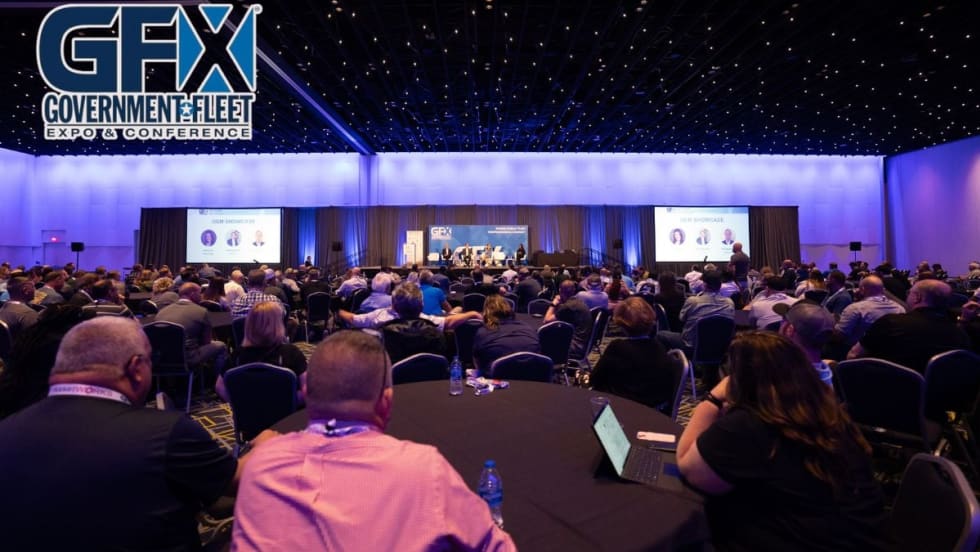
Public Fleet Professionals Set to Converge as GFX Gets Underway
Known as the largest gathering of public fleet professionals in the nation, GFX will feature in-depth training sessions, emerging fleet technologies, and access to leading suppliers and service providers.
Read More →
The Technician Pipeline: Finding, Keeping, and Promoting Techs Within the Operation
A look at where to find good talent, what fleets are doing to incentivize those techs to stay within the fleet, and what promotion looks like for a technician within the public sector.
Read More →
5 Public Fleet Stories Worth Revisiting Before GFX | The May Dispatch
Public fleet leaders are being asked to prepare for more, communicate better, and make decisions that hold up under pressure.
Read More →
Drive More Profit with Greater Fleet Uptime
Fleet downtime costs money. JASPER helps keep vehicles on the road with quality remanufactured components, fast nationwide delivery, and reliable solutions that boost uptime and profitability.
Read More →
Are You Tracking Your Fleet's True Total Cost of Ownership?
Bobit Business Media surveyed 190 fleet professionals and found that while most fleets are tracking costs, fragmented systems and data gaps are keeping true TCO visibility out of reach. With rising pressure to control spend in an increasingly volatile environment, the gap between what fleets think they know and what the data actually shows is wider than you might expect. See how your peers are managing costs today and where the industry still has room to improve.
Read More →
Minneapolis Fire Department Prepares to Add Three New Pierce Enforcer Pumpers to Front-Line Fleet
The order, secured through Pierce dealer MacQueen, marks the department’s move from commercial chassis pumpers to Pierce custom fire apparatus designed to meet the operational demands of Minnesota’s largest city.
Read More →
The Human Side of Fleet Leadership: Lessons from Larry Campbell
As public fleets navigate rapid change through AI, telematics, and increasing operational pressures, Larry Campbell believes the fundamentals of leadership matter more than ever. The longtime fleet leader reflects on accountability, integrity, and why earning trust remains the foundation of a successful fleet operation.
Read More →