




Standardization Offers Servicing & Budgeting Benefits
Standardizing fleet vehicle platforms leads to more efficient servicing, simplifies parts operations, and promotes a consistent organizational image. However, the process presents a few challenges and limitations.

Standardizing the vehicle platforms that comprise a fleet offers several benefits, including improved maintenance servicing, streamlined parts and fluids inventories, enhanced operational efficiency and driver safety, and expedited specification and bid processes.
Downsides to standardizing fleet vehicles include potentially higher acquisition costs, inability to take advantage of new technologies or vehicle innovations, and greater risk of excessive downtime due to model recalls or design flaws.
Standardization can be accomplished in a relatively straightforward way when limited to specific platforms, but standardizing more widely, across a number of platforms for a large portion of a fleet, can be trickier.
Vehicle Servicing & Fleet Image Benefit
The City of Napa, Calif., operates a fleet of close to 300 vehicles, including a number of standardized platforms, said Chris Burgeson, fleet manager. "That's the kind of thing we're trying to do as much as possible," he said.
Napa's vehicles for the fire, parks and recreation, police, and public works departments are maintained by four mechanics. "It's a tight staffing level," Burgeson noted. "We don't have a whole lot of room for learning as we go."
The fleet department as a whole benefits when mechanics are familiar with the vehicles they service, Burgeson said. "It means when they lift that thing up on the rack, they know their way around that vehicle and under the hood of it. It's not as if they have to start from square one and familiarize themselves with it."
There are other advantages. "It gives me the ability to standardize some of the mechanics' training," Burgeson said. "They can be focused on one make, model, and configuration. It means there's a certain consistency to the fleet."
That extends to the fleet's appearance, on which Burgeson puts a premium.
"One consistent look presents a professional image," he noted, instead of "apples, oranges, pears, and grapes."
One standard configuration in the Napa city fleet is used for building inspectors and code enforcement personnel vehicles. "We can now stock one oil filter for all trucks for all building inspectors," Burgeson pointed out.
But a standardized platform sometimes must be changed for reasons beyond a fleet's control. That's the case for the Napa police department, which, like many police departments, has been a long-time user of the Ford Crown Victoria.
"That is about to change," Burgeson said. "Ford is going to quit making that car in 2011. So we're searching for what the next standard platform is going to be."
The police department fleet numbers about 22 patrol cars, Burgeson said, and it will take a number of years before all Crown Victorias have been phased out. This year, the Crown Victoria is likely to remain the standard platform. However, Burgeson said he might "throw one car in the mix," possibly a Dodge Charger, as a candidate for the new platform. "We'd purchase one of those and put it in the fleet as a test bed," he said. "We'd want to know a little bit about that car" before settling on it, he said.
Standardizing often leads to cost reductions or improved cost controls in virtually everything related to maintenance, Burgeson said, including special tools. "We don't need a bunch of special tools. We just need the right ones for that particular make and model."
In addition to specialty tools, simplifying the array of vehicle components such as drivetrains, transmissions, and brake systems reduces the type and number of test equipment, software updates, and subscriptions required for fleet servicing.
Standardized vehicles, parts, and supplies also minimizes specifications and bid evaluations, reducing the workload for each new purchase.
City of Oxnard Seeks Broad-Based Program
Daniel Berlenbach, fleet services manager for the City of Oxnard, Calif., plans to ask the city council's approval in the near future for a process that would result in a more broad-based standardization of the city's fleet. The approach would request bids for a three-year contract solicited from local dealers representing one OEM or another - Ford or Chevrolet dealers in the area, for example - and would include training and access to diagnostic software.
The request most likely will call for bids to supply 6-10 fairly standard models, Berlenbach said, including compact, half-ton, full-size, and Crew Cab pickup trucks, "and see how each manufacturer responds, not only in terms of cost, but in terms of those other aspects" - training and access to diagnostic software.
For the term of the contract, the City would still solicit competitive bids, but only from the local dealers of the originally selected OEM.
Rather than being a change in the bidding process, Berlenbach said, "It's an exception to the rules."
This method of standardizing offers certain advantages, Berlenbach said, including greater parts and supplies efficiency. With greater similarity in vehicles, the parts department can streamline inventories and size.
"You can standardize training and the parts you're buying, and build some expertise among your folks so you become more efficient," Berlenbach noted.
Vehicle similarity also provides a user group benefit. Drivers become familiar and at ease with the vehicle's operation, controls, displays, and capabilities. Such familiarity helps promote safe driver habits and operations. Additionally, flexibility in vehicle assignments is facilitated when drivers are trained on a few standard model units.
[PAGEBREAK]
San Diego County Requests Longer-Term, Single-Source Bids
Another way to facilitate fleet standardization is to request longer-term, single-source bids.
When the County of San Diego wanted to standardize the light-duty vehicle segment of its fleet some years ago, it put out a request for single-source bids, recalled John Clements, fleet manager for the County. The term was one fiscal year, but there was a clause: the OEM represented by the winning bid would be the county's car manufacturer for five years.
As it happened, a Ford dealer won that bid, Clements said, and Ford has been the county's car company since. When the County requests bids for light-duty vehicles, it does so only from Ford dealers in the surrounding region.
The County has no signed contract with Ford, Clements emphasized, but he has the governing board's approval to buy Ford if he wants to.
"If quality, price, or availability of certain vehicles changes, we can go back to [conventional] competitive bidding," Clements said. "It's worked very, very well for us."
Of course, in a fleet that numbers approximately 3,900 pieces, there are bound to be exceptions.
"One of the biggest exceptions to our Ford program," Clements said, "is our undercover law enforcement vehicles. You can't have everybody driving a Ford Taurus."
Standardization Presents Risks, Challenges & Limits
There are challenges to standardizing, and limits to how far it can be taken. Bid competition is reduced as lifecycle costs, rather than the lowest-priced bid, become the determining factor in selecting vehicles. Unless the standardization process is implemented carefully, less competition can lead to higher acquisition costs.
Locking in one vehicle manufacturer may prevent a fleet from taking early advantage of new technologies or design innovations introduced in another manufacturer's product line.
Still another risk in standardizing a fleet is heightened when an OEM recall or product design flaw impacts a significant portion of the fleet's vehicles, leading to excessive downtime and loss of productivity.
To standardize a fleet properly, information about user vehicle or equipment needs must be as accurate as possible. "My customers are all of the using departments," said Napa's Burgeson. "It's their job to tell me what they need. It's my job to get the right fit for that need. Occasionally, they have a need that just doesn't find an application with any of our standard platforms. In that case, we have to veer off course a little bit and get something that's a little bit more of a one-off. It's inevitable that there are exceptions. The key is to try to limit them as much as possible."
Burgeson cited some reasons that lead a fleet to deviate from standard specs, including "dollars and cents."
"It's hard to argue with that," he said, "but you've got to weigh the short-term dollars and cents with the long-term dollars and cents."
Another reason for deviating from standardized specs is a lack of availability in the standard platform that will serve user needs. In such cases, "you go with what's available," Burgeson said. Likewise, in the case of more specialized pieces, little flexibility may exist.
[PAGEBREAK]
'Piggybacking' Advantages May Outweigh Standardization
An opportunity to piggyback on another agency's contract could also prompt a deviation from a standardized platform, Burgeson noted.
Built into some requests for proposals is a clause stipulating that other government agencies can participate on the winning bid. "We can get the same vehicle for the same price," Burgeson said. "It satisfies the need to have all of our equipment competitively bid. We're not sole-sourcing it, but we didn't go through the bid process. We're jumping on the back of another agency that has already gone through all of that administrative effort."
The piggybacking agency is involved in tracking what colleagues are purchasing or seeking to purchase and finding a winning bid suited to its needs.
"Fleet managers are a pretty tight-knit group," Burgeson said, when asked how he typically learned of piggybacking opportunities. "We'll reach out at a trade conference and start asking if anyone made a recent purchase." Word-of-mouth and e-mail can lead to finding a fleet that might be purchasing likely vehicles, Burgeson added.
"We have a 'semi-standard' for our larger trucks - in the 26,000-33,000 lb. GVW range," Burgeson said. "We got a chance to piggyback on a bid process that went out for similar trucks. The engine platform was different than what we've been 'quote-unquote' standardizing on, but in that case there was a pretty significant monetary advantage to going with that existing bid. So we did." Napa purchased two trucks in that instance, Burgeson explained.
"There are some real advantages to going that route," he said. "We don't want to compromise what we really want, but if our needs mesh well with the existing specification of another agency, then it just might be the way to go."
Since standardization offers definite benefits, Burgeson said, "We try to do it as much as possible. And where we can't do it we just take a measured approach," sticking with conventional specs and avoiding the out-of-the-ordinary as much as possible.
Contra Costa County Limited by Vehicle Model Unavailability
The County of Contra Costa, Calif., fleet is fairly standardized, according to Rick Ranger, fleet manager. "All around, I think it's a great idea," he said. "We're pretty much Ford-dominant."
Mechanics get to know the fleet vehicles and equipment well, and a standardized fleet has the added benefit of simplifying operations for the parts department, Ranger also noted. The county fleet has some 1,200 vehicles, maintained by 12 mechanics who work at the fleet's single facility in Martinez, Calif.
Ranger, like other government fleet managers, noted that factors beyond his control can limit the degree of achievable standardization.
"We had to change minivans because the Ford Windstar was no longer available, so we went with the Chevy Uplander," Ranger said. Such developments, plus the requirement to seek the lowest bidder, can force a fleet to maintain a more mixed roster of makes and models than it would otherwise.
The Uplander, for example, was not the low-bid passenger van in response to the most recent bid request. Now the fleet is going with the Dodge Grand Caravan, Ranger said. More variety in vehicle make and model presents more differentiation in parts and service and a further drift away from standardization.
More Operations
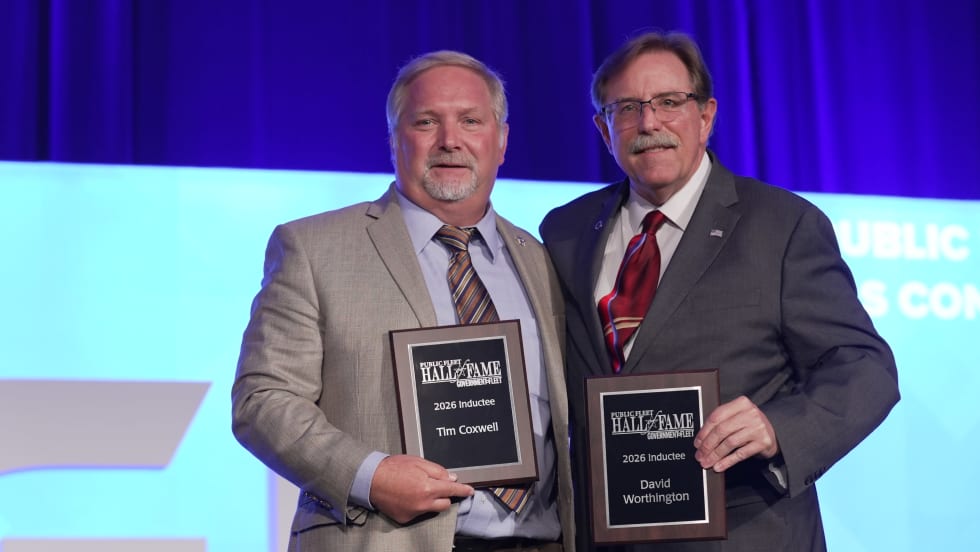
2026 Public Fleet Hall of Fame Inductees Honored
Honorees are recognized industry leaders and pioneers who have significantly contributed to the public fleet profession.
Read More →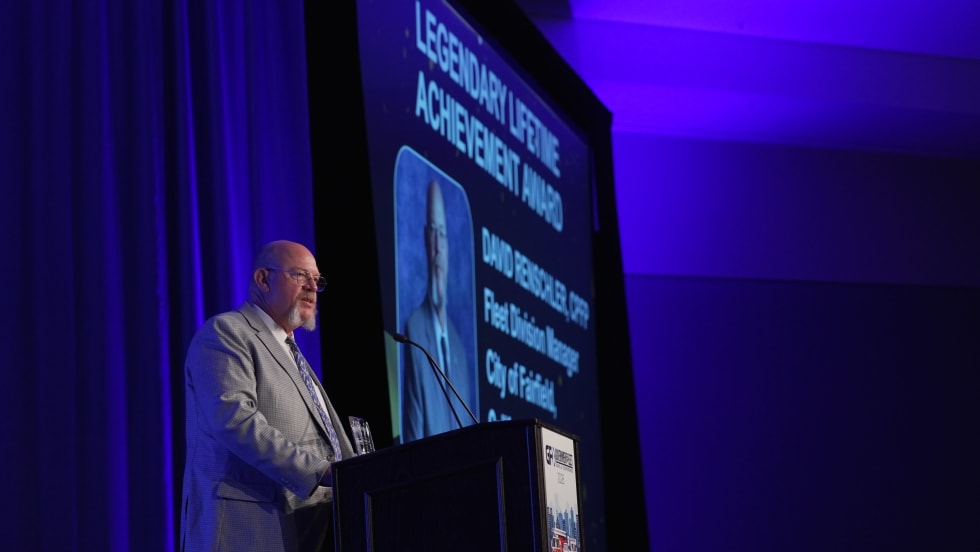
David Renschler Receives 2026 Legendary Lifetime Achievement Award
Andy Campbell of Sourcewell, which partnered with Government Fleet in presenting the award, recognized Renschler.
Read More →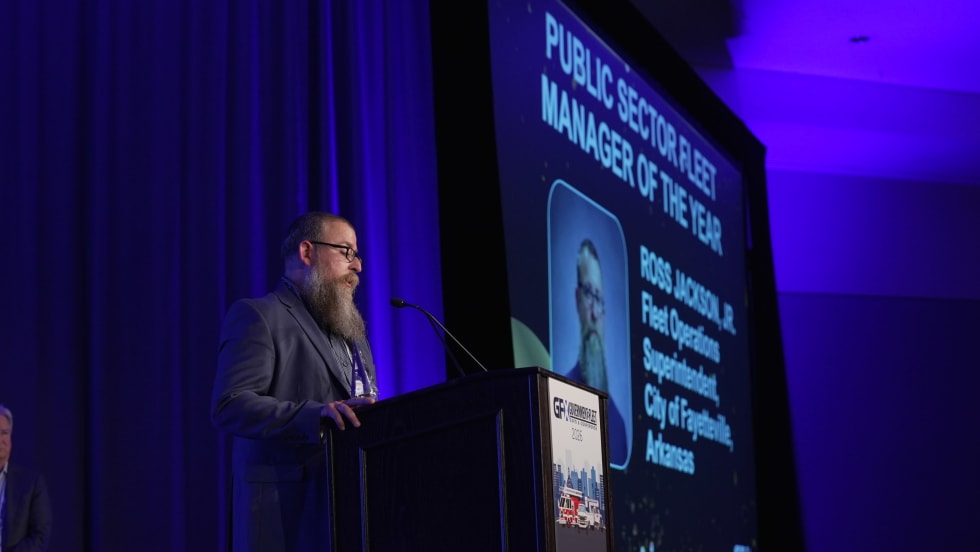
Ross Jackson Jr. Named 2026 Public Sector Fleet Manager of the Year
Ross Jackson Jr. is the Fleet Operations Superintendent with the City of Fayetteville, Arkansas.
Read More →
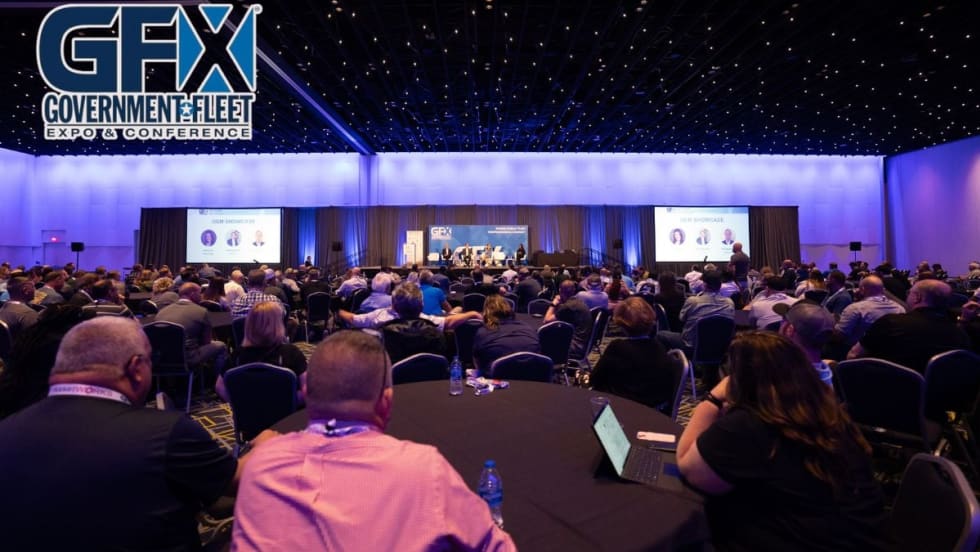
Public Fleet Professionals Set to Converge as GFX Gets Underway
Known as the largest gathering of public fleet professionals in the nation, GFX will feature in-depth training sessions, emerging fleet technologies, and access to leading suppliers and service providers.
Read More →
The Technician Pipeline: Finding, Keeping, and Promoting Techs Within the Operation
A look at where to find good talent, what fleets are doing to incentivize those techs to stay within the fleet, and what promotion looks like for a technician within the public sector.
Read More →
5 Public Fleet Stories Worth Revisiting Before GFX | The May Dispatch
Public fleet leaders are being asked to prepare for more, communicate better, and make decisions that hold up under pressure.
Read More →
Drive More Profit with Greater Fleet Uptime
Fleet downtime costs money. JASPER helps keep vehicles on the road with quality remanufactured components, fast nationwide delivery, and reliable solutions that boost uptime and profitability.
Read More →
Are You Tracking Your Fleet's True Total Cost of Ownership?
Bobit Business Media surveyed 190 fleet professionals and found that while most fleets are tracking costs, fragmented systems and data gaps are keeping true TCO visibility out of reach. With rising pressure to control spend in an increasingly volatile environment, the gap between what fleets think they know and what the data actually shows is wider than you might expect. See how your peers are managing costs today and where the industry still has room to improve.
Read More →
Minneapolis Fire Department Prepares to Add Three New Pierce Enforcer Pumpers to Front-Line Fleet
The order, secured through Pierce dealer MacQueen, marks the department’s move from commercial chassis pumpers to Pierce custom fire apparatus designed to meet the operational demands of Minnesota’s largest city.
Read More →
The Human Side of Fleet Leadership: Lessons from Larry Campbell
As public fleets navigate rapid change through AI, telematics, and increasing operational pressures, Larry Campbell believes the fundamentals of leadership matter more than ever. The longtime fleet leader reflects on accountability, integrity, and why earning trust remains the foundation of a successful fleet operation.
Read More →