




Related: All About Fleet Purchasing Contracts, with Tammy Rimes
5 Tips To Stage A Successful Pre-Bid Meeting
The responsibility for a productive pre-bid meeting falls to the fleet manager. The process begins with researched and well-written specifications.
by Steve Bennett
September 1, 2008
Photo via Pixabay
7 min to read
A productive pre-bid conference helps both purchaser and vendors, but it is to the fleet managers — the host of the event, after all — that responsibility for a successful meeting falls. How can the fleet manager ensure the pre-bid conference is productive for all parties?
To begin, specifications must be well-researched and well-written. Poorly constructed specs can inadvertently shut out some vendors, said David Bragg, former fleet operations superintendent for Fayetteville, Ark. (Editor’s note: Bragg retired from his fleet management career with Fayetteville.)
In the pre-bid meeting, adhering to a pre-established format helps keep participants on track. To stray from the meeting format risks the chance that one vendor will commandeer the proceedings and turn other vendors into virtual spectators, experienced fleet managers say.
These issues are among a variety of pitfalls in staging pre-bid conferences for which managers must prepare and monitor during the meeting to keep the proceedings firmly under control.
Government fleet managers offered the following tips on how to avoid the mistakes that often threaten the success of pre-bid meetings.
Write Clear, Comprehensive, Non-Restrictive Specs
"Put in enough detail so there’s no confusion," said Clive Cork, automotive director for the City of Coral Gables, Fla., and write the specs so they can be easily understood, he added. "That’s where most people fall short," Cork said. "It takes time to do it well."
Cork cited an example of a well-constructed spec in contrast to one that would not serve a fleet manager’s best interests: "The fuel capacity must be such that the equipment can operate for 24 hours nonstop without refueling." This precise detailing is better, said Cork, than a spec that calls for a fuel tank that holds "X" number of gallons.
Why? "Because I don’t know what the rate of fuel consumption is," Cork said. "I know I want to be able to operate the equipment for 24 hours continuously, until we can get around to refueling it tomorrow."
Using the cited example, Cork said he would require vendors to document that the equipment has fuel capacity to operate for 24 hours nonstop without refueling. That means "asking them for brochures for every component, so I can look at the engine specs and see that at maximum load, this engine uses so much fuel per hour," he explained.
Compromise Carefully on Specifications
"The goal when you call a pre-bid meeting is to make sure everyone understands exactly what you want and to make it as competitive as possible," said Milton Reid, general services director for the City of Gainesville, Fla.
Some vendors "are going to try to convince you to consider their product or service even though it doesn’t meet specifications," Reid said.
Fleets’ need for competitive bidding can make them vulnerable to requests for changes, Reid noted, but to change the specs without sound reasons is a compromise likely to produce negative results.
Even if a spec change results in a lower initial cost for a vehicle or piece of equipment, "it will cost you in other ways," Reid said. "First of all, you will not be able to use it in the application, and secondly, it’s going to spend more time in the shop than working because it is under spec’d." If the equipment or vehicle is underpowered, Reid added, "it’s not going to last long."
"Basically, every vendor is going to try to tweak the specs to their advantage," said Bragg. He recalled a policy followed by a municipal fleet for which he worked previously. "We typically didn’t commit at the meeting to make a change," he said. Vendors were allowed to give verbal suggestions on spec changes, "but we required anyone who requested a change to the draft spec to submit it in writing within a certain time period. That was quite successful."
If an original equipment manufacturer does not offer a product that was spec’d, there is no reason the supplier cannot buy it and install it, said Cork. For example, a fleet might spec an engine oil pressure gauge. In some cases, a vendor’s vehicle will have a red light as a standard feature. The vendor will bid with the standard red light, instead of adding an engine oil pressure gauge, Cork said.
"Many people do a bid like that," Cork said, "and they lose, because it’s not a pressure gauge. There’s no reason why [the vendor] couldn’t go to NAPA and buy a pressure gauge and install it." Likewise when extra lights are spec’d, Cork said.
Consistency, not only in pre-bid meetings, but also throughout the spec’ing and procurement process, can pay dividends over time, as vendors observe how a fleet manager conducts the procedure, Cork continued.
"If the spec calls for something and they don’t supply it, we are not taking the equipment," Cork said. He exercises vigilance on that score. "When I ask for different things, they order the vehicle without these items, hoping I won’t notice it — and they give me a lower bid," he said, describing an experience he has had more than once.
When the discrepancy is discovered, Cork said, the vendor often offers to deduct a certain amount or send the part for the fleet to install.
"And my answer is, ‘Come for your vehicle and take it because I don’t want it. I’m not paying for it,’ " Cork said.
Buy Strictly on the Basis of an Evaluated Bid
"We don’t buy low bids," Reid said. "We buy evaluated bids. Once the equipment meets the specs, we go ahead and evaluate it."
An evaluated bid includes references, Reid said. "Tell me four or five people who have used it and for how long, so we can see what kind of maintenance costs and reliability we’re talking about."
Reid continued, "Then, of course, we also look at salvage value. At the end of the term, how much are we going to get for it — 10 percent or 20 percent of the original price?" Safety and fuel economy also must be weighed in evaluating bids.
Make Attendance Elective
There are sound reasons for not requiring vendors to attend pre-bid conferences, Reid said. The main one is that it could have the unintended effect of shutting out vendors of better products and services, which can work against the fleet’s best interests.
"Vendors with good products and services are usually in greater demand, which means sometimes they cannot make the meetings," Reid pointed out. "On the opposite side, those with inferior products and services have all the time in the world" — fewer demands on their time, Reid contended — "so they will attend all the meetings."
Some flexibility on the fleet side is in order, Reid advised. "If we really like your product and you’re not [at the pre-bid conference], we’ll ask for a demonstration," he said.
Reid advised not going alone to an equipment or vehicle demonstration. When the fleet has no experience with a particular make and model, his normal practice is to go with a person from the department who would use the equipment, and when possible, a technician to evaluate the piece from a maintenance perspective.
Follow the Meeting Format and Timeline
A loosely controlled meeting can quickly become an out-of-control meeting, fleet managers said.
"Do not allow any one, or a few, vendors to monopolize the meeting," Reid said. "Go around the room and ask each person for their input."
The key is "proper facilitating," Reid said. Explain the format at the beginning of the meeting. Reid gave a general description of what he says at the start of the session: "This is the product we are talking about and here are the specifications. We’re going to go around the room and ask each of you to give your input and ask questions. After that, we’ll open it up for anyone who forgot a question."
The purchaser must use discretion on the amount of time to allow each vendor, depending partly on how much explanation might be required, Reid said.
A danger sign is when one person tries to present all the information about his or her company and product, while others "are probably not as bullish," Reid noted.
"The main thing is to maintain control of the situation while allowing the vendors to speak and express their concern with specific specs," Bragg said. "It’s important to go line by line and to discuss things as they come up — not let people take you off on a wild goose chase."
Subscribe to Our Newsletter
More Procurement
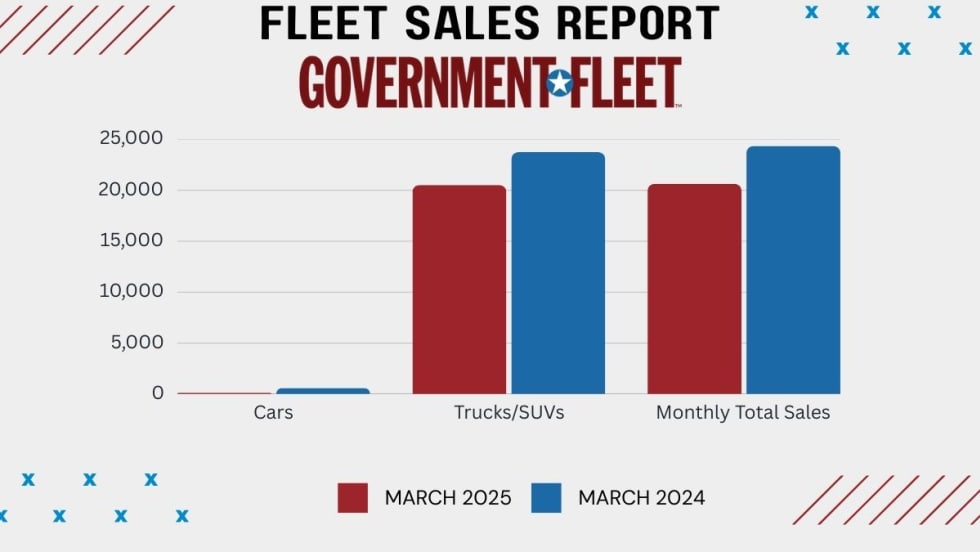
Government Vehicle Sales See Continued Growth from Beginning of Year
Government fleet sales rose from both January and February monthly totals, which were both under 20,000.
Read More →
Updated: Trump Signs Proclamation Imposing 25% Tariff on Auto Imports
A new proclamation signed by President Trump imposes a 25% tariff on imported passenger vehicles and key auto parts, citing national security concerns.
Read More →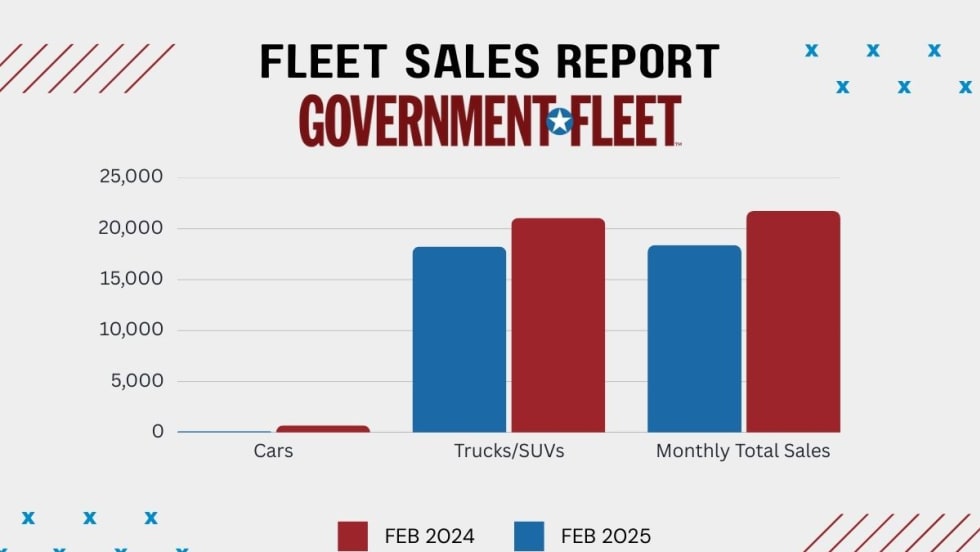
Government Vehicles Sales See Another Dip Compared to 2024
Government fleet sales last month came in at 18,383 vehicles, falling 15.4% from 21,737 in February 2024.
Read More →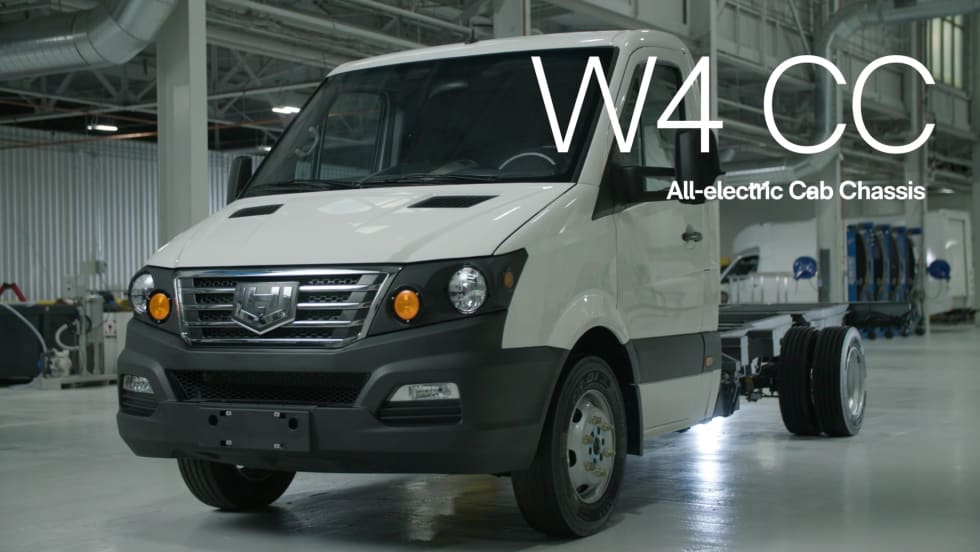
Washington Municipality Adds Workhorse Electric Trucks to Fleet
The municipality will deploy two W4 CC electric work trucks for trash and recycling can switch-outs, enhancing the efficiency of its waste management services.
Read More →
From the Archives: Changes in Fleet Acquisitions
When vehicles become harder to acquire, fleet managers must balance keeping vehicles on the road longer while managing the escalating operating costs of older vehicles.
Read More →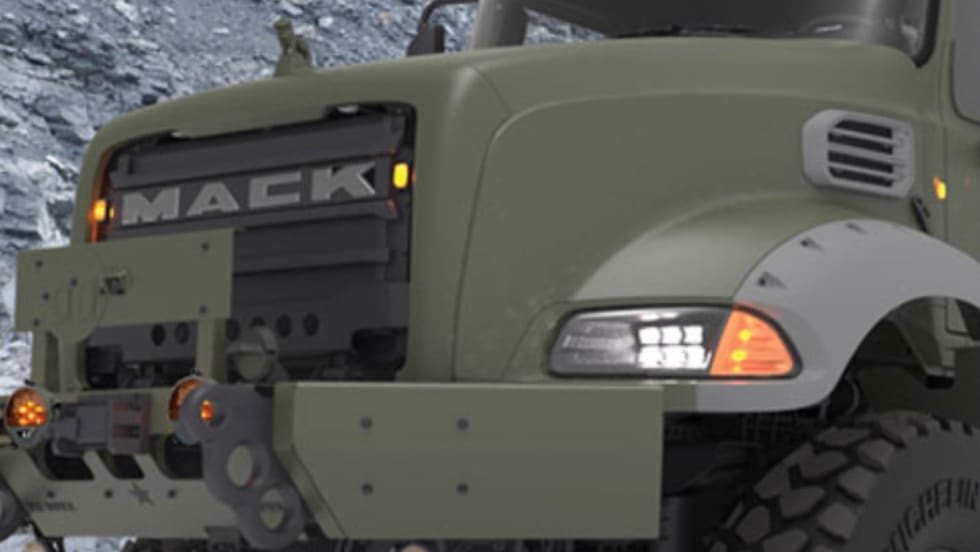
Mack Defense Awarded Contract By U.S. Marine Corps To Develop Medium Tactical Truck
The U.S. Marine Corps awarded Mack Defense a 12-month contract for the initial development of a new Medium Tactical Trucks (MTT) fleet.
Read More →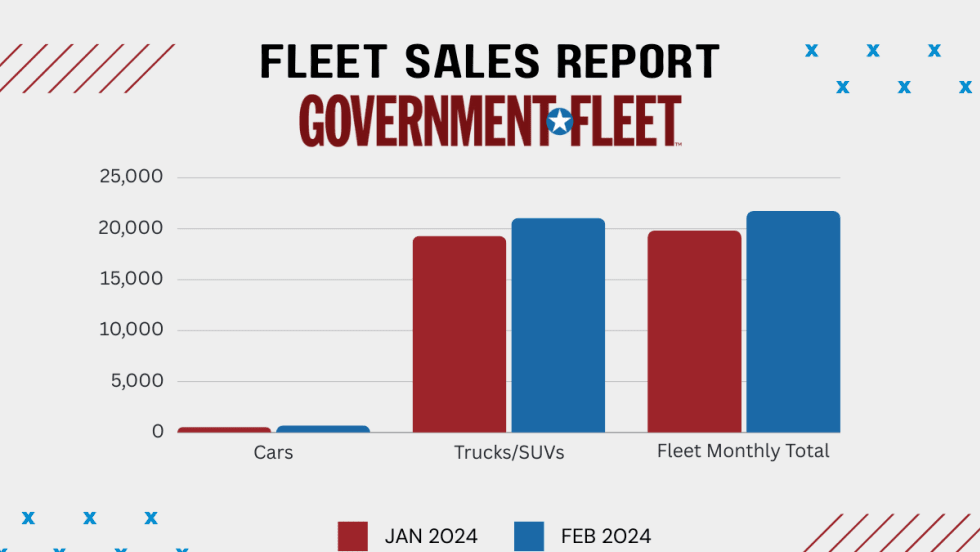
Government Vehicle Sales Rise from January to February
Government vehicle sales continue to rise into 2024 with both car and truck/SUV sales climbing between January and February of 2024, according to Bobit/Government Fleet sales data released March 2.
Read More →
How the UAW Strike Affected Government Fleet Orders from the Big 3
Government Fleet asked the Big 3 how their operations have been in the weeks since the UAW strike ended, with new contracts ratified. Plus, automakers address concerns about vehicle delivery delays.
Read More →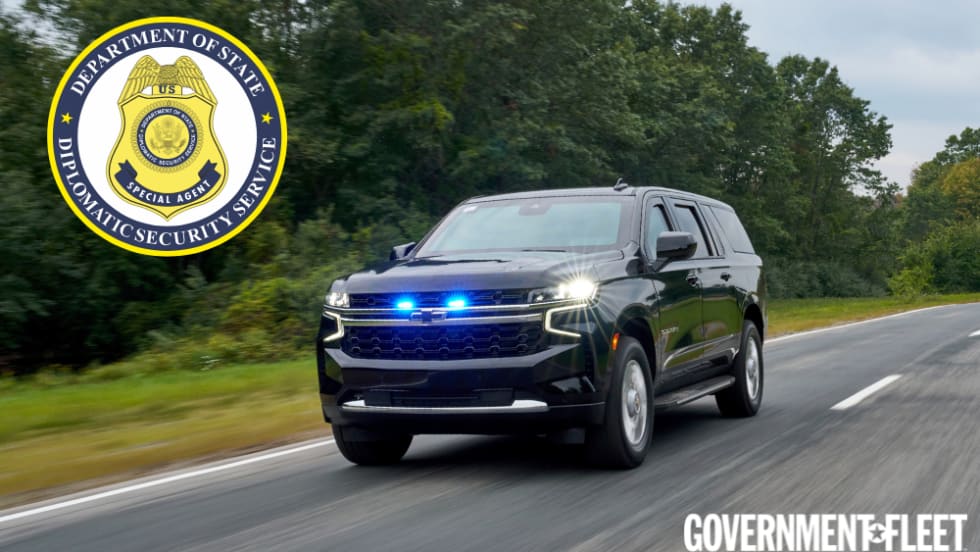
GM Defense to Supply Armored Vehicles to U.S. Department of State
Details on the contract, a look at upgrades and an improved up-armoring process in the next generation heavy-duty armored SUVs, and how the Department of State landed on GM Defense's product.
Read More →
When Switching from Leasing to Purchasing is More Effective
For one municipal fleet, choosing purchasing over leasing was a smart, money-saving move.
Read More →