




One Pump Size Doesn't Fit All
Selecting the right-size fire pump for a fire apparatus is an important task. Fire departments can exceed the minimum gpm based on their own preferences or expected future growth.

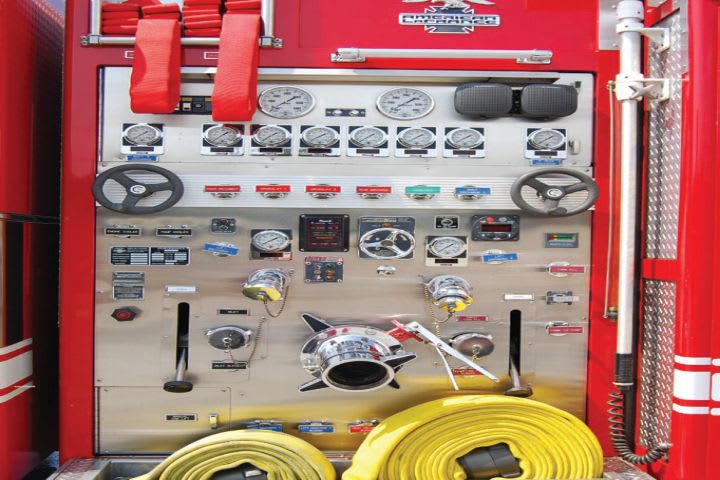
The Manhattan Beach, Calif., Fire Department utilizes a 4-inch supply and 13/4-inch handlines pump for large water delivery when indicated.
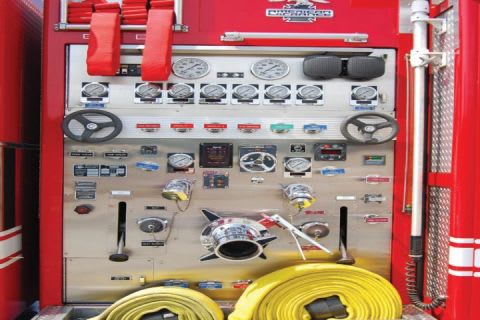
The fire pump is an integral component of the fire apparatus. The pump is the main, and some might argue, only reason for a fire apparatus. All other components are useless if a pump does not perform adequately. With this in mind, selecting the right pump size for a fire apparatus is a critical task.
Most fire pumps are centrifugal pumps, manufactured by separate companies and purchased by the apparatus builder. A typical fire pump can move 1,500 gallons per minute (gpm).
Pump size can be restricted by available water supply, particularly in rural areas where fire hydrants are not readily available. In many cases, fire departments can increase the pump one size larger without increasing the engine horsepower.
Minimum gpm requirements are usually set by the Insurance Services Office (ISO), a supplier of risk information, and are based on building construction, size, and distance from other structures. Fire departments can exceed the minimum gpm based on their own preferences or on expected future growth.
Palm Beach County Fire Rescue, in Palm Beach County, Fla., uses a 1,250- gpm pump. "The water flow from our hydrants limits our gpm unless we use multiple lines. Even then, we found through training exercises and debriefing after fires, we are comfortable with the 1,250-gpm pumps," said Tim Calhoun, fleet director, Palm Beach County.
"Remember, you also need to have people to handle and operate larger capacity pumps. We prefer adding two trucks to the scene," adds Calhoun.
The Wayland, Mass., Fire Department also uses 1,250-gpm single-stage Hale pumps as standard. Wayland is a predominately residential community with limited staffing.
"Two- and three-person engine companies with a greater pumping capacity would not be worth the engineering and maintenance costs," said Chief Robert Loomer, Wayland Fire Department. "However, this is our standpoint. Other communities might have demographics that require a larger pumping capacity per vehicle."
The Manhattan Beach Fire Department (MBFD) in California orders single-stage, 2,000- gpm pumps. They use 4-inch supply and 1¾-inch handlines and carry 2 ½-inch handlines for large water delivery when indicated. The department uses pre-plumbed ladder pipes and master stream monitors.
"The larger gpm allows us to deliver greater volume with our three-person staff. I see no down side to this and the cost is minimal when ordering a fire engine," said Ken Shuck, MBFD battalion chief.
According to Jim Long, New York Fire Department spokesperson, the department utilizes 1,000-gpm pumps on most of its fire apparatus and 2,000-gpm pumps in commercial and residential high-rise areas.
The ISO rates fire departments according to total pump capacity available to meet needed fire flows. Many factors are involved in determining this rated fire flow. The type of construction, square footage, and exposure hazards are some factors involved.
As cities grow, new commercial and industrial facilities are built, in addition to new housing such as single family dwellings and apartment complexes. All this development adds to the required fire flow for a municipality.
"By spec’ing larger pumps for new engines when replacing an older engine, a department can purchase fewer pumpers and maintain the required pump capacity needed to maintain ISO requirements," said Danny Dwight, fleet administrator, Amarillo Fire Department, Texas. "Larger pumps are more expensive, but this cost can be recovered by the need for fewer pumpers,"
According to Dwight, "one more plus" is the need for less maintenance and upkeep on fewer apparatus. "Larger pumps allow large diameter hose use, increasing water flow needed for large fires. Pumpers with larger pumps usually are easier to sell when due to be replaced."
The Amarillo Fire Department currently utilizes 1,250-gpm pumps on its pumper fleet. The ladder trucks are equipped with 1,500-gpm pumps.

Government Fleet caught up with Gary Handwerk, global product manager for Hale Pumps, to find out what current trends he sees in purchasing pumps for fire apparatus.
According to Handwerk, the most popular type of apparatus is pumpers. "About 90 percent are split-drive line, midship-mounted pumps. Most are #1, 1,500 gpm, or #2, 1,250 gpm."
About 95 percent are single-stage. All meet National Fire Protection Association (NFPA) Standard 1901, which defines requirements for new automotive fire apparatus designed for emergency conditions to transport personnel and equipment, and to support fire suppression and mitigation of other hazardous situations.
"Only some of the bigger cities with high-rise buildings more than 30 stories tall buy two-stage pumps," said Handwerk. "Some will use two trucks with single-stage pumps operating in series."
The size pump purchased is based on chassis horsepower (most apparatus have the power to operate a 1,750-gpm pump), state/ISO fire department rating requirements, NFPA1901, fire load calculations, and tradition/history.
"In the end, most pumpers have a 1,250- or 1,500-gpm pump — a 750 or 1,000 pump costs as much as a 1,250 pump, if equal in valving and piping. Common chassis are custom built for the job or built on a Class 8 chassis," Handwerk said.
According to Handwerk, the next most popular apparatus is a slip-on wildland type. (Grass truck, field truck, or flat bed are terms also used.) These typically are equipped with a small engine-driven pump; the most common have an ISO 9 size pump, (50 gpm at 150 psi from draft).
More Operations
2026 Public Fleet Hall of Fame Inductees Honored
Honorees are recognized industry leaders and pioneers who have significantly contributed to the public fleet profession.
Read More →
David Renschler Receives 2026 Legendary Lifetime Achievement Award
Andy Campbell of Sourcewell, which partnered with Government Fleet in presenting the award, recognized Renschler.
Read More →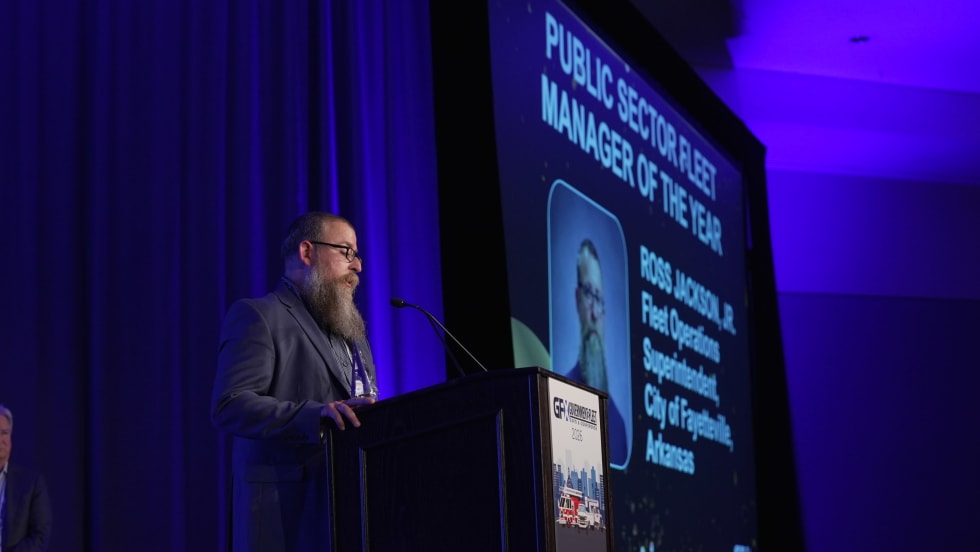
Ross Jackson Jr. Named 2026 Public Sector Fleet Manager of the Year
Ross Jackson Jr. is the Fleet Operations Superintendent with the City of Fayetteville, Arkansas.
Read More →
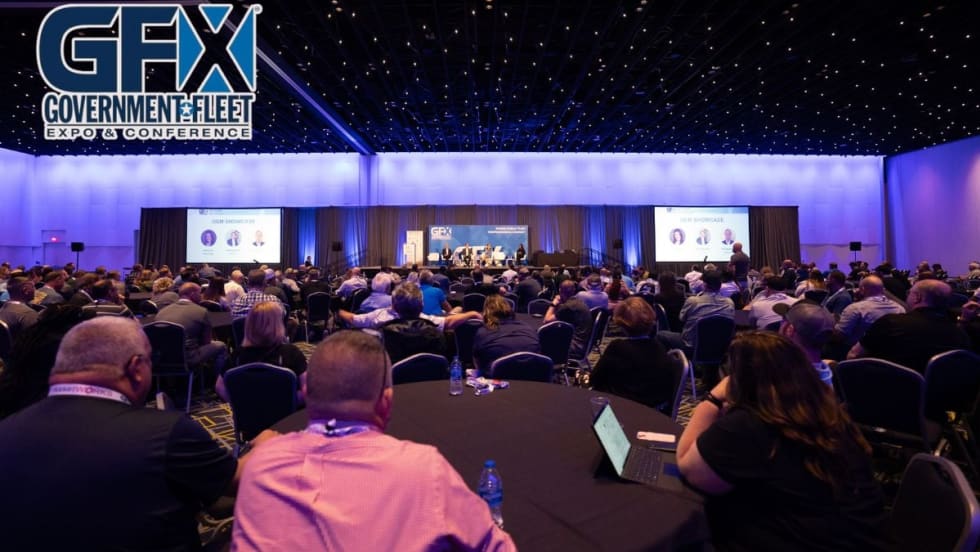
Public Fleet Professionals Set to Converge as GFX Gets Underway
Known as the largest gathering of public fleet professionals in the nation, GFX will feature in-depth training sessions, emerging fleet technologies, and access to leading suppliers and service providers.
Read More →
The Technician Pipeline: Finding, Keeping, and Promoting Techs Within the Operation
A look at where to find good talent, what fleets are doing to incentivize those techs to stay within the fleet, and what promotion looks like for a technician within the public sector.
Read More →
5 Public Fleet Stories Worth Revisiting Before GFX | The May Dispatch
Public fleet leaders are being asked to prepare for more, communicate better, and make decisions that hold up under pressure.
Read More →
Drive More Profit with Greater Fleet Uptime
Fleet downtime costs money. JASPER helps keep vehicles on the road with quality remanufactured components, fast nationwide delivery, and reliable solutions that boost uptime and profitability.
Read More →
Are You Tracking Your Fleet's True Total Cost of Ownership?
Bobit Business Media surveyed 190 fleet professionals and found that while most fleets are tracking costs, fragmented systems and data gaps are keeping true TCO visibility out of reach. With rising pressure to control spend in an increasingly volatile environment, the gap between what fleets think they know and what the data actually shows is wider than you might expect. See how your peers are managing costs today and where the industry still has room to improve.
Read More →
Minneapolis Fire Department Prepares to Add Three New Pierce Enforcer Pumpers to Front-Line Fleet
The order, secured through Pierce dealer MacQueen, marks the department’s move from commercial chassis pumpers to Pierce custom fire apparatus designed to meet the operational demands of Minnesota’s largest city.
Read More →
The Human Side of Fleet Leadership: Lessons from Larry Campbell
As public fleets navigate rapid change through AI, telematics, and increasing operational pressures, Larry Campbell believes the fundamentals of leadership matter more than ever. The longtime fleet leader reflects on accountability, integrity, and why earning trust remains the foundation of a successful fleet operation.
Read More →