




San Diego County 'Sold' on Reverse Auctions
The Web-enabled competitive pricing tool has saved the County more than $25 million in four years. For fleet, the technology saves time and results in better vehicle pricing.

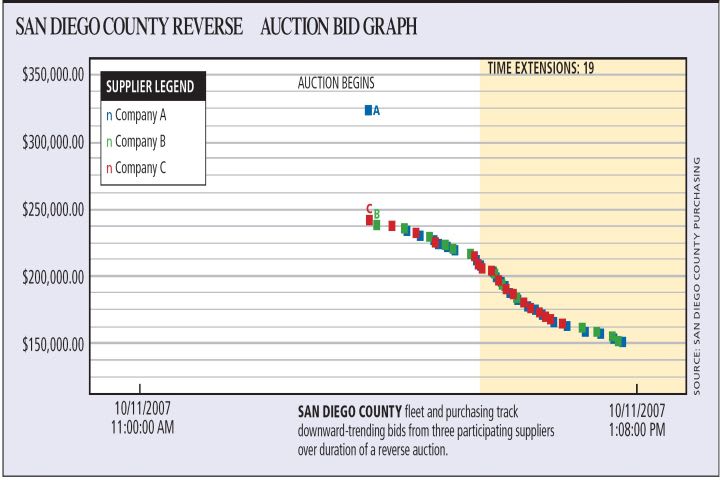
San Diego County fleet and purchasing track downward-trending bids from three particpating suppliers over the duration of a reverse auction.
Reverse auctions, an increasingly popular purchasing tool for all manner of commodities from toilet paper to firearms, can cut costs and save time while providing transaction transparency. Now, one public sector fleet is using the Web-based process to acquire vehicles.
According to Fleet Manager John Clements, San Diego County is one of the first public sector fleets in the U.S. to hold reverse auctions for multiple-unit vehicle purchases. With a $12 million vehicle acquisition budget and a 3,800-unit fleet, the County single-sources most of its administrative, light-duty, and public safety vehicles with Ford.
Purchasing Director Winston McColl introduced an e-sourcing model of reverse auctions to the County in 2004. He considers it one tool in a kit of procurement strategies for supplies used by county departments.
"A reverse auction is a Web-enabled competitive pricing tool that allows the buyer, on one hand, to open up its procurement requests and obtain a lower price on a real-time basis. Suppliers, on the other hand, can now tailor their bids to the real-time online bidding process," McColl explained.
Unlike sealed bids, he added, in which the seller gets one chance to submit a best price, the reverse auction technique allows the bidder to submit bids online based on other bidders’ responses.
"This dynamic pricing tool provides significant savings to the public buying entity by ensuring the prices submitted by competing suppliers are real-time, lowest possible, visible to all participants, and auditable," said McColl.
Reverse auctions are different from an eBay sale, according to McColl. "On eBay, one product is offered to many buyers. A reverse auction involves one buyer and many suppliers."
He has tracked total cost savings achieved 2004-2007 through reverse auctions held for the purchase of goods (including vehicles), and selected services. "These events have saved more than $25 million in verifiable savings to County departments, providing a return on investment of more than 100 times greater than the cost to the County of $200,000," McColl reported.
San Diego County uses a software program, Procuri, now Ariba, to run the reverse auction and pays an annual $50,000 software license fee for its use. Among the savings the internal reverse auction produces is the elimination of the cost of a live auctioneer.
"What’s critical to the process are tightly-written specifications and at least 2-3 bidders to start," said McColl. In addition, publicizing and communicating bidding details are crucial to a successful auction.
The County’s fleet operations holds 2-3 reverse auctions per year, depending on the bid cycle and when the purchase volume is significant, said Clements. "For the one- or two-vehicle purchase, for example, when we buy undercover cars, purchasing will do a quick quote on BuyNet." Typically, the County’s vehicle reverse auctions draw about 10 bidders.
Specifications can be created for an item with multiple line items and levels of bid items. Multiple line items also may be included in a single auction event.
A multiyear bid is usually structured with two years of fixed pricing and two option years with an escalator factor, Clements explained.
Fleet and purchasing work closely during the specification process, said Clements. "The way we buy vehicles is a very interactive process with purchasing," he said. "Purchasing practically lives in our building or we are in their building when we go through a vehicle bid because of tasks such as bid analysis that we have to do together."
[PAGEBREAK]
The bidding event is highly configurable. Purchasing and fleet work together to configure the event, choosing what information is shared with suppliers, including all bids, low bid only, no bids, bid rank, number of bids, and bidder names and comments, according to McColl.
The process also allows fleet and purchasing to structure minimum bid increments, according to Clements. "Someone can’t bid 50 cents less on a $2 million bid. That minimum bid might be $1,000."
Once all cost information is collected from the auction, the software package allows fleet to quickly and efficiently evaluate all cost and performance data.
Clements and McColl both found initial supplier response to the reverse auction process mixed. "In the beginning, some dealers complained, ‘This isn’t fair. We’re not computer people,’ etc.," said Clements.
"The challenge to the County was convincing its supplier base that this technology would help them provide their best possible pricing," said McColl. Some suppliers, while not technically sophisticated, found the reverse auction tool easy to use after only a brief training session, he added.
Reverse auctions benefit San Diego County’s fleet operations and its suppliers. For Clements, a significant benefit is savings in time. "The bid time is shortened. You’re technically talking about an hour’s work of bid time versus 30 days, minimum," he said. Bid analysis is also more efficient, since the software program produces a printed report of all the bid details, Clements noted.
Just as important, vehicle pricing "has done nothing but get better," with reverse auctions, he said.
The reverse auction process is also fairer to the bidders, according to Clements. "Often what will happen with sealed bids is when bids are open, a vendor misses low bid by $1,000 on a $1 million bid. Because suppliers can see the low bid in our reverse auction process, they can adjust their own bid in that situation."
From the County’s purchasing perspective, reverse auctions help "get products and services to customers faster than with sealed bids," said McColl. "We can award sales contracts faster."
In addition to cost and time savings, the system provides a valuable transparency, said McColl. "The tool keeps an audit trail — who posts what bid and when."
Reverse auctions, concluded McColl, help fulfill the county’s vision of technology — to provide strategic sourcing opportunities that drive down costs, as well as maintain quality in the procurement of goods and services.
• Working closely with the County’s purchasing and contracting department, fleet operations develops vehicle specifications and a bid package.
• About 30 days before the scheduled auction, the specifications are incorpo-rated in a request for bid (RFB) and posted to the County’s BuyNet Web site, with the time and date of the reverse auction.
• Prequalified car or truck dealerships are notified of the RFB posting via e-mail and Web site announcement.
• At the stated time, the purchasing department opens the auction. From their desktops, dealerships submit bids.
• Fleet and purchasing department staff monitor bidding by lot or article num-ber on a computer or projection screen. They can view each dealership’s name and the submitted price. Vendors can view only their bid and the low bid.
• Vendors can request a bid be deleted after submitting it to correct an error.
• If a lower bid is entered just prior to the auction close, the software automatically extends the bidding time. The auction ends when no new low bids are submitted.
• At the end of the bid period, the software closes the auction and prints the results for fleet and purchasing evaluation.
• The bid is awarded to the lowest bidder and the award notice is posted online. GF
More Remarketing
Missouri County Enters Partnership for Vehicle Leasing and Sales
In a recent development focused on improving operational efficiency, Franklin County, Missouri, has entered into agreements with Enterprise Fleet Management.
Read More →
The State of the Vehicle Market Today
What is the state of the vehicle market today? What are you thinking about when deciding to order vehicles? What might be some of the considerations for vehicle replacement? Find answers to these questions and more on this episode of GovCast.
Read More →
Sold! Why You Should Use Auctions for Used Fleet Vehicles
A seasoned government fleet manager shares why using auctions to sell used vehicles can be valuable.
Read More →
Using Online Auctions to Fill Gaps in Fleets
Commercial fleets are constantly dealing with canceled vehicle orders. Government fleets can help meet these needs – and cash in – by selling their used vehicles and heavy equipment.
Read More →
NYC Faces Lawsuit Over New Vehicle Auction Contract
The city's previous contractor argues it was not made aware of a new contract DCAS was working on for 10 months. It also argues the new contract will cost the city $6 million more.
Read More →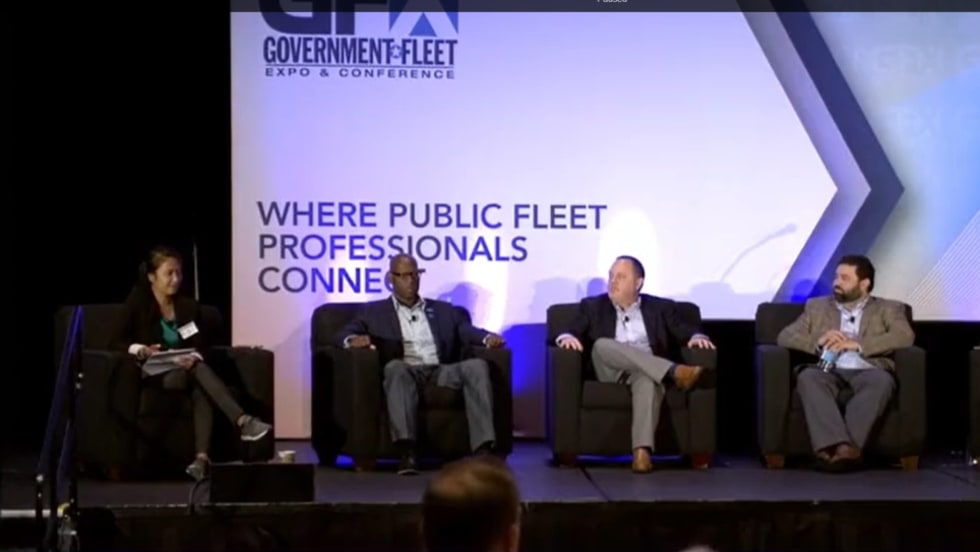
4 Tactics to Exploit Delivery Delays & High Resale Values Now
A panel at GFX suggested tactics for fleet managers to take advantage of the current long vehicle delivery delays and astounding resale values.
Read More →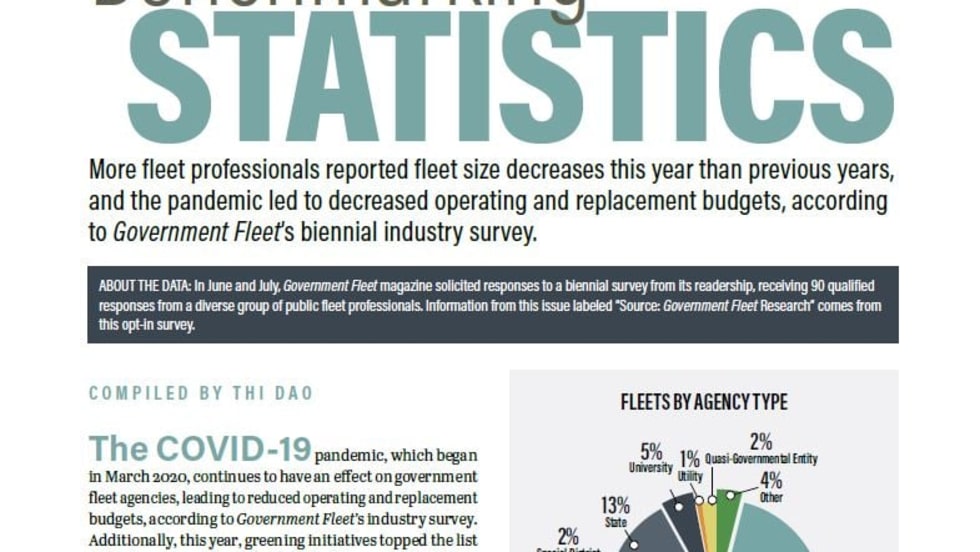
2021 Benchmarking Statistics
This report covers public sector fleet operations statistics for 2021, taken from Government Fleet's biennial industry survey.
Read More →
NYC Posts Record Fleet Revenue with Strong Resale Values
For fiscal-year 2021, New York City DCAS brought in $15.75 million in revenue between the sale of used vehicles and pursuit of restitution when private vehicles damage fleet vehicles.
Read More →
The Effect of COVID-19 on Remarketing
The onset of the pandemic put a pause on live auctions and shifted sales online. Is it a trend that’s here to stay?
Read More →
Bright Ideas to Improve Your Fleet
Government Fleet often shares programs and initiatives that lead to great success, but those ideas often require significant investments in time or money. Here, we turn to the smaller ideas that are simpler and easier to implement.
Read More →